
The commercial aquaculture and premium poultry feed sectors are facing an unprecedented ecological and financial crisis regarding their historical reliance on marine fishmeal. Driven by severe overfishing, volatile climate patterns, and restrictive global quotas, the price of conventional fishmeal has become highly unpredictable. To maintain profitability and achieve corporate sustainability mandates, international feed formulators are aggressively transitioning toward high-density insect biomass. In this strategic shift, partnering with a technologically verified Bulk Dried Maggots supplier provides a massive biochemical advantage. Maggots offer an exceptional crude protein profile, rich in essential amino acids, limiting minerals, and antimicrobial peptides that naturally stimulate livestock immunity. However, replacing marine fishmeal with insect protein on a multimillion-dollar Full Container Load (FCL) scale requires extreme processing precision. Understanding how industrial dehydration methodology dictates biological efficacy is critical for procurement directors evaluating a Bulk Dried Maggots supplier.
Thermal Degradation vs Bioavailability
When comparing marine fishmeal to insect alternative proteins, the primary metric of commercial concern is the absolute bioavailability of the amino acid matrix. Traditional fishmeal processing involves intense heat and pressing, which can sometimes degrade heat-sensitive nutrients. Unfortunately, the commercial insect protein market faces a similar technological challenge. A vast majority of unverified brokers aggregate their raw biomass from localized farms that utilize outdated thermal oven-roasting or open-air sun-drying. These primitive methodologies apply intense, uneven external heat over prolonged processing cycles.
This extended thermal stress is catastrophic for delicate biological tissues. It inevitably triggers a severe Maillard reaction, a chemical process that irreversibly binds heat-sensitive essential amino acids—specifically critical limiting factors like lysine and methionine—to reducing sugars. Consequently, the vital proteins become biologically locked. When high-value carnivorous fish or poultry consume heat-damaged ingredients from an under-equipped Bulk Dried Maggots supplier, their digestive systems fail to metabolize the bound nutrients. This severe lack of bioavailability directly leads to a stunted Feed Conversion Ratio (FCR) on the farm. To correct these degraded growth rates, commercial feed mills are forced to purchase expensive synthetic amino acids to supplement the formulation, completely erasing the initial financial savings of adopting sustainable alternative proteins.
Advanced Microwave Dehydration Technology
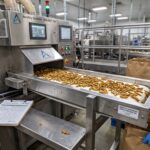
To successfully align with sustainable alternative protein guidelines established by the Food and Agriculture Organization (FAO), maximizing the true nutritional yield of insect biomass requires advanced industrial processing. An industry-leading Bulk Dried Maggots supplier bypasses thermal degradation entirely by utilizing advanced industrial microwave dehydration technology. This state-of-the-art volumetric heating method completely revolutionizes the stabilization phase. Instead of applying external ambient heat that slowly penetrates the insect, industrial microwaves generate heat directly from the water molecules within the cellular structure of the biomass itself.
This scientific phenomenon ensures extremely rapid, highly uniform moisture evaporation from the inside out, drastically cutting the total processing time. By utilizing volumetric microwave heating, a premium Bulk Dried Maggots supplier explicitly prevents amino acid binding, securing a pristine, highly digestible crude protein profile that actively rivals the best marine fishmeal. Furthermore, bypassing extreme external heat preserves the natural structural elasticity of the insect exoskeleton. Similar to the structural requirements necessary when formulating with high-quality Wholesale Dried Crickets, maintaining this physical integrity prevents the biomass from shattering into wasteful fine dust during the automated feed extrusion process, ensuring maximum material yield.
Logistical Stability and FCL Security
Replacing fishmeal safely also requires mitigating severe logistical and sanitary risks during multi-week international ocean transit. High-volume insect biomass retains dangerous levels of hidden internal moisture if processed using slow thermal techniques. During a standard FCL shipment under CIF or FOB terms, fluctuating transoceanic temperatures cause this trapped moisture to evaporate and rapidly condense on the cold steel ceiling of the maritime container. This trapped humidity transforms the cargo into an active biological breeding ground for Salmonella, E. coli, and highly toxic aflatoxins.
A verified, technologically advanced Bulk Dried Maggots supplier systematically eliminates this sanitary risk by using industrial microwaves to guarantee a highly uniform internal moisture content strictly below the ≤5% moisture threshold. This sub-5% precision acts as an impenetrable biological sterilization phase. It effectively eradicates vegetative pathogens, completely prevents container rain, and secures a highly stable 18-month shelf life without artificial chemical preservatives.
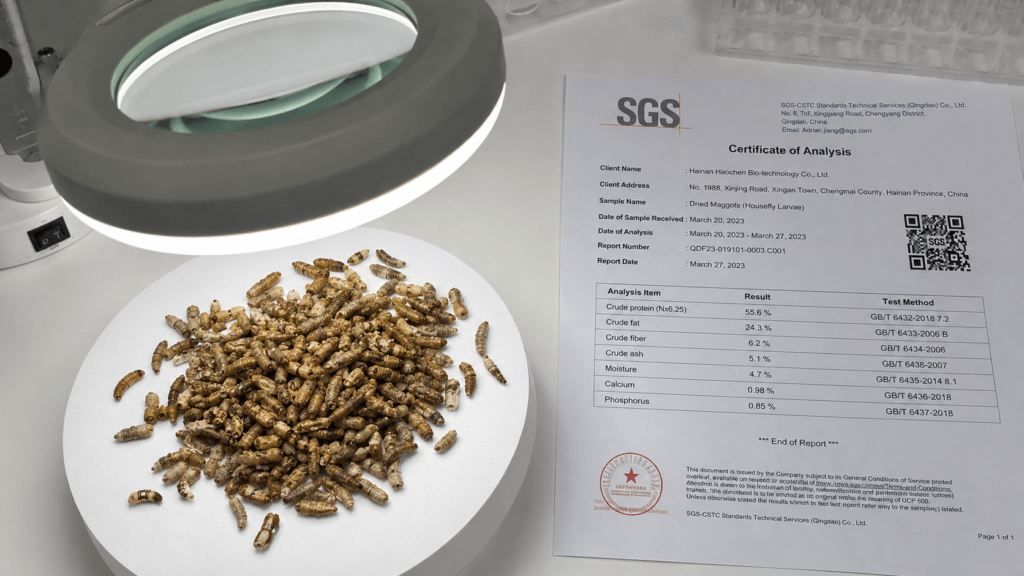
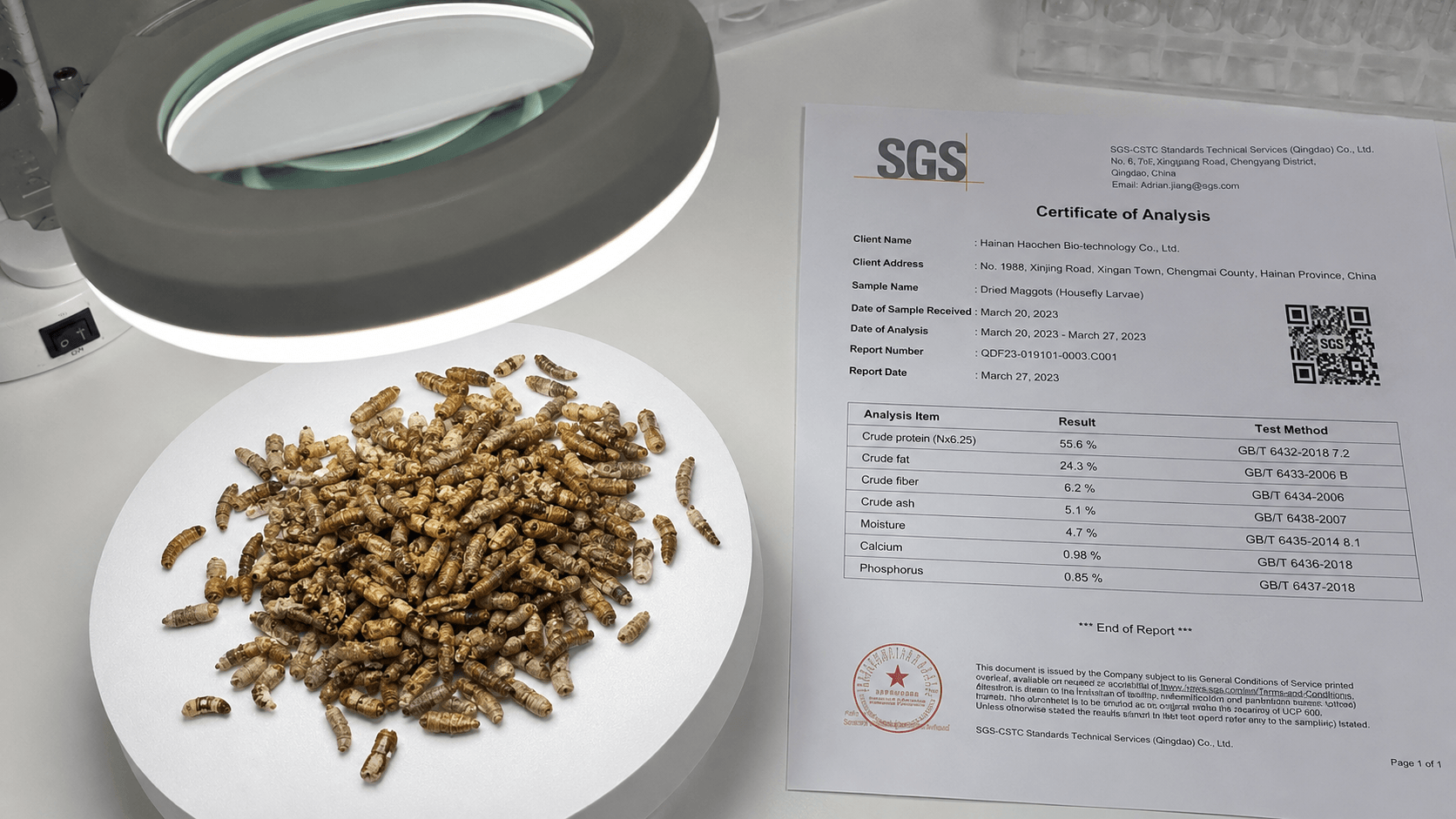
Before executing massive FCL contracts to replace marine fishmeal, intelligent procurement teams demand verifiable Certificate of Analysis (COA) documents from independent auditors like SGS. By utilizing a strategic 1000kg Minimum Order Quantity (MOQ) pilot batch, commercial formulators can physically test the superior bioavailability and extrusion resilience of the ingredient on their own production lines, ensuring absolute supply chain security.
Looking for a reliable manufacturing partner? BulkInsects is a verified Bulk Dried Maggots supplier using advanced microwave dehydration technology to deliver premium insect ingredients with guaranteed nutritional integrity. Start your market test with our 1000kg MOQ. Contact us today for CIF pricing and free samples.