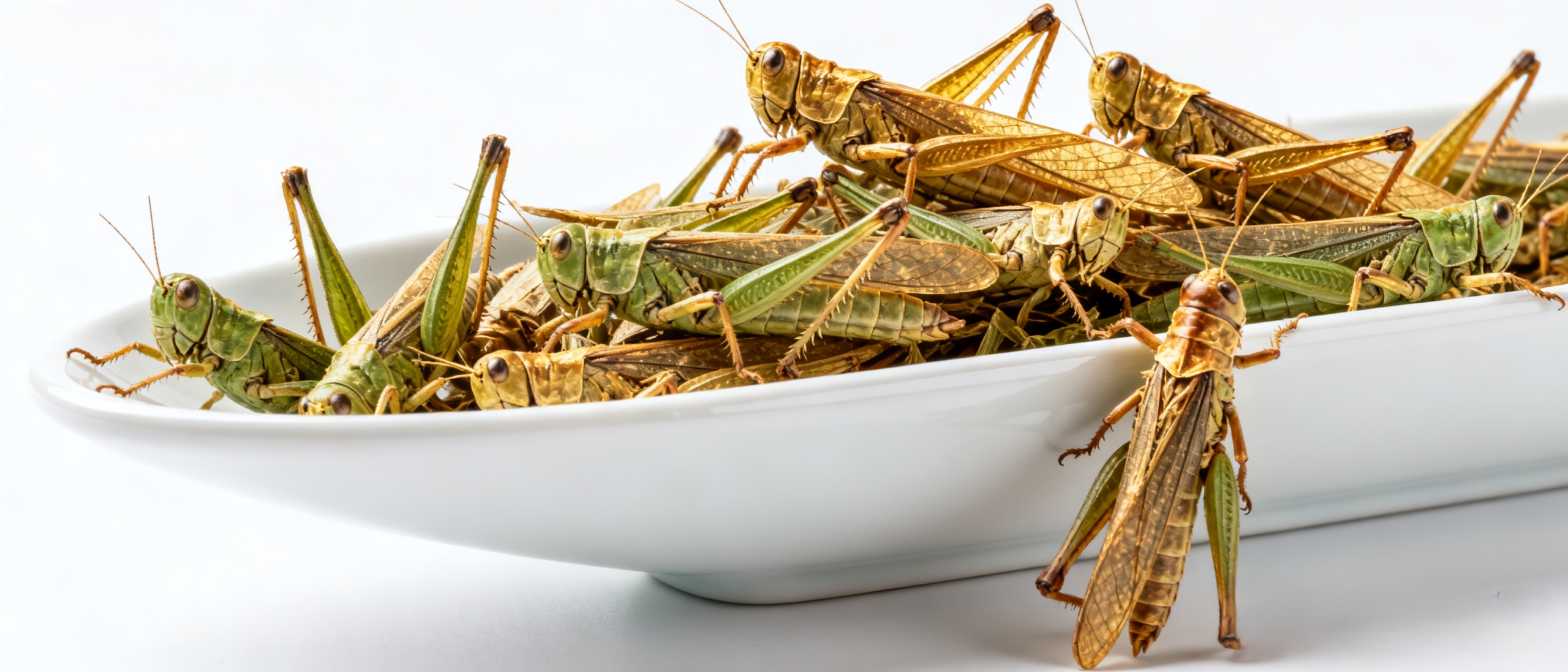

Grasshoppers (locusts) are one of the oldest edible insects for humans. In the European and American markets, dried grasshoppers are transitioning from a “novelty food” to a regular ingredient in pet food and protein powder. They are high in protein and have higher breeding efficiency than traditional livestock, but for bulk buyers, this category still suffers from inconsistent specifications and a fragmented supply chain.
Product Forms and Application Scenarios
Whole Dried Grasshoppers: Retaining their intact form, primarily used in the human snack market (seasoned roasted grasshoppers) and reptile feed. Their visual appeal is a selling point, but they have a high breakage rate and significant transportation losses.
Dried Grasshoppers (Wings and Legs Removed): Removing wings and hind legs results in a better texture and is used in high-end foods and protein bar additives. They are more expensive, but processing losses increase costs.
Grasshopper Powder: Ground into powder, with a protein content typically between 60% and 70%, this is currently the fastest-growing form for bulk purchases. Used in protein powder, energy bars, sports nutrition products, and feed additives.
If the target market is food-grade, wingless and legless or powder form is most practical; the feed-grade market has lower requirements for form, whole dried worms are acceptable.
Key Quality Indicators
Protein Content: Food-grade grasshopper dried worms typically have ≥60% protein, while feed-grade can be slightly lower. Note: Grasshoppers’ exoskeletons contain chitin, which affects protein digestibility; in vitro digestibility data should be requested if possible.
Moisture: ≤8% is acceptable. Grasshoppers have a higher fat content than mealworms, and excessive moisture easily leads to oxidation and rancidity, producing an off-odor.
Acid Value and Peroxide Value: These are key indicators specific to dried grasshoppers, reflecting the degree of fat oxidation. If the product has a rancid smell, the acid value usually exceeds the standard. The contract should include a clear rejection clause regarding off-odors.
Microorganisms: Similar to mealworms, Salmonella and E. coli are the minimum requirements. For human consumption grade, Staphylococcus aureus and Listeria testing are also required.
Seasonality of Farming and Harvesting
Grasshopper farming has a short cycle (approximately 45–60 days), but is significantly affected by temperature. Temperate regions typically produce 3–4 harvests per year, while tropical regions can produce year-round. For large-scale purchases, it’s crucial to understand the supplier’s harvest schedule to avoid supply disruptions due to “downtime.”
Wild-caught grasshoppers are cheaper, but their quality is unpredictable, especially with a very high risk of pesticide residues. Unless the supplier can provide pesticide residue testing reports for each batch, it’s not recommended to deal with wild-caught sources.
Market Price Reference
The international market price for dried grasshoppers is generally higher than that of mealworms but lower than that of black soldier flies. The price difference between food-grade and feed-grade grasshoppers can be 30%–50%. Be highly cautious if a supplier’s food-grade price is close to the average market price for feed-grade grasshoppers.