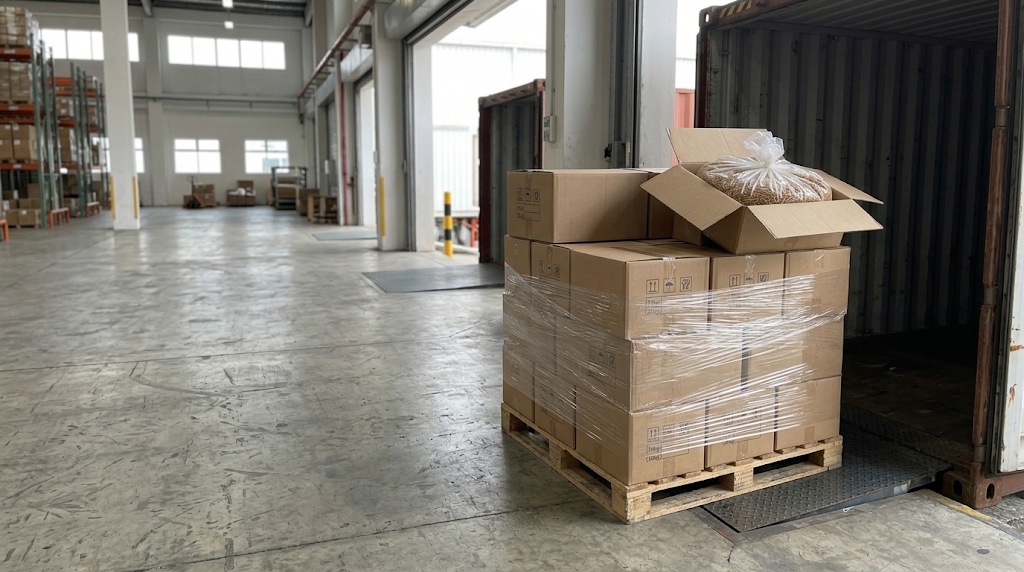

For importers, distributors, wholesalers, and other commercial buyers, shipping bulk insects involves more than comparing ocean freight rates. The Incoterm used in a quotation affects who arranges transportation, which costs are included in the quoted price, where risk transfers from seller to buyer, and which party manages specific parts of the shipment.
FOB and CIF are two commonly recognized Incoterms for goods transported by sea or inland waterway. However, a CIF quotation should not automatically be considered more complete or lower risk than an FOB quotation. The two terms allocate costs and responsibilities differently, and the appropriate choice depends on the buyer’s logistics capabilities, destination, shipment size, and commercial arrangement.
For buyers sourcing whole dried insects internationally, understanding these differences makes supplier quotations easier to compare and reduces the risk of unexpected freight or destination charges.
1. Why Shipping Terms Matter in Bulk Insect Orders
A product quotation does not provide a complete picture of purchasing cost unless the applicable trade term is clear. A price quoted FOB and a price quoted CIF may cover different parts of the logistics chain even when the underlying dried insect product is identical.
This distinction becomes particularly important when buyers compare suppliers. One supplier may quote only through the agreed port of shipment, while another may include ocean freight and insurance to the named destination port. Comparing the headline prices without separating these components can lead to an incorrect purchasing decision.
The Incoterm should therefore be agreed upon with the named port or place. Buyers should avoid treating “FOB price” or “CIF price” as complete terms without identifying the location to which the Incoterm applies.
2. What FOB Means for B2B Buyers
Under FOB—Free on Board—the seller is responsible for delivering the goods on board the vessel nominated by the buyer at the named port of shipment. The seller handles the obligations allocated to the seller under FOB, including export clearance.
Once the goods are on board the vessel at the named port of shipment, risk transfers to the buyer. The buyer is responsible for arranging the main carriage from that point and generally manages the ocean freight and subsequent import-side logistics.
For experienced importers with their own freight forwarders or negotiated carrier relationships, FOB can provide greater control over the international transportation process. It also allows the buyer to separate the supplier’s product and export-side costs from the main freight cost more clearly.
3. What CIF Means for B2B Buyers
Under CIF—Cost, Insurance and Freight—the seller arranges and pays the cost of carriage to the named destination port and also contracts for the insurance required under the CIF rule.
A critical distinction is that payment of freight to the destination port does not mean the seller retains transit risk until the cargo reaches that port. Under CIF, risk transfers when the goods are on board the vessel at the port of shipment, even though the seller pays the freight and insurance to the named destination port.
This separation between cost responsibility and risk transfer is one of the most important points for new international buyers to understand. CIF can simplify freight arrangement for buyers who prefer the seller to organize the main carriage, but it should not be interpreted as a door-to-door delivery term.
4. FOB vs. CIF: Cost and Responsibility
The main commercial difference between FOB and CIF concerns who arranges and pays for the main carriage and, under CIF, the seller’s obligation to arrange insurance. Both terms should be evaluated together with the named ports and the actual quotation details.
With FOB, the buyer normally has greater control over the choice of forwarder, carrier, and freight arrangement after the cargo is loaded on board. With CIF, the seller manages the main carriage to the named destination port, which may reduce the amount of freight coordination required from the buyer before departure.
Neither structure is automatically cheaper. The buyer’s own freight rates, shipment volume, route, carrier availability, and supplier logistics arrangements can all influence the final result.
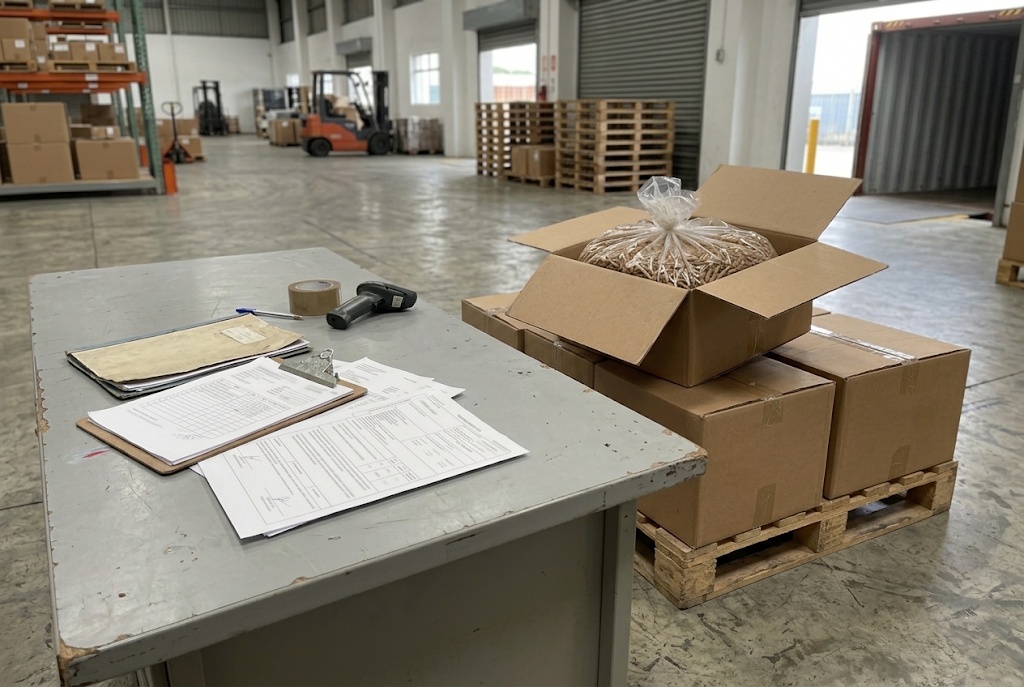
5. Understand Risk Transfer Under FOB and CIF
One of the most common misunderstandings is assuming that the party paying the freight automatically carries the cargo risk for the same period. Incoterms separate these concepts.
Under both FOB and CIF, the risk transfer point is when the goods are placed on board the vessel at the named port of shipment. Under CIF, the seller nevertheless remains responsible for arranging and paying the main carriage and obtaining the insurance required by the rule to the named destination port.
The International Chamber of Commerce publishes the Incoterms® 2020 rules, which define the allocation of obligations, costs, and risks between seller and buyer. Buyers should use the agreed Incoterm together with a clearly named port rather than relying on informal interpretations of terms such as FOB or CIF.
6. Freight, Insurance, and Destination Charges
A CIF quotation includes the cost of the goods, the contracted freight to the named destination port, and the insurance required under CIF. However, buyers should not assume that every charge arising after the vessel reaches the destination is included.
Depending on the shipment and local arrangements, destination-side costs can include terminal, handling, customs clearance, duties, taxes, inspection, storage, delivery, or other charges. The exact cost structure should be confirmed with the buyer’s customs broker or local logistics provider before the order is finalized.
Under FOB, buyers arrange the main freight themselves, which can make freight pricing more transparent when they already have established forwarding relationships. However, this also means the buyer needs the operational capability to coordinate transportation after the seller completes its FOB obligations.
7. When FOB May Be the Better Choice
FOB can be attractive for experienced importers who already work with freight forwarders and want greater control over carrier selection, freight rates, routing, and shipment coordination.
It can also make supplier comparisons easier when several exporters are being evaluated from the same origin region. Buyers can compare product and export-side quotations separately and apply their own freight arrangements to each option.
However, FOB is not automatically the best choice simply because the buyer is purchasing a large volume. The buyer should consider whether its freight rates, logistics resources, and destination arrangements actually provide an advantage.
8. When CIF May Be the Better Choice
CIF may be useful when a buyer wants the seller to arrange the main ocean transportation and provide the required insurance to the named destination port. This can reduce some of the coordination required before shipment.
It can be particularly convenient when the buyer is evaluating a new supply route or does not yet have competitive freight arrangements from the seller’s port. A CIF quotation can also provide an initial view of the product plus the main-carriage cost to the destination port.
However, the buyer should still investigate destination charges, import clearance, and onward transportation. CIF should not be confused with a fully delivered quotation, and the buyer should understand both the insurance coverage and the point at which the risk of loss in transit transfers.
9. Packaging and Shipment Planning
Shipping economics are influenced by more than the Incoterm. Packaging dimensions, carton weight, pallet configuration, and container utilization can materially affect freight efficiency.
Whole dried insects can also differ in physical characteristics. Products that are relatively fragile may require packaging that limits excessive compression and breakage, while moisture protection remains important throughout storage and international transportation.
Commercial buyers should therefore discuss packaging together with shipment quantity and freight method. Reducing packaging cost or maximizing carton weight without considering product condition can increase breakage or handling losses after arrival.
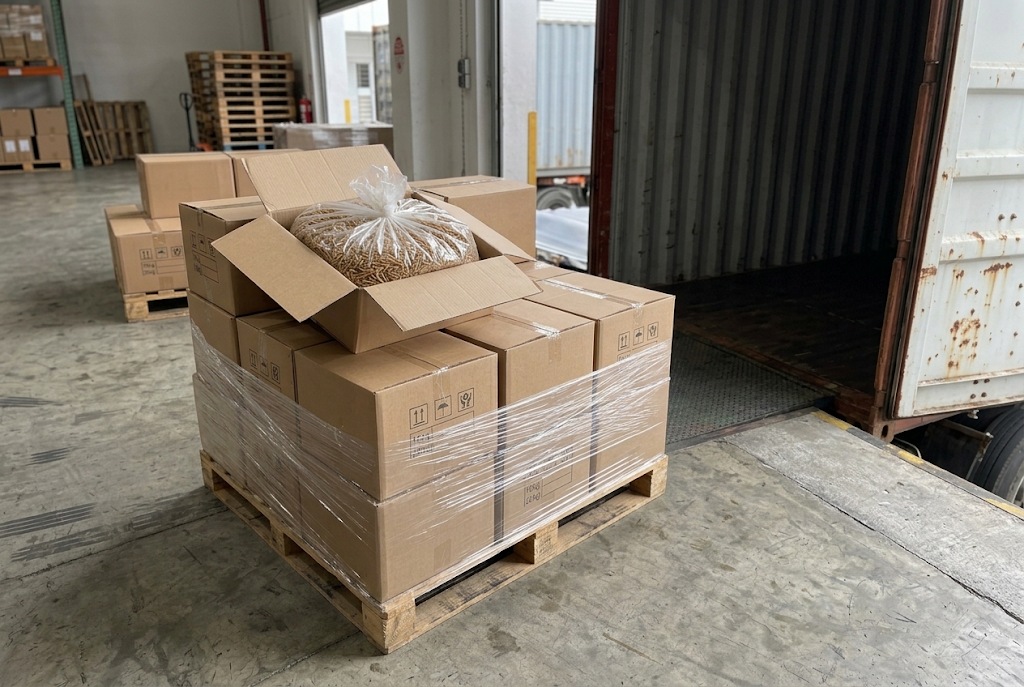
10. Compare FOB and CIF Quotations Correctly
The most useful comparison begins with the same product specification, quantity, and packaging. Buyers can then separate the product value, export-side costs, main freight, insurance, and expected destination-side costs.
For example, a lower CIF quotation is not automatically more competitive if the freight arrangement produces higher destination charges or less flexibility. Similarly, a lower FOB quotation may not deliver better landed economics if the buyer’s own freight rate is substantially higher.
The objective is to compare total landed cost and operational suitability rather than simply choosing the quotation with the lowest number at the top of the pro forma invoice.
11. What to Include in a Shipping RFQ
A useful shipping RFQ should specify the required whole dried insect product, the approximate quantity, the packaging, the destination, and the preferred trade term. For FOB or CIF, the relevant named port should also be stated clearly.
Buyers requesting both options can ask the supplier to quote the same product and quantity on an FOB basis and a CIF basis. This makes it easier to compare the supplier’s freight arrangement with the buyer’s own logistics option.
The RFQ should also request expected lead time, packing details, and shipment information needed for freight planning. Where samples, testing, or special documentation are required, these should be communicated before the final commercial quotation is confirmed.
12. Build a Pre-Shipment Checklist
Before shipment, the buyer and seller should reconfirm the Incoterm, named port, product quantity, packaging, and shipping schedule. The commercial invoice, packing list, and transport information should use consistent product and consignee details.
For FOB shipments, the parties should coordinate the buyer’s nominated forwarder or carrier and the information required for export and loading. For CIF shipments, the buyer should confirm the destination port and obtain the relevant shipping and insurance documentation from the seller as required by the transaction.
Import documentation should also be reviewed before departure. Freight arrangements do not replace customs, animal-food, animal-health, or other regulatory requirements that may apply to the dried insect product at the destination.
Frequently Asked Questions
What is the main difference between FOB and CIF?
Under FOB, the buyer arranges the main carriage after the seller places the goods on board at the named port of shipment. Under CIF, the seller arranges and pays the main carriage and required insurance to the named destination port. Risk transfer under both terms occurs when the goods are on board the vessel at the port of shipment.
Does CIF mean the seller carries the risk until the destination port?
No. This is a common misunderstanding. Under CIF, the seller pays for carriage and arranges the required insurance to the destination port, but risk transfers to the buyer when the goods are on board at the port of shipment.
Is FOB always cheaper than CIF?
No. The final economics depend on the supplier’s freight arrangements, the buyer’s own freight rates, route, shipment size, destination charges, and other logistics costs.
Does CIF include customs duties and import taxes?
CIF does not by itself mean that destination customs duties, taxes, and all local charges are included. Buyers should confirm import-side costs separately with their broker or logistics provider.
Should new importers choose CIF?
CIF can reduce some freight coordination because the seller arranges the main carriage, but that does not automatically make it the best option. New importers still need to understand destination charges, customs clearance, insurance, and risk transfer.
Can buyers request both FOB and CIF prices?
Yes. Requesting both terms for the same product specification, quantity, and packaging can help buyers compare the supplier’s freight arrangement with their own logistics options.
Final Buying Review
When shipping bulk insects, FOB and CIF should be evaluated as different allocations of logistics obligations, costs, and risk—not simply as two different freight prices. The named ports, shipment quantity, packaging, and destination costs should all be clear before quotations are compared.
FOB can provide experienced importers with greater control over main carriage, while CIF can allow the seller to arrange freight and the required insurance to the destination port. Neither term is universally better. The appropriate choice depends on the buyer’s logistics capabilities, freight rates, and commercial requirements.
For whole dried insect orders, buyers can review our bulk dried insect supply or contact BulkInsects with the product, quantity, destination, and preferred trade term to request an FOB or CIF quotation.