
Sourcing bulk dried BSFL requires more than comparing the price per kilogram. Commercial buyers need to confirm product identity, physical condition, drying quality, cleanliness, moisture, batch testing, packaging, and whether the offered material is suitable for the intended application and destination market.
Dried black soldier fly larvae can be supplied for different commercial applications, including pet products, bird products, aquaculture, poultry, and other feed-related uses where permitted. Requirements can differ considerably between a distributor purchasing recognizable whole larvae and a business using dried BSFL as a raw material for further processing. A clear purchasing specification is therefore essential before comparing quotations.
Key Takeaways
- Confirm that the product is whole dried black soldier fly larvae and establish the required commercial form.
- Define acceptable color, size, whole-body condition, fragments, and fines before approving a sample.
- Evaluate moisture, cleanliness, and odor separately rather than relying only on visual appearance.
- Request batch-linked testing and documentation appropriate to the application and destination.
- Packaging should protect dried BSFL from moisture, contamination, and physical damage during international transportation.
- Compare suppliers using the same specification, sample standard, packaging, and trade terms—not price alone.
1. Confirm Product Identity and Commercial Form
BSFL stands for black soldier fly larvae, typically referring to the larval stage of Hermetia illucens. For international B2B sourcing, buyers should not rely only on abbreviations or product photographs. The quotation, specification, sample identification, batch documents, and commercial shipment should consistently identify what is being supplied.
Commercial buyers should also distinguish whole dried larvae from powders, meals, oils, and other processed derivatives. BulkInsects focuses on whole dried BSFL, so the purchasing specification should describe the required whole-product condition rather than specifications intended for a powdered ingredient.
Where relevant, confirm the scientific name, production origin, life stage, drying method, intended application, lot identification, and whether the supplied sample represents the actual commercial grade.
2. Define the Application Before Comparing Suppliers
The intended application influences which characteristics deserve the greatest attention. A distributor or reseller may prioritize recognizable larvae, consistent appearance, and packaging suitable for repacking, while pet, bird, aquaculture, or farm-related buyers may place different emphasis on moisture, composition, cleanliness, microbiological parameters, and commercial cost.
Tell the supplier the destination country, intended application, expected order quantity, and whether the BSFL will be sold whole, repacked, or further processed. This information helps suppliers quote against an actual commercial requirement instead of simply offering the lowest available grade.
Buyers should separately confirm whether the product and intended use are acceptable under the requirements applicable to the destination market. Commercial availability does not itself establish regulatory eligibility.
3. Evaluate Appearance and Whole-Body Condition
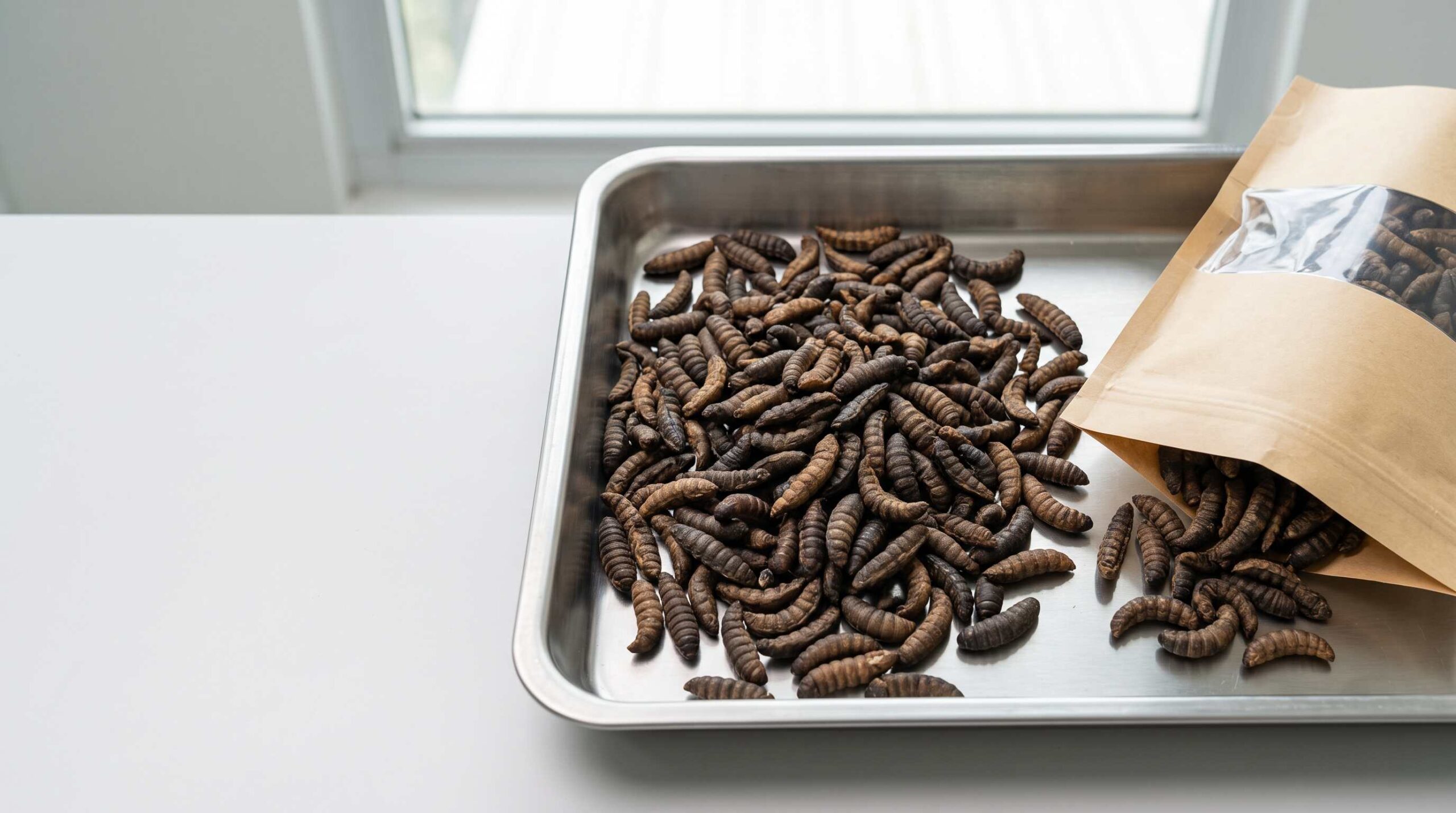
The appearance of dried BSFL can vary naturally according to raw material, life stage, processing, and drying conditions. Buyers should therefore define an acceptable commercial range rather than expect every larva to have exactly the same size, shape, or color.
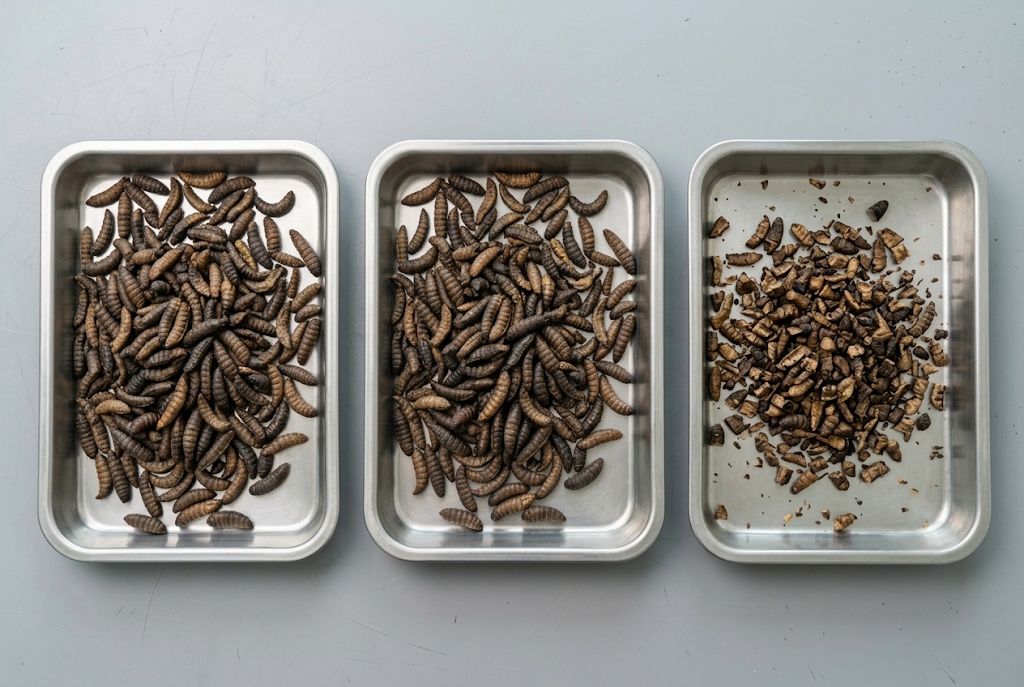
For a representative sample, evaluate the proportion of recognizable whole larvae, partially damaged larvae, larger broken pieces, and small fragments or fines. The inspection method should also state whether results are measured by weight or count, because the two approaches are not directly interchangeable.
For bulk dried BSFL, the purpose of grading is not to create an unrealistic expectation of identical larvae. It is to establish a repeatable commercial standard that both buyer and supplier can use for sample approval, production, and shipment inspection.
4. Color Is a Specification Issue, Not a Simple Quality Score
Color can be commercially important, but it should not be used as the only measure of BSFL quality. Dried larvae can show natural variation from brown and dark brown to deeper brown-black tones depending on raw material characteristics and processing conditions.
For buyers who require a particular visual grade, establish the acceptable color range using representative samples or controlled reference photographs. Investigate substantial deviations such as abnormal scorching, unusual staining, visible mold-like growth, wet or sticky surfaces, or a major change from the approved sample.
For BulkInsects’ export-oriented whole BSFL supply, a natural brown-to-dark-brown commercial appearance is preferable to an excessively blackened appearance. Final appearance requirements should still be confirmed against the actual available batch rather than treated as a universal color specification.
5. Check Size, Texture, Cleanliness, and Foreign Matter
Size affects visual consistency, package density, and the number of larvae per unit weight. If size matters commercially, specify how it will be measured, the expected range, and the permitted proportion of outliers rather than relying only on descriptions such as “large” or “premium.”
Texture should be dry and consistent with the agreed processing method. Unexpected softness, clumping, surface moisture or abnormal greasiness should be investigated. Buyers should also inspect representative samples for soil, substrate residue, unrelated insect material, plant material, plastic, metal, stones or other foreign matter.
Detached BSFL fragments should not automatically be classified as foreign matter. Product breakage and actual foreign material are different quality categories and should be recorded separately.
6. Moisture and Storage Condition Need Measurable Requirements
Moisture affects storage behavior, clumping, texture, and transport conditions, so visual dryness should not replace measurement. A commercial specification should state the agreed moisture limit or range, analytical method, reporting basis, sample represented, and timing of testing relative to packaging.
Buyers should also distinguish moisture content from water activity. They describe different aspects of the product and neither measurement alone establishes a universal shelf life. Storage stability depends on the product condition, processing, packaging, storage environment, and other relevant factors.
If moisture is commercially critical, connect the result to the actual batch rather than relying on a generic specification sheet or a result from an unrelated production lot.
7. Review Batch Testing and Documentation
The required testing program depends on the application, destination, and buyer’s risk assessment. A typical B2B review may include a product specification, batch-linked Certificate of Analysis, moisture and proximate composition, relevant microbiological parameters, applicable contaminant testing, species and origin information, production dates, lot identification, and packaging details.
Buyers should verify that product names, lot numbers, units, methods, and testing dates correspond to the material being purchased. A generic COA can provide background information, but it should not be presented as evidence for a different commercial batch.
For U.S.-bound products, buyers and importers should review applicable U.S. animal food import requirements and confirm which FDA, USDA, or other requirements apply to the actual product and intended use before shipment
8. Packaging for Bulk Dried BSFL
Packaging should protect the whole dried larvae from moisture, contamination, pests, strong external odors, and unnecessary physical damage. Buyers should evaluate the inner liner, sealing method, net weight per package, outer packaging strength, pallet configuration, and container conditions as a connected system.
Pack size should also reflect the intended downstream operation. A distributor repacking the material into smaller units may have different requirements from a commercial user handling entire bulk packages. When comparing suppliers, make sure quoted prices refer to comparable packaging specifications and net weights.
9. Use Representative Samples Before a Commercial Order
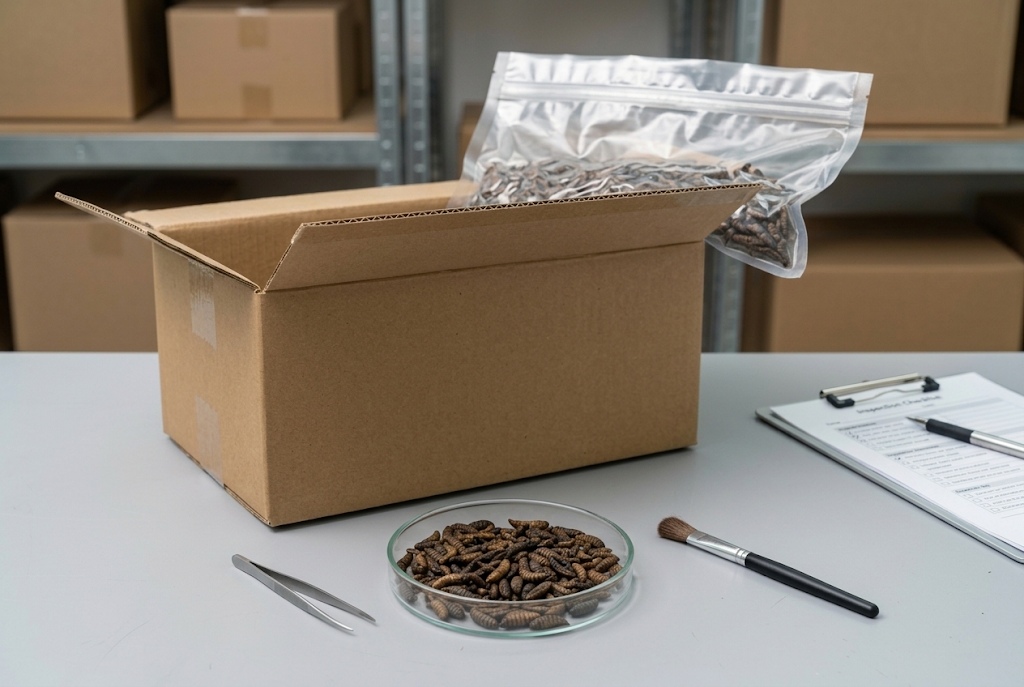
A pre-order sample should represent the commercial grade being quoted rather than a hand-selected group of the best-looking larvae. Buyers can record the sample reference, weight, product identity, drying method, size and color range, whole-body condition, fragments, odor, texture, cleanliness, moisture, and packaging.
When practical, retain an approved reference sample under suitable sealed storage conditions. Controlled photographs can provide additional documentation, but they should not replace the physical sample where appearance and product condition are important purchasing criteria.
The approved sample, written specification, and commercial quotation should describe the same product. This reduces disputes caused by subjective terms such as “premium,” “clean,” “large,” or “high quality.”
10. Build a Clear RFQ
A detailed RFQ makes quotations easier to compare. Buyers sourcing bulk dried BSFL should provide the destination country, application, required commercial form, expected size or appearance, drying preference where relevant, moisture requirements, fragment tolerance, testing requirements, packaging, target quantity, purchase frequency, and preferred Incoterm.
Mandatory requirements should be communicated before sample and quotation approval. If a buyer has a specific color preference, microbiological limit, package weight, or documentation requirement, it should be defined early rather than introduced after production.
11. Compare Suppliers on the Same Commercial Basis
Two quotations for dried BSFL may represent substantially different products. Compare the product identity, grade, size, moisture, testing, packaging, quantity, and trade terms before concluding that one supplier is cheaper.
| Comparison Area | What to Confirm | Commercial Impact |
|---|---|---|
| Product identity | Species, life stage and form | Application and import suitability |
| Whole-body grade | Whole larvae vs fragments | Presentation and usable yield |
| Color & size | Agreed commercial range | Consistency and downstream use |
| Moisture | Method, unit, and batch | Storage and transport condition |
| Cleanliness | Foreign matter controls | Quality acceptance |
| Testing | Batch-specific results | Documentation and risk control |
| Packaging | Unit weight and protection | Moisture and handling |
| Trade terms | Incoterm and shipment scope | Actual landed cost |
The useful comparison is not simply price per kilogram. Buyers should consider usable yield, packaging, freight, quality consistency, documentation, and any additional sorting or repacking required after arrival.
12. Pre-Shipment and Arrival Inspection
Before shipment, confirm that the approved sample, specification, batch documents, labels, and packaging correspond to the same commercial lot. Carton or outer-pack condition and pallet protection should also be reviewed before loading.
After arrival, inspect package integrity, lot codes, moisture exposure, abnormal odor, clumping, visible foreign matter, whole-body condition, and differences among selected packages. If a deviation is found, preserve representative evidence and document package numbers, photographs, sample weights, and inspection timing before discussing corrective action with the supplier.
Frequently Asked Questions
What is bulk dried BSFL?
Bulk dried BSFL refers to dried black soldier fly larvae supplied in commercial quantities for B2B applications. Buyers should distinguish whole dried larvae from BSFL meal, powder, oil, and other processed derivatives.
What should buyers check when sourcing bulk dried BSFL?
Buyers should evaluate product identity, whole-body condition, size, color, moisture, cleanliness, testing, packaging, quantity, destination requirements, and trade terms.
Should dried BSFL be completely black?
Not necessarily. Commercial dried BSFL can exhibit natural brown, dark brown, and deep brown-black variations depending on the raw material and processing conditions. Buyers with specific appearance requirements should establish an acceptable range using representative samples.
What documents should B2B buyers request?
Depending on the application and destination, buyers may request a product specification, batch-linked COA, relevant test results, origin and identity information, lot details, packaging information, and applicable export or health documentation.
How should buyers compare dried BSFL suppliers?
Compare quotations against the same product identity, commercial grade, moisture requirement, testing scope, packaging, quantity, and Incoterm. Price per kilogram alone does not show the complete commercial value
Final Buying Review
Successful sourcing of bulk dried BSFL starts with a clear definition of the actual product being purchased. Product identity, whole-body condition, size, color, moisture, cleanliness, batch testing, and packaging should be treated as connected but separately measurable purchasing criteria.
A stronger procurement process combines a representative sample, a written specification, batch-linked documentation, agreed packaging, and shipment inspection. This makes supplier quotations easier to compare and reduces disagreements caused by subjective quality descriptions.
To discuss the whole dried BSFL supply, contact BulkInsects with your destination, application, required quantity, product grade, packaging, and testing requirements.