
For B2B buyers, evaluating dried BSFL quality requires more than looking at whether the larvae appear dry or dark. Whole dried BSFL can naturally vary in size, color, shape, and degree of breakage, so a useful commercial inspection should separate normal variation from conditions that may affect product acceptance.
The most important areas are usually whole-body condition, color, cleanliness, moisture, texture, and foreign matter. These characteristics should be evaluated against a representative sample and an agreed commercial specification rather than judged from a single photograph or a small selection of unusually good-looking larvae.
1. Start With the Whole-Body Condition
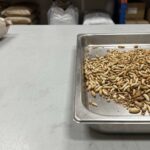
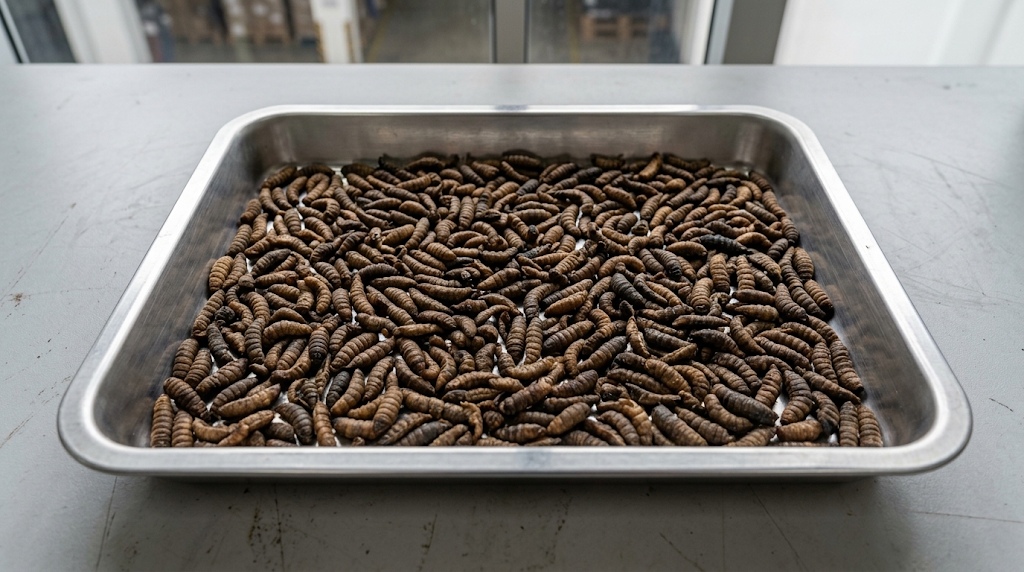
For whole dried BSFL, the first quality question is whether the supplied material still presents as recognizable larvae. Buyers should examine the proportion of recognizable whole bodies, larvae with detached or damaged sections, larger broken pieces, and small fragments or fines.
Natural breakage can occur during drying, sorting, packaging, loading, and transportation. A detached body section or leg should not automatically be treated as foreign matter, while excessive fragmentation may reduce the commercial value of a product sold specifically as whole dried larvae. The buyer and supplier should therefore define what “whole” means before sample approval.
When comparing bulk dried BSFL, it is also useful to specify whether the whole-body condition is assessed by weight or by count. These methods can produce different results because larger larvae and fragments do not contribute equally to the total weight.
2. Evaluate Color Without Treating It as a Simple Quality Score
Color is one of the easiest characteristics for a buyer to inspect, but it should not be used as a standalone quality score. Dried BSFL can naturally range from brown and dark brown to deeper brown-black shades depending on the raw material, life stage, drying conditions, and handling.
A buyer should instead establish an acceptable commercial color range from representative samples. Significant deviations should be investigated, particularly when the product shows unusual blackening, scorching, staining, visible surface abnormalities, or a substantial change from the approved reference sample.
For commercial whole dried BSFL, consistency is generally more useful than demanding one exact shade. If appearance is important to the final application, the acceptable color range should be documented as part of the product specification rather than left to subjective descriptions such as “light,” “dark,” or “premium.”
3. Check Cleanliness and Foreign Matter
Cleanliness should be evaluated separately from appearance. A visually dark or uneven batch can still be commercially acceptable if it meets the agreed requirements for foreign matter and other quality parameters, while a visually attractive batch can still have a cleanliness problem.
Inspect representative samples for soil, substrate residue, plant material, unrelated insects, plastic, metal, stones, and other foreign material. Also, look for excessive dust, unusual surface deposits, or material that does not appear consistent with the agreed product.
It is important to distinguish product fragments from foreign matter. Broken BSFL are still part of the dried insect product, whereas unrelated materials should be evaluated under a separate foreign-matter criterion. This distinction makes quality inspection more objective and helps prevent disagreements between buyers and suppliers.
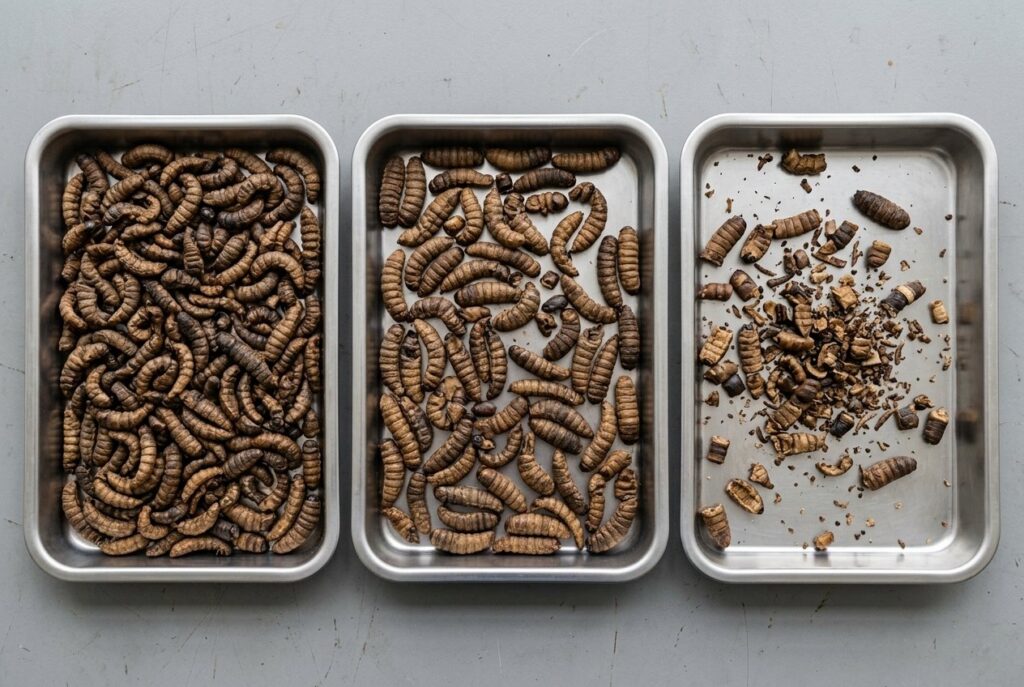
4. Look at Texture, Dryness, and Odor
Texture provides another useful indication of whether the product is consistent with the agreed drying process. Whole dried BSFL should have a dry, stable texture appropriate to the specified product. Unexpected softness, clumping, surface moisture, or an abnormal odor should be investigated rather than accepted simply because the larvae look dry externally.
Odor should also be evaluated against a representative reference sample. A natural dried-insect odor can vary by raw material and processing, but unusual, strongly abnormal, or clearly deteriorated odors warrant further investigation.
Visual inspection cannot replace measurement. Where moisture is commercially important, buyers should establish a measurable moisture requirement and agree on the testing method and reporting basis.
5. Use a Representative Sample for Quality Inspection
A representative sample is more useful than a small group of carefully selected larvae. The sample should reflect the commercial batch that the buyer will actually receive and should be large enough to show natural variation in size, color, whole-body condition, and fragments.
A practical inspection can record the proportions of recognizable whole larvae, damaged or partially broken larvae, larger fragments, and fines, along with observations of color, cleanliness, odor, and texture. Where numerical limits are required, the measurement method should be agreed in advance.
For repeat purchasing, retaining an approved reference sample can also help both sides evaluate future batches consistently. The reference should be linked to the product specification and, where applicable, batch documentation.
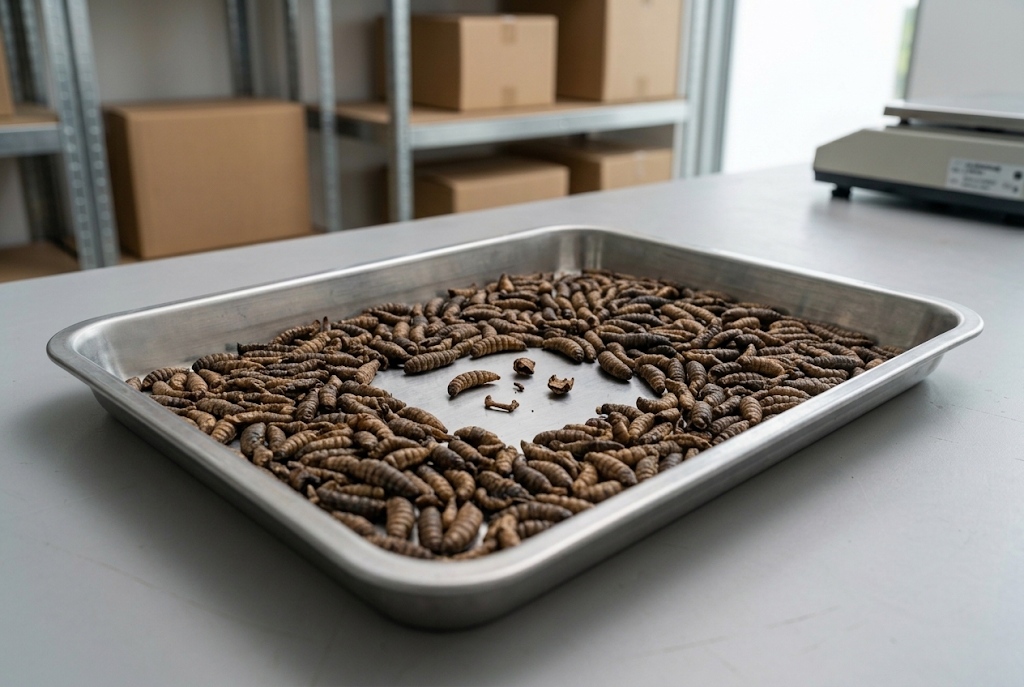
6. Connect Physical Quality With Batch Testing
Physical inspection is only one part of dried BSFL quality. Depending on the intended application and destination, buyers may also require moisture, proximate composition, microbiological parameters, contaminant testing, or other batch-specific analysis.
The documentation should correspond to the actual commercial lot. Buyers should check that the product name, lot number, test date, analytical method, and reported units match the material being purchased. A generic Certificate of Analysis may provide useful background information, but it should not automatically be treated as evidence for another production batch.
For U.S. animal-food applications, applicable preventive-control and current good manufacturing practice requirements may also need to be considered based on the product, facility, and intended use. FDA’s guidance explains that 21 CFR Part 507 establishes CGMP and risk-based preventive-control requirements for covered animal-food facilities. FDA guidance on Preventive Controls for Animal Food
7. Consider Packaging as Part of Quality Control
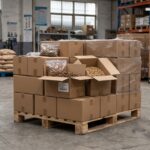
A dried insect batch can meet the buyer’s initial quality expectations and still arrive in poorer condition if the packaging does not adequately protect the product. Whole dried BSFL can be affected by moisture exposure, compression, excessive movement, and rough handling during transportation.
For this reason, buyers should review the inner liner, sealing method, package weight, carton strength, and pallet configuration together. If whole-body appearance is commercially important, packaging should be evaluated not only for moisture protection but also for its ability to reduce unnecessary breakage.
This is particularly relevant when comparing suppliers from different production locations. The delivered condition of the product—not just the condition of the pre-shipment sample—is part of the commercial quality assessment.
8. Build a Practical BSFL Quality Specification
A useful quality specification should turn subjective expectations into measurable or clearly observable requirements. For whole dried BSFL, the specification can cover:
- Product identity and species
- Whole-body condition
- Acceptable size range
- Color range
- Fragment and fines tolerance
- Cleanliness and foreign matter
- Moisture requirement
- Odor and texture
- Required testing
- Packaging configuration
- Lot identification and documentation
Not every buyer needs the same level of detail. A distributor selling recognizable whole larvae may place greater emphasis on appearance and whole-body condition, while a feed-related buyer may place more emphasis on analytical results and regulatory requirements. The specification should therefore reflect the actual commercial application.
9. Compare Suppliers Using the Same Quality Standard
A supplier comparison becomes much more meaningful when every quotation is evaluated against the same quality criteria. A product offered at a lower price may have a different whole-body grade, higher fragment content, different moisture, different packaging, or a different testing scope.
Instead of asking only “Which supplier has the lowest price?”, buyers should compare the usable product they expect to receive, the consistency of the commercial grade, documentation, packaging, and delivered cost.
For repeat procurement, the strongest process is to connect the approved sample, written specification, batch documentation, and shipment inspection. This gives both buyer and supplier a shared reference for what the commercial product is expected to look like and how it should perform.
Frequently Asked Questions
What is good dried BSFL quality?
Good dried BSFL quality should be evaluated against an agreed commercial specification. For whole dried larvae, key factors include recognizable whole bodies, acceptable color variation, cleanliness, appropriate dryness, controlled fragmentation, and consistent batch documentation.
Should whole dried BSFL be completely black?
No. Dried BSFL can naturally show brown, dark brown, and deeper brown-black coloration. A buyer should establish an acceptable commercial range rather than use one exact color as a universal quality standard.
How do I check whether dried BSFL are clean?
Inspect representative samples for soil, substrate residue, plant material, unrelated insects, plastic, metal, stones, and other foreign matter. Product fragments should be recorded separately from actual foreign material.
How much broken BSFL is acceptable?
There is no universal percentage that applies to every commercial application. The acceptable level should be agreed between buyer and supplier according to the intended use and whether the product is sold specifically as whole dried larvae.
Can appearance alone confirm dried BSFL quality?
No. Appearance is useful for physical inspection, but moisture, testing, cleanliness, documentation, and batch consistency should also be considered where relevant to the application and destination.
Final Buying Review
Evaluating dried BSFL quality is most effective when the buyer separates the major quality characteristics instead of relying on a single visual impression. Whole-body condition, color, and cleanliness should be inspected independently, while moisture, testing, packaging, and batch documentation provide additional information about commercial consistency.
For buyers sourcing whole dried BSFL in bulk, the objective is not to find larvae that all look identical. The objective is to establish a repeatable commercial standard that can be applied to samples, production batches, and delivered shipments.
For a quotation or sample request, provide your destination, application, required quantity, whole-body grade, packaging requirements, and quality specifications.