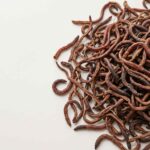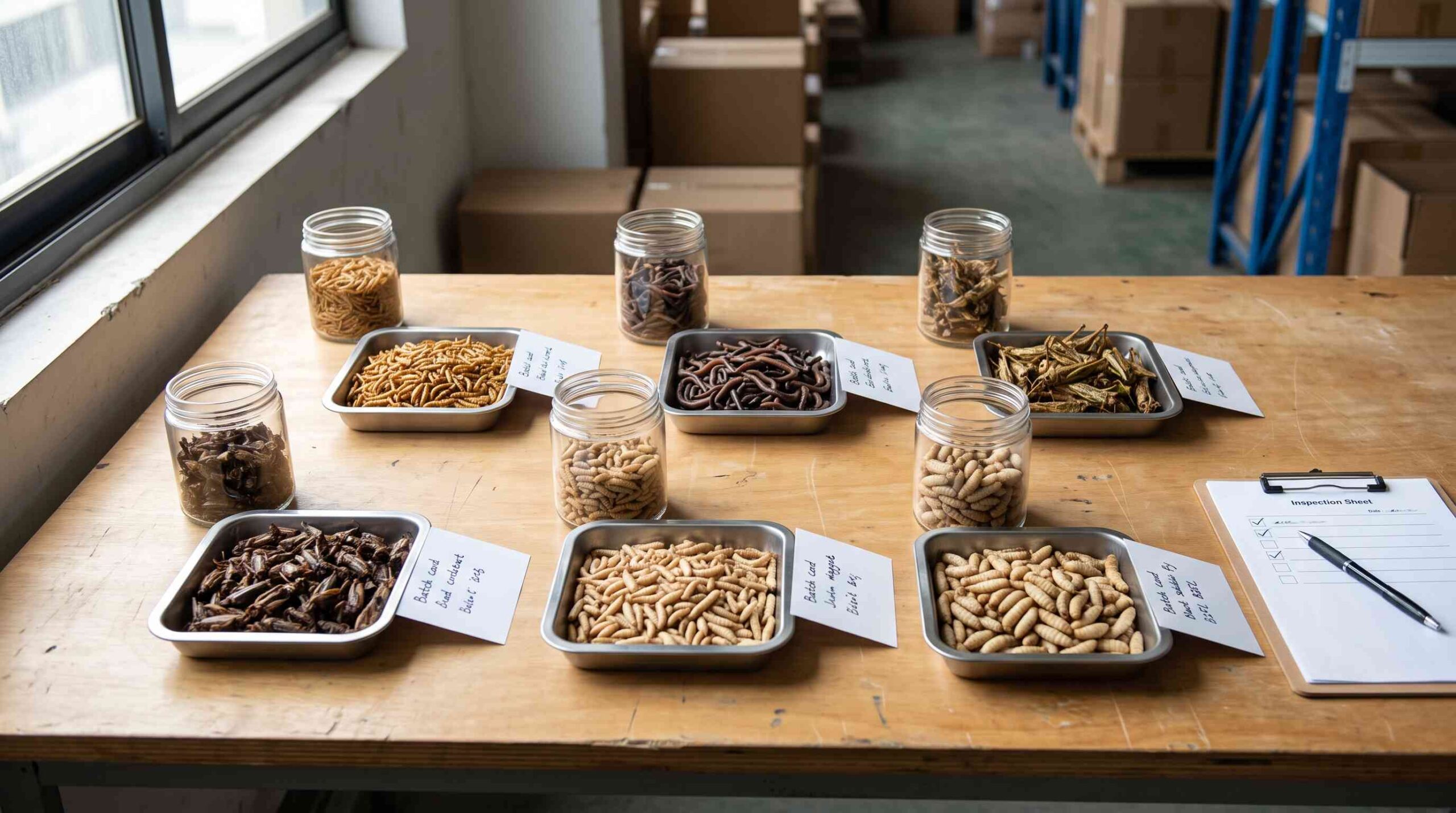

Dried insect samples help B2B buyers examine a product before committing to a commercial order. They can provide useful information about species, whole-product appearance, colour, cleanliness, size distribution, fragments, odour, and proposed packaging. They can also help buyers explain which characteristics matter most for resale, repacking, pet products, farming or feed-related use.
However, a sample is not automatically a guarantee for every future shipment. The value of the evaluation depends on where the sample came from, how it was selected, how it was packed, and whether the commercial order will use the same batch, a comparable batch, or a later production lot.
This guide explains how to review dried insect samples systematically, what information to request, and how to move from sample approval to a properly defined trial or bulk order.
Start With the Intended Application
A sample cannot be judged meaningfully without knowing what the buyer plans to do with the product. The same dried insect may be acceptable for one application but unsuitable for another.
For example:
- a distributor may prioritize consistent commercial grade and supply continuity;
- a repacker may focus on whole appearance, colour and low visible dust;
- a pet product business may need a recognizable species and a particular size range;
- a farm may place more weight on practical bulk handling and value;
- a feed-related buyer may require defined analytical and documentation checks; and
- an importer may need packaging and labels suited to local receiving procedures.
Before requesting a sample, provide the species, intended use, expected order quantity, destination, and packaging preference. This helps the supplier select a more relevant product grade instead of sending an attractive sample that does not match the commercial requirement.
Buyers comparing available options can first review the range of whole dried insect products and identify which species and processing options are relevant to their application.
Confirm What the Sample Represents
The first question should not be “Does it look good?” It should be “What exactly does this sample represent?”
Dried insect samples may be:
- taken from a currently available commercial batch;
- selected from a representative production lot;
- retained from an earlier batch;
- prepared as a general grade reference;
- selected to demonstrate an available processing method; or
- provided only to show the typical species and product form.
These are not equivalent. Ask for the sample or batch code, sampling date, product grade, processing method, and current availability. If the sample is linked to a specific lot, confirm whether that lot can support the planned order quantity. If it is a reference sample, confirm how the later commercial batch will be approved.
A well-presented sample may show what a supplier can offer, but it does not prove that an unlimited quantity of identical material is available. Whole dried insects are agricultural products, and natural differences can occur between batches.
Record the Sample Before Opening It
Create a receiving record before the package is opened. This provides evidence of how the sample arrived and prevents important identification details from being lost.
Record:
- supplier or source;
- delivery date;
- product and species name;
- sample or lot number;
- stated processing method;
- sample weight;
- packaging and seal condition;
- label information;
- photographs of the unopened sample; and
- any temperature, moisture, or transit issue visible on arrival.
If several suppliers are being compared, assign an internal sample number and use the same evaluation form for each. Consistent records make the comparison more objective and reduce the influence of packaging presentation or memory.
Evaluate Species Identity and Product Form
Confirm that the sample matches the requested insect and form. BulkInsects focuses on whole dried insects rather than live insects or insect powder, so the evaluation should consider whether the product remains recognizable and commercially suitable as a whole dried material.
Check:
- whether the species appears consistent with the requested product;
- whether the material is whole, fragmented or mixed;
- whether unrelated insect material is visible;
- whether the sample contains excessive non-product material; and
- whether size and physical form fit the intended application.
Visual inspection alone may not resolve every identity question. Where species identity is commercially or legally important, agree on the required supporting documents or verification method before the order.
Assess Appearance, Colour and Uniformity
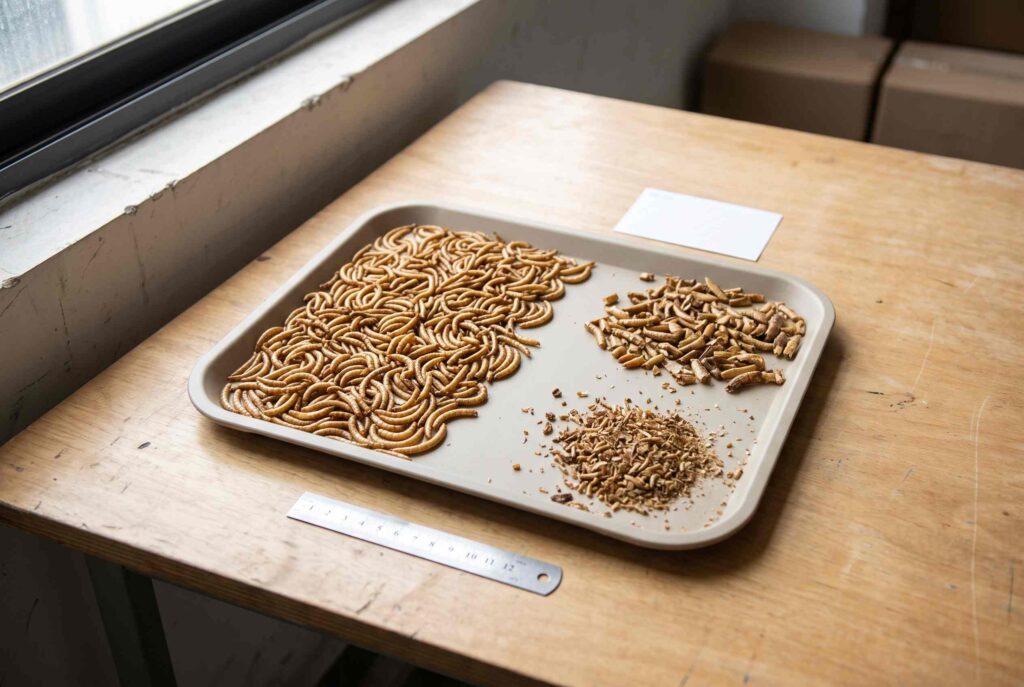
Spread the sample on a clean, neutral inspection surface under consistent lighting. Avoid judging colour through tinted bags or under strong warm lighting.
Review:
- overall colour range;
- dark, scorched or unusually pale pieces;
- consistency between different parts of the sample;
- visible surface damage;
- size distribution;
- whole-piece ratio;
- fragments and dust; and
- signs of clumping or compression.
Appearance requirements vary by product. Dried grasshoppers and crickets have fragile appendages, while mealworms, maggots, and black soldier fly larvae have different shapes and breakage patterns. Dried earthworms may require particular attention to cleaning and remaining soil or foreign matter.
Avoid approving a sample only because it looks exceptionally uniform. Ask whether it represents a standard commercial grade or a specially selected presentation. The approved characteristics should be described in measurable or reviewable terms wherever practical.
IMAGE 2 POSITION — insert immediately after this section and before the next H2, “Check Cleanliness and Foreign Matter.”
Check Cleanliness and Foreign Matter
Cleanliness is both a visual and commercial consideration. Examine the sample for soil, stones, plant material, packaging fibres, unrelated insects, and other visible foreign matter.
Use a shallow tray and inspect more than the top layer. Small fragments can settle during shipping, while lightweight material may remain near the surface. If cleanliness is important, record observations consistently rather than using vague descriptions such as “clean enough.”
Depending on the product and intended use, laboratory or specification measures may support the evaluation, but they do not replace visual inspection. An ash result, for example, cannot show the exact type and distribution of visible foreign material.
Review Breakage, Fragments and Dust
Breakage can occur during drying, sorting, packing, courier transport, and repeated handling. The sample packaging may also influence the result: a small rigid container can protect appearance better than the larger bags planned for a bulk shipment.
When evaluating fragments:
- allow the sample to settle before opening;
- empty the complete sample onto the inspection tray;
- separate obviously whole pieces, fragments, and fine material;
- photograph the result;
- record the method used; and
- ask how commercial packaging may change the result.
Do not claim a universal “zero breakage” standard. Buyers who need a high whole-piece ratio should state that requirement and confirm how it will be checked on the commercial batch.
Evaluate Odour and General Condition
The sample should be examined for unexpected odours, visible moisture, condensation, clumping or other signs of abnormal condition. Odour descriptions are subjective, so comparisons should be made by the same trained people where possible.
Do not taste the product as a routine quality test. If an unusual odour or condition is observed, isolate the sample and request clarification rather than continuing normal handling.
The product’s appearance and odour cannot establish microbiological condition, residues, moisture content or full regulatory suitability. Those questions require the relevant specifications, testing and documentation.
Review Moisture and Texture Carefully
Touch and texture can provide useful observations, but they are not a substitute for an analytical moisture result. A soft, brittle, or clumped sample may prompt further investigation, yet the cause cannot be identified from feel alone.
Ask:
- Is a batch moisture result available?
- What test method and reporting basis were used?
- Was the result produced for this sample’s batch?
- How was the sample sealed and stored?
- Did courier transport expose it to unusual humidity or temperature changes?
Our guide to dried insect quality control explains how physical observations, batch information, and test results should be considered together.
Decide Whether Laboratory Testing Is Needed
Not every preliminary sample needs the same testing panel. Testing should answer a defined purchasing, regulatory, or product-development question.
Possible areas may include moisture, selected nutritional indicators, microbiological items, ash, or other agreed parameters. The appropriate scope depends on the species, destination, application, buyer requirements, and stage of the purchasing process.
Sampling and sample preparation affect what a laboratory result represents. The FDA’s BAM Chapter 1 on food sampling and sample preparation provides methodological background on this principle. It is not a universal dried-insect testing protocol, and it should not be treated as proof that a sample or shipment meets a destination requirement.
Before testing, agree on:
- the purpose of the analysis;
- the batch represented;
- the sample quantity;
- who collects and seals the sample;
- the laboratory and method;
- units and reporting basis;
- comparison limits; and
- responsibility for cost and timing.
For a commercial order, dried insect batch testing should be linked to the batch being purchased rather than assumed from an earlier promotional sample.
Compare Sample Packaging With Bulk Packaging
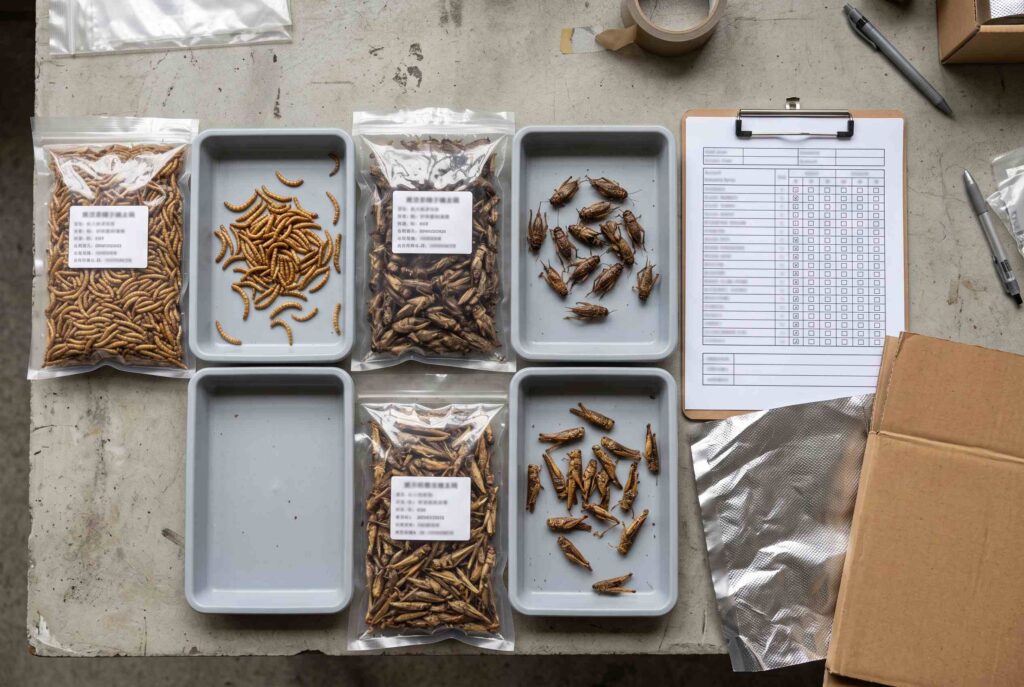
Courier samples are often packed in small sealed pouches, jars or rigid containers. The proposed commercial packaging may use larger inner liners, cartons or woven sacks. This difference can affect compression, fragments, moisture exposure and ease of handling.
Ask the supplier to explain:
- sample packaging versus commercial packaging;
- proposed net weight per bag or carton;
- inner-liner material and closure;
- outer-package type;
- label and batch information;
- pallet and wrapping arrangement; and
- any effect the bulk format may have on product appearance.
If repacking is planned, check whether the sample flows, measures, and handles appropriately in the buyer’s actual process. A visually acceptable sample may still be inconvenient for the intended packing equipment or pack size.
Use a Consistent Dried Insect Samples Scorecard
A simple scorecard allows buyers to compare dried insect samples on the same basis without pretending that every characteristic has the same importance.
| Evaluation area | Questions to record |
|---|---|
| Identification | Does the product and batch information match the request? |
| Species and form | Is it the requested recognizable whole dried insect? |
| Appearance | Are colour, size and physical form commercially suitable? |
| Whole pieces | Is the observed whole-piece and fragment balance acceptable? |
| Cleanliness | Is visible soil, plant material or other foreign matter present? |
| Odour and condition | Is there any unexpected odour, clumping or condensation? |
| Moisture information | Is a relevant result, method and batch reference available? |
| Packaging | Does the sample pack differ from the proposed commercial pack? |
| Documentation | Are grade, process, sample code and available reports clear? |
| Commercial fit | Does the sample suit the intended application and price level? |
Weight the scorecard according to the application. A repacker may give greater importance to whole appearance, while a farm or processor may prioritize different commercial characteristics. Keep photographs and written notes with the score rather than relying on the total number alone.
IMAGE 3 POSITION — insert immediately after this section and before the next H2, “Move From Sample Approval to a Trial Order.”
Move From Sample Approval to a Trial Order
Sample approval should lead to a defined next step rather than a vague expectation that all future goods will be identical.
Before placing the order, confirm:
- whether the approved sample came from the commercial batch;
- which sample characteristics become purchasing requirements;
- which values are references and which are agreed limits;
- the required quantity and grade;
- processing method;
- commercial packaging;
- batch testing and COA needs;
- destination and shipment timing;
- pre-shipment photographs or retained sample arrangements; and
- the process for resolving material differences.
A manageable trial order may be more informative than repeatedly requesting small samples. It shows how the product performs under commercial packing, freight, receiving, storage and use conditions.
For later repeat orders, keep the approved sample record, photographs, batch report and purchasing specification together. If a new batch differs naturally but remains within the agreed requirement, the buyer can evaluate the difference using documented criteria rather than memory.
What to Include in a Sample Request
A useful sample request should state:
- product or species;
- whole-product requirement;
- intended application;
- expected commercial quantity;
- destination country;
- preferred processing method, if relevant;
- target appearance or grade;
- packaging preference;
- tests or documents needed at this stage; and
- courier account or delivery arrangement, when applicable.
Avoid asking only for the “best sample.” That wording may encourage selection of a premium grade that is not aligned with the buyer’s price target or intended use. Request a sample representative of the grade being quoted.
Buyers can submit these details through the contact form and indicate that the enquiry is for a commercial sample. Sample availability, courier arrangements, documentation and the relationship between the sample and future batch should be confirmed for each request.
Common Sample-Evaluation Mistakes
Treating one sample as a permanent guarantee
A sample provides information about the material it represents. It does not eliminate natural batch variation or replace an agreed commercial specification.
Comparing different grades as if they were identical
Confirm processing, grade, batch, sample age, and packaging before deciding that one supplier is better based on appearance alone.
Evaluating only the top of the bag
Fragments and fine material may settle during shipping. Inspect the complete sample using a consistent method.
Ignoring the proposed commercial packaging
A small rigid sample container may not reproduce compression and handling conditions in larger bulk packaging.
Sending a sample to a laboratory without a clear question
Testing costs and results are more useful when the batch, purpose, method, units, and comparison criteria are defined in advance.
Failing to document approval
Photographs, notes and a scorecard provide a stronger purchasing reference than “sample approved” in an email.
Conclusion
Dried insect samples are most useful when buyers evaluate them against a defined application and record what the material represents. Appearance, colour, cleanliness, breakage, odour, moisture information, packaging and documentation should be considered together.
Sample approval is the beginning of commercial confirmation, not the end. Buyers should determine whether the later order comes from the same or a comparable batch, translate important observations into purchasing requirements, and confirm batch-specific testing or inspection where necessary. This approach turns a Sample CTA into a practical step toward a better-defined trial or bulk order.
Frequently Asked Questions
How much product should dried insect samples contain?
There is no universal sample size. It should be sufficient for the planned visual inspection, handling trial or laboratory work. Confirm the required quantity and purpose before dispatch.
Do dried insect samples represent the final bulk order?
Only when the sample is traceably taken from the commercial batch, and that batch remains available for the order. Otherwise, treat it as a grade or product reference and agree on commercial-batch approval.
Should buyers pay for samples and courier delivery?
Sample and freight arrangements vary by product, quantity, destination and enquiry. Buyers should confirm the sample cost, courier responsibility and whether any amount is credited to a future order.
Can a buyer request laboratory testing on a sample?
Yes, when the testing question, sample source, method, laboratory, cost, and reporting requirements are agreed. A result applies to the tested sample and should not automatically be extended to an unrelated future batch.
What happens after a dried insect sample is approved?
Confirm the commercial grade, quantity, packaging, batch relationship, testing, documents, destination, and shipment timing. A trial order can then verify performance under commercial conditions.