
Dried insect batch testing helps commercial buyers evaluate the product connected to a specific order rather than relying only on a general specification or an earlier sample. For wholesalers, distributors, resellers, pet product businesses, farms and feed-related buyers, this distinction matters because dried insects are agricultural products and natural variation can occur between production batches.
A specification sheet may describe the supplier’s usual product range. A sample may show the appearance of one available lot. Batch testing, however, provides selected analytical information about the batch sampled for testing.
Testing cannot remove every purchasing risk, and one report cannot describe every physical characteristic. It can nevertheless support a more structured approval process when it is combined with representative sampling, product inspection, batch identification and clear purchasing requirements.
This guide explains why batch testing matters, what buyers may need to check and how to interpret results without treating reference values as permanent guarantees.
What Does Batch Testing Mean?
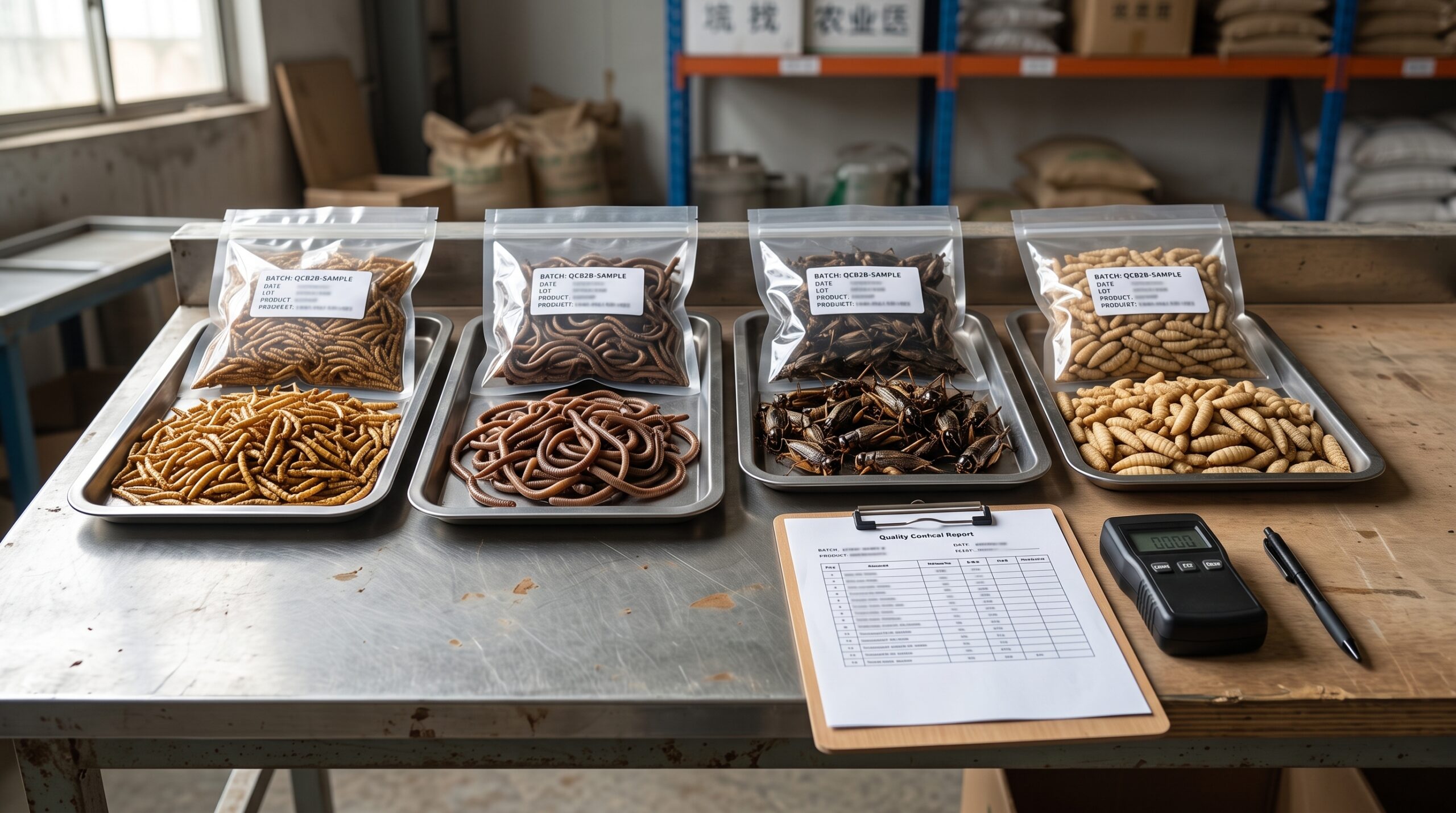
Batch testing means that an identified sample from a defined production lot or commercial batch is tested for selected parameters. The results should be connected to a batch number, sample code or another traceable reference.
This is different from:
- a generic product specification;
- a typical nutritional data sheet;
- a test report from a previous year;
- an unrelated sample certificate;
- a supplier’s marketing claim; or
- a laboratory report for another insect species.
The scope of testing is not automatically identical for every shipment. It may vary according to:
- insect species;
- product grade;
- processing method;
- intended application;
- buyer specification;
- destination market;
- shipment size; and
- agreed inspection requirements.
For this reason, buyers should define the relevant test items before the batch is packed or shipped.
Why General Specifications Are Not Enough
A general specification is useful during initial sourcing. It helps buyers understand the usual product form, available processing options and reference characteristics. However, it normally describes a product range rather than the actual result of every future batch.
Natural raw materials can vary because of:
- raw-material source;
- growing or production conditions;
- season;
- insect size and maturity;
- cleaning and sorting;
- drying conditions;
- storage time; and
- handling before packing.
Even when a supplier follows a stable process, some variation may remain. The buyer therefore needs to know whether a reported value is:
- a typical reference value;
- an agreed specification limit; or
- an actual result from the relevant batch.
These three types of information should not be treated as interchangeable. If you are unsure how they appear on a report, review our guide to reading a dried insects COA.
How Batch Testing Supports Commercial Purchasing
The purpose of testing is not simply to collect certificates. It should help answer specific purchasing questions.
Does the tested batch meet the agreed requirement?
Results can be compared with the buyer’s specification, destination requirement or another agreed reference. The method, unit and reporting basis must also be compatible.
Does the documentation match the shipment?
The batch number on the report should correspond with the product label, packing information or other relevant records.
Are important changes visible between orders?
Results from repeat shipments can help identify meaningful changes. Buyers should allow for normal variation while investigating results that fall outside agreed limits or differ substantially without explanation.
Is additional verification needed?
Testing may reveal the need for retesting, a new sample, physical inspection or clarification of the method used.
Can the buyer make a better release decision?
The final decision may combine analytical results with appearance, odour, cleanliness, packaging and other commercial criteria.
What Should Be Considered for Dried Insect Batch Testing?
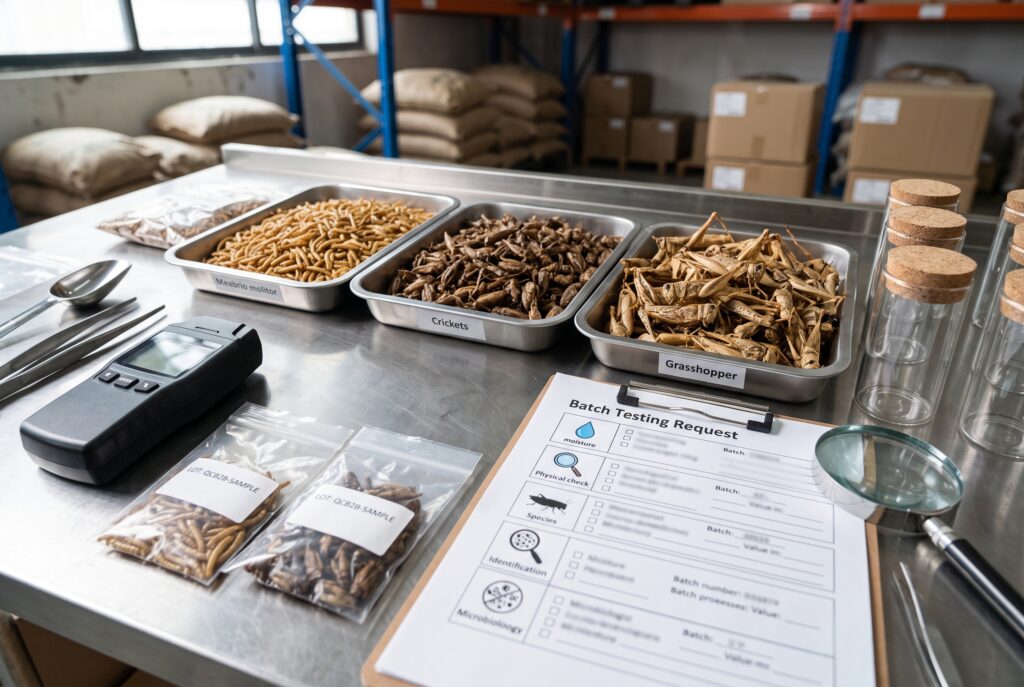
The correct testing panel depends on the order. Buyers should avoid copying a long list of tests from an unrelated product without confirming whether each item is applicable.
Common categories may include the following.
Moisture
Moisture is relevant to product condition, storage and shelf stability. Buyers should review the test result together with packaging integrity and storage conditions. A result obtained before shipment does not prevent later moisture absorption if bags are damaged or stored incorrectly.
Nutritional indicators
Depending on the commercial requirement, testing may include crude protein, crude fat, crude fibre, crude ash or other selected indicators. Results can vary by species, raw material, processing and reporting basis.
Buyers should confirm whether results are reported as-is or on a dry-matter basis before comparing suppliers or batches.
Microbiological items
Selected microbiological tests may be required according to the product, destination and intended application. Each result should be read together with the organism or count tested, method, sample quantity, unit and applicable limit.
The US FDA’s Bacteriological Analytical Manual illustrates why analytical methods and sample preparation matter in microbiological testing. Its inclusion here is a methodological reference, not a statement that one FDA method or test panel applies automatically to every dried insect shipment.
Ash, soil and foreign matter
Ash testing may be commercially relevant for products such as dried earthworms, where cleaning and removal of soil affect quality. However, an analytical ash result does not replace a physical check for visible foreign matter.
Contaminants or residues
Where required, a buyer may request selected contaminant or residue testing. The required items and limits should be checked against the destination market and intended use rather than assumed to be universal.
Physical quality
Some important characteristics are better evaluated through inspection than through laboratory analysis, including:
- percentage of whole pieces;
- fragments and dust;
- colour;
- odour;
- size distribution;
- visible impurities; and
- packaging condition.
The strongest approval process combines relevant test results with a representative physical sample.
Why Sampling Matters as Much as the Test Result
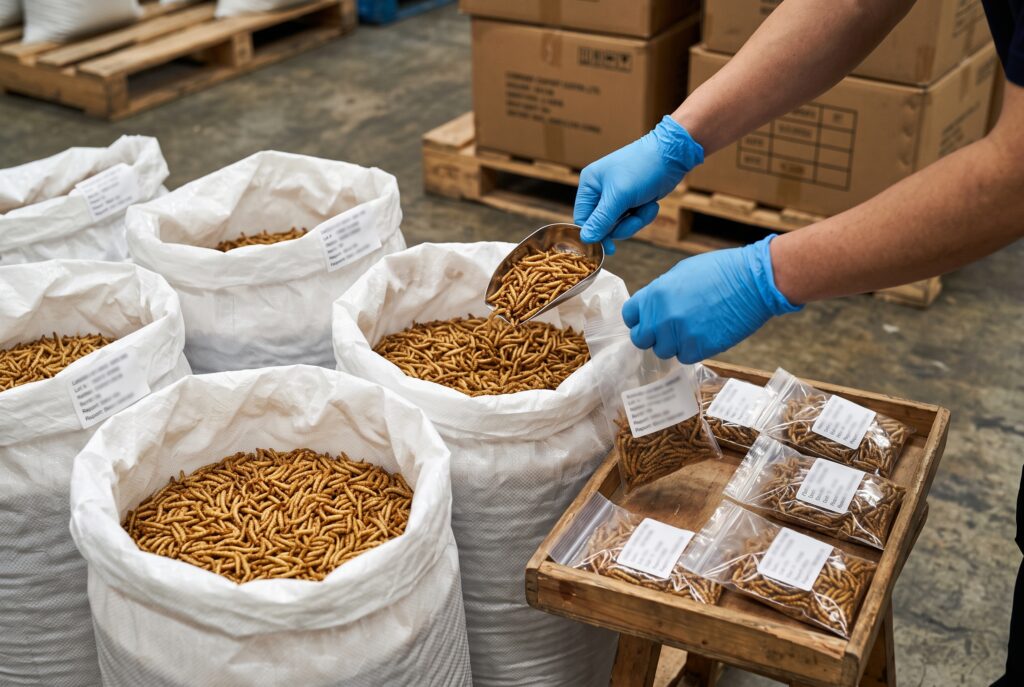
A laboratory result describes the sample received by the laboratory. Its value depends on whether that sample represents the commercial batch.
Buyers should ask:
- Who collected the sample?
- From how many bags or locations was it taken?
- Was the batch already mixed, sorted and packed?
- Was the sample sealed and labelled?
- Does its code match the testing request?
- Was it stored and transported appropriately?
- Can a retained sample be kept for comparison?
A small sample taken from one convenient location may not represent a large or uneven batch. The sampling approach should therefore reflect the product, shipment size, risk and purpose of testing.
For larger or higher-risk orders, the buyer may request witnessed sampling or independent inspection. This should be arranged before shipment and included in the commercial agreement because it can affect time and cost.
How to Compare Results Between Batches
Comparing batch reports can help buyers monitor consistency, but only when the comparison is technically meaningful.
Before comparing two results, check that they refer to:
- the same insect species and product form;
- comparable grades;
- the same units;
- the same reporting basis;
- the same or comparable test methods;
- representative samples; and
- similar stages of processing or storage.
A difference does not automatically mean that one batch is unacceptable. Determine whether both results remain within the agreed requirement and whether the variation is commercially important.
For example, a distributor focused on retail repacking may place greater weight on whole appearance and fragments than a farm purchasing a commercial feeding grade. A processing buyer may prioritize a different combination of analytical and physical characteristics.
Record keeping also matters. Keep the COA, batch label, sample photographs, inspection notes and purchase specification together. This provides a clearer reference for future orders and supplier discussions.
Batch Testing Before a Trial Order
A new buyer does not always need the most extensive possible testing panel before receiving an initial sample. A staged process is often more practical:
- Define the product, application and destination.
- Review available specifications and reference information.
- Request a representative sample.
- Evaluate physical appearance and packaging.
- Confirm which tests are required for the commercial batch.
- Agree on sampling, laboratory and document requirements.
- Place a manageable trial order.
- Review the batch results before shipment or release.
This process helps avoid paying for irrelevant tests while ensuring that commercially important requirements are addressed. It also gives the buyer and supplier a documented basis for repeat orders.
Testing requirements should be included when buyers prepare a complete dried insect RFQ, especially when reports are required before shipment.
Batch Testing for Repeat Orders
Repeat purchasing does not eliminate the need for quality control. The appropriate frequency and scope may change as the commercial relationship develops.
Buyers can consider:
- which checks apply to every batch;
- which tests are required periodically;
- whether destination-specific items apply to each shipment;
- when third-party testing is necessary;
- how retained samples are managed;
- what happens when a result falls outside the agreement; and
- how changes in raw material or processing are communicated.
A risk-based approach is usually more useful than requesting every possible test for every order. Higher-risk parameters, regulatory requirements and agreed critical limits should receive appropriate attention, while other checks may be handled through routine inspection or periodic verification.
Reliable communication is also part of the process. Buyers should understand how a potential non-conforming result will be reported and whether retesting, sorting, replacement or another response may be considered. This is one of the factors to evaluate when you choose a reliable dried insect supplier.
Common Batch-Testing Mistakes
Treating an old report as a current result
An earlier report may illustrate typical product characteristics, but it should not be described as the result for a new unidentified shipment.
Testing without defining the batch
A report cannot support traceability if the tested sample is not connected to a batch or lot reference.
Comparing numbers without checking methods
Different units, methods or reporting bases can make an apparent comparison misleading.
Requesting every test without a commercial reason
Unnecessary testing increases cost and lead time. Build the panel around the product, destination, application and agreed requirement.
Ignoring physical inspection
Laboratory data may not show breakage, colour, odour, visible impurities or damaged packaging.
Assuming one test panel fits every market
Import and use requirements can vary. Buyers should confirm current local requirements with the responsible authorities or qualified advisers.
Dried Insect Batch Testing Checklist
Use this checklist before approving testing or shipment:
| Review area | Question to confirm |
|---|---|
| Product | Is the insect species, form and grade clearly identified? |
| Batch | Is there a batch, lot or sample code? |
| Sampling | Does the sample reasonably represent the commercial batch? |
| Test panel | Are the selected items relevant to the order? |
| Method | Are the analytical method and reporting basis stated? |
| Unit | Are results and limits expressed in compatible units? |
| Requirement | Is the comparison limit agreed and applicable? |
| Laboratory | Is the testing source clearly identified? |
| Timing | Will results be available before the agreed release point? |
| Documentation | Do the report, labels and shipment records correspond? |
| Physical quality | Have appearance, fragments and impurities also been checked? |
| Follow-up | Is there a process for questions or non-conforming results? |
Use Testing as Part of a Complete Approval Process
Dried insect batch testing is most valuable when it answers defined purchasing questions and relates to an identifiable commercial batch. Buyers should confirm the sample, test items, methods, units and comparison limits rather than judging a report by appearance alone.
Testing should be combined with product inspection, packaging review, documentation checks and clear communication. Because dried insects are natural products, reference specifications can support early discussion, while final purchasing decisions should rely on the relevant batch and export testing arrangements.
BulkInsects coordinates whole dried insect supply through established production sources. Product specifications, samples, testing and documentation are discussed according to the insect species, destination, application and order requirements. We do not treat typical reference values as fixed guarantees for every future batch.
Planning a bulk order? Send the product, quantity, destination, application, packaging preference and required test items through our contact form.
Frequently Asked Questions
What is dried insect batch testing?
Dried insect batch testing means testing an identified sample from a defined batch for selected parameters. The report should be connected to a batch, lot or sample reference.
Is a product specification the same as a batch test report?
No. A specification describes expected or agreed requirements, while a batch report records results for the tested sample. A typical data sheet may provide reference values without representing a specific shipment.
Which tests are required for every dried insect shipment?
There is no universal testing panel for every product and market. Requirements depend on the insect species, intended application, destination, buyer specification and applicable import conditions.
Can batch testing guarantee the quality of an entire shipment?
Testing reduces uncertainty but does not eliminate all risk. The value of the result depends on representative sampling, correct methods and batch traceability. Physical inspection and packaging checks may also be required.
Should buyers arrange third-party testing?
Third-party testing may be appropriate when required by the buyer, destination, contract or risk level. The laboratory, test scope, sampling process, cost and timing should be confirmed before shipment.