
Buying bulk dried earthworms requires more than comparing price per kilogram. Earthworms naturally come into close contact with soil and organic material, so commercial buyers should pay particular attention to cleaning, visible impurities, product identity, drying consistency, and batch documentation. Whole-product condition and packaging also matter when the product will be repacked, distributed, or supplied to downstream customers.
Two quotations may appear to cover the same product while representing different grades. One may offer cleaner, more recognisable whole dried earthworms with tighter sorting. Another may contain more fragments, residual material or natural size variation. Testing scope, packaging configuration, and shipment terms can also change the real delivered value.
This guide explains how distributors, wholesalers, resellers, farms, aquaculture businesses, and pet-product companies can evaluate an offer before requesting a sample or placing a commercial order.
Key Takeaways
- Define the intended application and acceptable commercial grade before comparing prices.
- Give special attention to cleaning, soil removal, visible foreign matter and ash-related results.
- Evaluate whole-product condition, fragments, colour, odour and drying uniformity with a representative sample.
- Do not use appearance or touch as a substitute for moisture, microbiological or other required tests.
- Confirm packaging, batch identification, destination requirements and acceptance criteria in the RFQ.
1. Define the Intended Application First
The appropriate grade depends on how the product will be used. A distributor supplying visible whole earthworms may need recognisable shape, controlled fragments and consistent presentation. A buyer using the product as one component in an animal-feed application may accept broader natural variation while placing greater emphasis on cleanliness, moisture, testing and delivered cost.
Before sourcing, clarify:
- destination country and intended application;
- whole-product presentation requirements;
- acceptable size and colour variation;
- tolerance for fragments and fine material;
- required moisture, microbiological or compositional parameters;
- packaging size and material;
- order quantity, frequency and delivery terms.
Separate mandatory conditions from preferences. Product identity, cleanliness and required batch results may be essential, while a narrow colour range may only be a marketing preference. This prevents buyers from paying for a visual grade they do not need or accepting a cheaper grade that creates downstream complaints.
Buyers can review the available wholesale dried earthworms before requesting a grade-specific quotation or sample.
2. Confirm Product Identity and Commercial Form
The RFQ should identify the product clearly as whole dried earthworms and state whether fragments are acceptable. Avoid relying only on broad terms such as “dried worms,” which may be interpreted differently across suppliers and markets.
Ask the supplier to confirm:
- common product name;
- scientific or source identification where available;
- whole, broken or mixed commercial form;
- drying method offered;
- batch or lot identification;
- whether the sample represents the offered commercial grade.
Species and source can affect natural appearance, dimensions and composition. A buyer should therefore compare like with like and avoid setting a specification from photographs of an unrelated earthworm type. The goal is not to force an agricultural product into an artificial uniform shape, but to confirm that the supplied material matches the agreed identity and grade.
3. Cleaning, Soil Removal and Impurity Control
Cleaning is one of the most important distinctions when evaluating bulk dried earthworms. Because earthworms are associated with soil and substrate, inadequate separation or cleaning can increase visible residue, undesirable foreign matter and variability in analytical results.
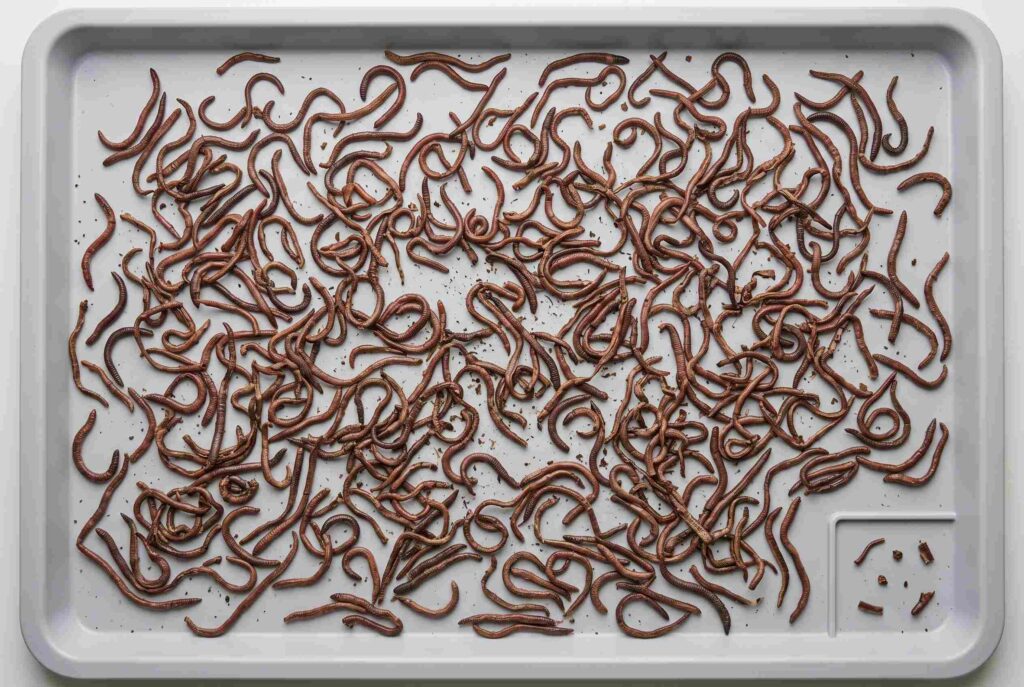
Spread the sample thinly over a clean, light-coloured inspection surface and look for:
- attached soil or gritty residue;
- stones, fibres or unrelated plant material;
- excessive loose particles at the bottom of the pack;
- non-earthworm material;
- abnormal dark clumps or contamination;
- packaging debris introduced after processing.
Visual inspection cannot identify every contaminant, but it provides a useful first screen. Record observations using photographs and a defined sample weight. A carefully selected handful is not enough to characterise a full shipment.
Buyers should ask how raw material is separated from its substrate, cleaned before drying, and sorted after drying. The answer does not need to disclose confidential production details, but it should give enough information to understand the main impurity-control steps.
4. Understand Ash Without Treating It as a Single Quality Verdict
Ash is the inorganic residue remaining after a laboratory method removes organic material. In dried earthworm purchasing, an unexpectedly high result may prompt questions about mineral content, residual soil, or sample composition. However, ash is not a direct measurement of “dirt,” and one number should not be interpreted without context.
When comparing results, confirm:
- whether the value is reported as-is or on a dry-matter basis;
- the analytical method and unit;
- the batch and sample represented;
- whether the same preparation method was used;
- the agreed specification or buyer requirement.
Natural mineral content contributes to total ash, so a buyer should not make a universal claim that all ash is contamination. Conversely, a clean-looking surface does not prove that a batch will meet an analytical requirement. Use visual cleanliness checks and laboratory information together.
If ash is commercially important, state the limit and reporting basis before ordering. Do not introduce the requirement only after the shipment arrives.
5. Evaluate Whole-Product Condition and Breakage
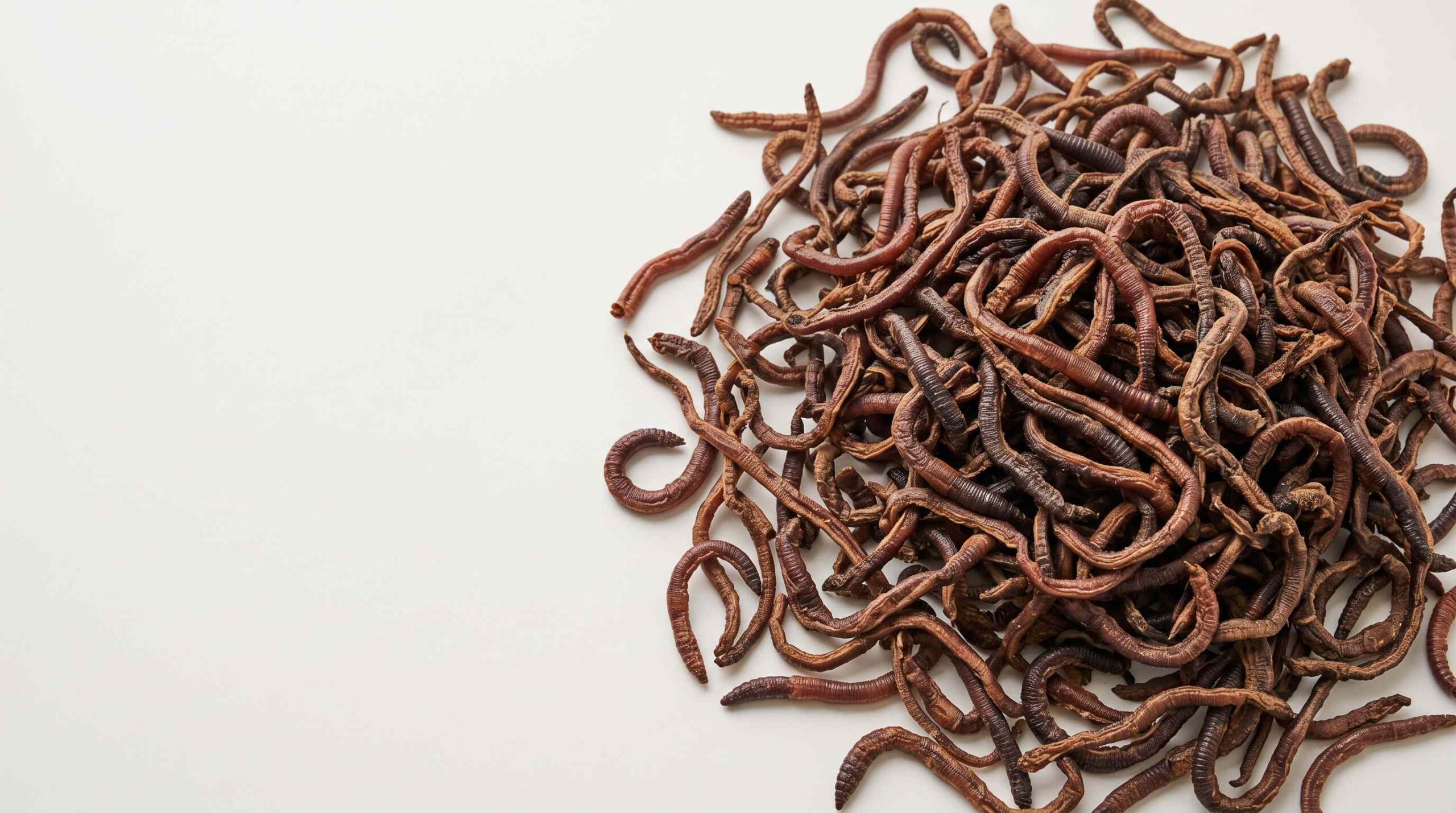
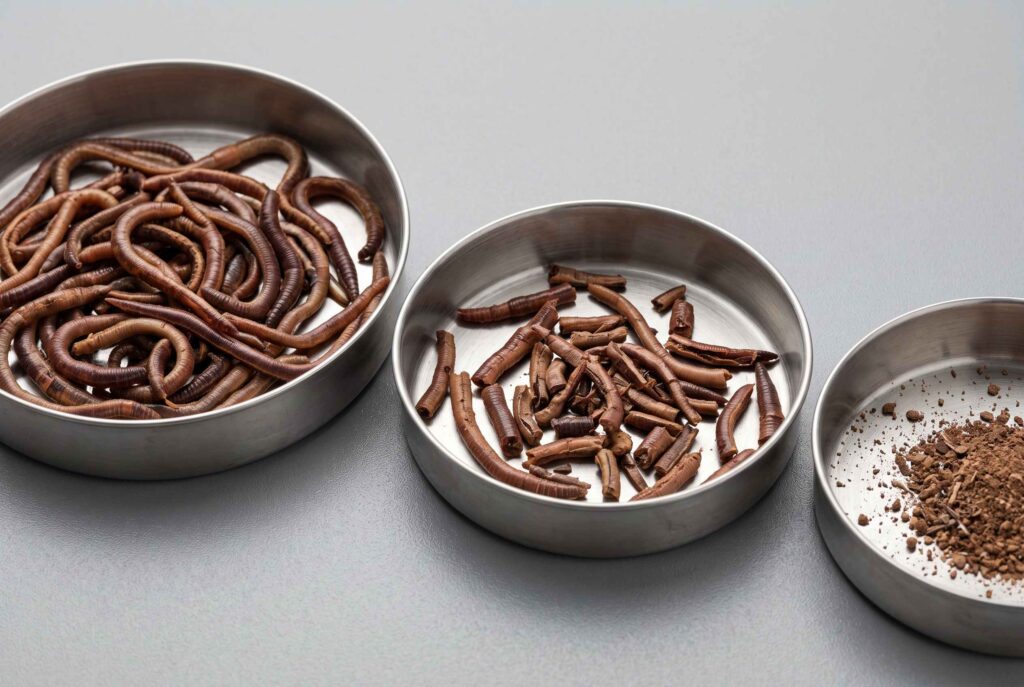
Whole dried earthworms are naturally more elongated and irregular than mealworms. Bends, coils, and some size variation can be normal. The commercial issue is whether the delivered product retains the recognisable form and physical condition required for the application.
Examine:
- proportion of recognisable whole or nearly whole pieces;
- broken lengths and small fragments;
- fines or powder at the bottom of the package;
- severe crushing or compression;
- excessive tangling that makes repacking difficult;
- differences between the top and bottom of the sample.
Define categories before measuring them. One buyer may classify a long partial piece as commercially whole, while another may call it broken. If intactness matters, agree on the sorting method, sample size and tolerance rather than using ambiguous phrases such as “mostly whole.”
Breakage can occur during drying, sorting, packing and international transport. Packaging configuration and pallet compression should therefore be evaluated together with the production sample.
6. Compare Colour, Odour and Texture Carefully
Dried earthworms may show natural brown, reddish-brown or deeper brown tones depending on source, pretreatment, drying conditions and storage. A darker colour is not automatically evidence of poor quality, and a lighter colour does not prove greater cleanliness or safety.
Compare samples under consistent neutral lighting. Look for unusual patchiness, scorched areas, big differences within one lot or a major departure from the approved reference sample.
Odour should be checked promptly after opening. The product may have a characteristic natural odour, but musty, sour, chemical or rancid notes should trigger further review. Record the observation and isolate the affected sample rather than trying to determine the cause from smell alone.
Texture can help identify possible handling or moisture problems. Note whether the material is dry and reasonably free-flowing, unusually soft, sticky, clumped, or excessively brittle. These observations are screening tools; they are not substitutes for measured moisture or batch testing.
7. Review the Drying Method and Its Commercial Effect
Sun drying and controlled heat drying can produce different combinations of colour, drying time, uniformity, capacity, and cost. The method name alone does not establish the finished grade.
When reviewing a process option, consider:
- uniformity of the dried product;
- protection from environmental contamination;
- weather dependence and production consistency;
- degree of heat exposure;
- sorting and inspection after drying;
- final moisture verification;
- availability at the required scale.
Controlled heat drying may offer more repeatable processing conditions, while sun-dried material may have different commercial availability or appearance. Either option still requires evaluation against the agreed specification.
Avoid claims such as “sun dried is more natural” or “heat dried is always safer.” Safety and quality depend on the complete process, starting material, controls, packaging, and batch results—not a marketing label.
8. Moisture and Drying Uniformity
Moisture affects handling, storage decisions, and packaging requirements. A sample that feels dry can still differ from another batch in measured moisture, and uneven drying may not be obvious from a quick visual inspection.
For bulk dried earthworms, review:
- batch-specific moisture result;
- unit and test method;
- sampling basis;
- agreed specification limit;
- evidence of clumping or condensation;
- packaging barrier and storage conditions.
Long, folded pieces can create variation within a sample, so representative sampling matters. Do not test only the most intact or best-looking pieces. The guide to dried insect moisture explains the difference between moisture content, water activity, and physical dryness.
There is no responsible universal moisture number for every species, application, and destination. The buyer and supplier should agree on a measurable limit suitable for the product and order.
9. Check Batch Testing and Documentation
A physical sample cannot confirm microbiological, chemical, or nutritional parameters. Ask which tests apply to the offered batch and whether the report or COA can be linked to the lot being shipped.
Review:
- product and batch identification;
- sample or report date;
- laboratory or issuer information;
- parameters, methods, results and units;
- specification limits where applicable;
- reporting basis for compositional values;
- match between the document and commercial shipment.
Testing scope should reflect the destination, application, and buyer’s own compliance responsibilities. It should not be copied automatically from an unrelated product or market.
As a general animal-food quality reference, U.S. 21 CFR Part 507 covers current good manufacturing practice and related requirements for animal food. Buyers should not treat this U.S. regulation as a universal standard for every country; importers must confirm the requirements that apply to their specific destination and use.
10. Request a Representative Sample
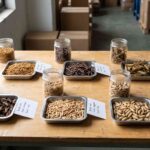
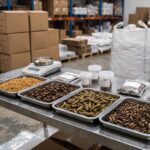
A sample is valuable only when its relationship to the commercial supply is clear. Ask whether it comes from the current batch, a typical production lot, or separate reference stock.
Evaluate the sample for:
- identity and grade;
- visible cleanliness;
- whole-product condition;
- fragments and fines;
- colour and size range;
- characteristic or abnormal odour;
- physical dryness and flow;
- packaging and label information;
- available batch documents.
Use the same sample size, lighting and sorting method when comparing suppliers. Record the result with notes and photographs. Where practical, retain a sealed approved reference sample.
A sample cannot guarantee all future shipments. It establishes a shared reference, while each commercial batch still requires the agreed checks. See the guide to dried insect samples for a fuller sample-approval workflow.
11. Packaging for Bulk Orders
Packaging must protect the selected grade through storage and transport. Long dried earthworm pieces can be crushed if cartons are overfilled, liners are unsuitable, or pallets experience excessive compression.
Confirm:
- inner bag or liner material;
- seal type and moisture protection;
- net weight per unit;
- outer bag or carton configuration;
- batch label information;
- units per carton and pallet;
- pallet protection and container loading;
- options for private-label or repacking operations.
Inspect the arriving shipment for wet cartons, punctures, open seals, compression damage, and inconsistent labels. A product approved at the sample stage can arrive in a different condition if packaging and handling are not aligned with the route.
12. Compare Quotations on the Same Basis
The lowest price may reflect a different commercial grade, more residual material, broader variation, different test coverage or less protective packaging. Normalise the quotations before choosing.
| Purchasing factor | What to compare | Why it matters |
|---|---|---|
| Product identity | Species/source information and commercial form | Prevents unlike products being compared |
| Cleaning | Soil, residue and visible foreign matter control | Central to earthworm product acceptance |
| Physical grade | Whole pieces, breakage, fragments and fines | Affects resale and repacking yield |
| Moisture | Result, method, unit and limit | Supports storage and acceptance decisions |
| Ash | Basis, method and agreed requirement | Helps interpret mineral and residual-material variation |
| Testing | Parameters and batch linkage | Connects quality claims to the shipment |
| Packaging | Liner, unit weight, carton and pallet | Protects condition in transit |
| Commercial terms | Quantity, lead time, Incoterm and destination | Determines delivered value |
Ask suppliers to quote against the same written specification. Otherwise, a price comparison may be misleading.
13. What to Include in a Dried Earthworm RFQ
A useful RFQ should state:
- product: whole dried earthworms;
- destination country and intended application;
- required quantity and purchase frequency;
- preferred drying method, if mandatory;
- acceptable appearance and size range;
- cleanliness and foreign-matter expectations;
- whole-product, fragment and fines requirements;
- moisture, ash and other required parameters;
- microbiological or destination-specific tests;
- packaging type and unit weight;
- sample and document requirements;
- target delivery time and trade terms.
Avoid asking only for “best quality and best price.” A detailed enquiry helps the supplier identify the appropriate grade and reduces revisions after sampling.
Frequently Asked Questions
What should buyers check when purchasing bulk dried earthworms?
Check product identity, cleaning, visible soil or foreign matter, whole-product condition, fragments, colour, odour, moisture, ash reporting, batch tests, packaging and shipment terms. The required grade should match the intended application.
Does a high ash result always mean the earthworms are dirty?
No. Ash includes naturally occurring inorganic material and is not a direct dirt measurement. An unusual result may justify reviewing cleaning, sampling, and source, but it must be interpreted using the method, reporting basis, and agreed specification.
Are sun-dried or heat-dried earthworms better?
Neither is universally better. Buyers should compare the finished grade, drying uniformity, cleanliness, moisture, tests, availability, and cost. The process name alone does not prove quality or safety.
Can a sample guarantee the quality of a commercial shipment?
No. A representative sample helps establish the approved grade, but future batches can vary. Link the purchase order to written acceptance criteria and review batch-specific information for each shipment.
What packaging is suitable for bulk dried earthworms?
Packaging should provide an appropriate inner barrier, secure closure, clear batch identification, and enough physical protection to limit moisture exposure and crushing. The correct unit size depends on the route and buyer’s handling process.
Final Buying Decision
Reliable sourcing of bulk dried earthworms combines a clear specification, representative sample, batch-linked documentation, and suitable packaging. Appearance matters, but earthworm buyers should give particular attention to cleaning, soil and impurity control, ash interpretation, moisture and physical condition.
Compare suppliers on equivalent grades and delivery terms. Define how whole pieces, fragments, visible residue, and required test results will be evaluated before shipment. This makes the quotation more meaningful and creates a practical basis for repeat orders.
To request a product discussion, sample, or quotation, contact BulkInsects with your quantity, destination, application, preferred grade, packaging, and testing requirements.