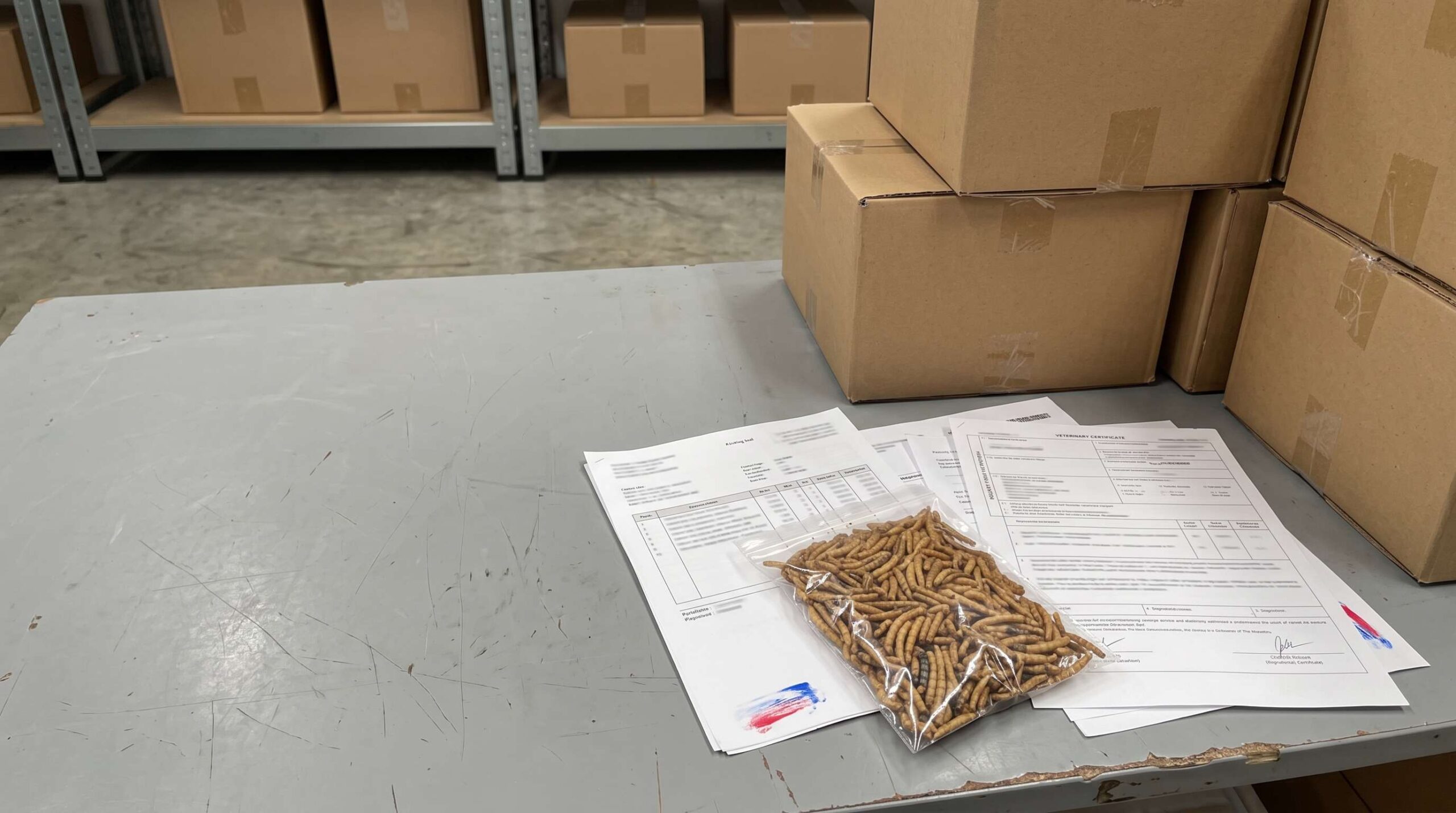

For B2B buyers, importing bulk insects is not simply a matter of arranging freight and presenting a commercial invoice. Whole dried insects intended for animal feed, pet-related applications, or other commercial uses may be subject to customs requirements, food or feed regulations, animal-health controls, official certification, and destination-specific import procedures.
The exact requirements can vary according to the insect species, processing method, intended use, country of origin, destination, importer status, and applicable customs classification. A document required for one shipment may not apply to another.
For this reason, import compliance should be reviewed before the commercial order is finalized. The exporter, importer, customs broker, and relevant authorities may each have different responsibilities, and those responsibilities should be clarified before the shipment leaves the country of origin.
1. Start With the Product, Use, and Destination
The first compliance question is not simply, “Can dried insects be imported?” Buyers should first define exactly what is being imported and how the product will be used.
Whole dried mealworms sold for bird food, dried black soldier fly larvae intended for animal feed, and dried crickets supplied for pet-related applications may be assessed under different regulatory or customs frameworks. Even when the physical products appear similar, intended use can affect the applicable import requirements.
Before requesting final shipping documents, buyers should therefore confirm the insect species, whole-product form, processing method, intended application, country of origin, and destination market. These details provide the basis for customs classification and regulatory review.
2. Separate Customs Documents From Regulatory Documents
A common source of confusion is treating every document associated with an international shipment as the same type of requirement. In practice, commercial, customs, and regulatory documents serve different purposes.
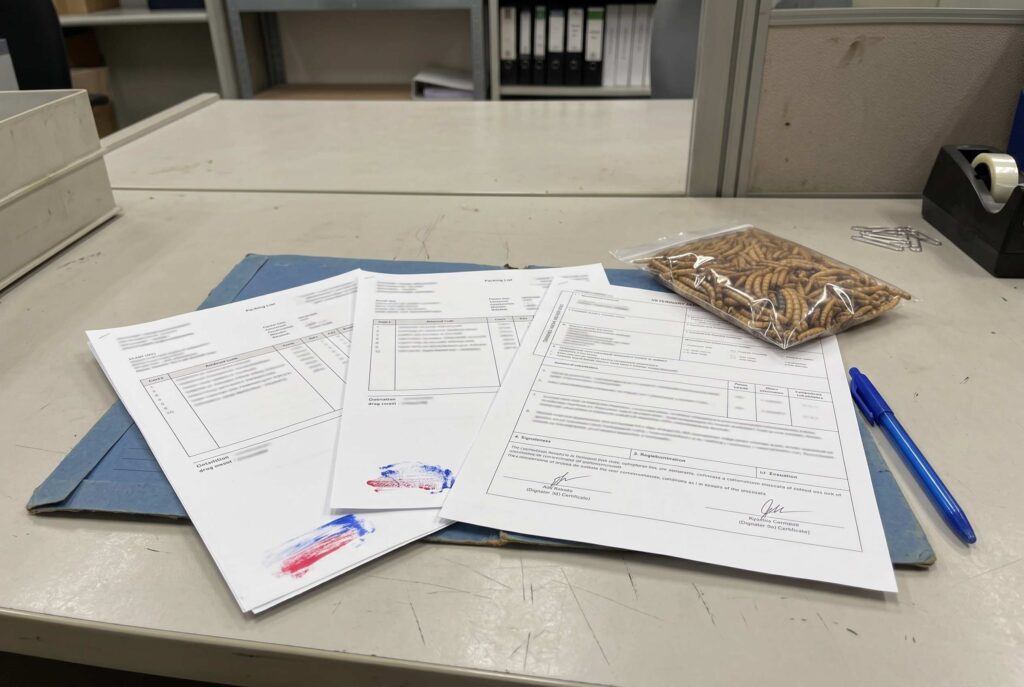
Commercial documents normally describe the transaction and shipment. These can include the commercial invoice, packing list, and transport document. Customs authorities use shipment information for classification, valuation, and clearance, while regulatory authorities may require separate certificates or permits concerning food, feed, animal health, or product safety.
Buyers should therefore avoid asking a supplier only for “all certificates.” A better approach is to identify which documents are required for customs clearance, which are required by the relevant regulatory authority, and which are additional commercial quality documents requested by the buyer.
3. Commercial Invoice, Packing List, and Transport Documents
The commercial invoice is one of the fundamental documents in international trade. It normally identifies the seller and buyer, describes the goods, states quantity and value, and records the applicable trade terms.
The packing list provides additional shipment information such as package count, net and gross weight, package dimensions, and packing configuration. The transport document will depend on the shipping method and may include a bill of lading for ocean freight or an air waybill for air shipments.
These documents should describe the shipment consistently. Differences in product name, quantity, weight, or consignee information across documents can create unnecessary questions during customs clearance.
4. Certificate of Origin: When It May Be Required
A Certificate of Origin or other proof of origin identifies where the goods originate for customs purposes. However, buyers should not assume that the same form of origin documentation is mandatory for every shipment.
Origin can affect customs procedures, tariff treatment, and the application of particular trade measures. In the EU, proof of origin can be relevant to both non-preferential origin and preferential tariff treatment, depending on the goods and applicable trade arrangements. EU Access2Markets also identifies commercial invoices, transport documents, and, where applicable, health or inspection certificates among documents that can accompany customs declarations.
Before shipment, the importer or customs broker should confirm whether a specific Certificate of Origin, origin declaration, or other proof is required for the actual product and trade route.
5. Health and Veterinary Certificates
For certain animal-origin products, an official health or veterinary certificate may be required by the importing authority. Such certificates differ from a commercial Certificate of Analysis because they are typically linked to government certification and import controls rather than to product testing alone.
The exact certificate requirement depends on the destination and the regulatory status of the product. Buyers should therefore avoid requesting a generic “Health Certificate” without first confirming which official certificate model, statements, or competent-authority endorsements are required.
Where an official certificate is required, the format and declarations should be confirmed before shipment. A certificate prepared in the wrong format may not satisfy the destination authority even if the underlying product information is accurate.
6. Importing Dried Insects Into the United States
For U.S.-bound shipments, several authorities can become relevant depending on the product. U.S. Customs and Border Protection handles customs entry, while the FDA regulates animal food and feed, including pet food. USDA APHIS may also regulate certain animal-origin materials.
This means that customs clearance alone does not establish regulatory compliance. A shipment may need to satisfy FDA requirements and, where applicable, USDA requirements in addition to standard customs procedures.
The importer should determine the product’s intended use and regulatory status before shipment rather than assuming that all dried insect products enter under one universal procedure.
7. FDA Requirements for Animal Food Imports
FDA states that imported animal food must meet the applicable U.S. requirements. Imported animal food must use ingredients acceptable for the intended animal-food use, and imported food is also subject to requirements such as food-facility registration and prior notice before arrival. FDA’s current animal and veterinary import guidance also identifies requirements such as Food Facility Registration, the FSVP importer DUNS number, and labeling among items verified at import.
For buyers importing animal food, this means that the commercial product description alone is not enough. The importer should determine whether the ingredient is acceptable for its intended use and confirm the relevant FDA requirements before the supplier prepares the shipment.
Responsibility should also be clearly separated between the exporter and the importer. Certain U.S. compliance obligations are importer-side requirements and should not be presented as documents that the foreign supplier can independently complete on the buyer’s behalf.
8. USDA APHIS and Animal-Origin Materials
USDA APHIS can also become relevant when products contain animal-origin material. FDA’s animal-food import guidance notes that a USDA APHIS Veterinary Services permit is generally required for certain animal food, pet food, aquaculture feed, or ingredients containing animal-origin material from countries affected by livestock diseases of concern to the United States.
However, buyers should not assume that every dried insect shipment automatically requires the same APHIS permit. The product, processing, origin, and intended use should be checked against current USDA requirements, and the importer should confirm whether a permit or supporting government certification applies to the specific shipment.
This review should take place before production and shipping dates are finalized. If a permit is required on the importer side, discovering that requirement after cargo has already departed can create avoidable delays and storage costs.
9. Importing Dried Insects Into the European Union
EU imports can involve customs requirements together with food, feed, and animal-health controls. The applicable route depends on the product classification, intended use, and regulatory category.
Buyers should first determine whether the dried insect product falls under requirements that include official controls or certification. The appropriate EU member-state authorities, customs representative, and importer should confirm the specific conditions applicable to the product before shipment.
EU rules concerning animal proteins and feed also distinguish between particular materials and target animal species. The European Commission has, for example, revised feed-ban rules to allow certain insect-derived processed animal proteins in specified non-ruminant feed uses, illustrating why intended use matters in determining regulatory treatment.
10. TRACES and Official Certification
The European Commission’s TRACES system supports official certification and controls for animals, animal products, and certain food and feed consignments entering or moving within the EU. Where EU legislation requires an official certificate, TRACES can be used to issue certificates, pre-notify, and record controls.
This does not mean that every shipment of dried insects uses the same TRACES document. The applicable certificate and control procedure depend on the product and regulatory category.
For commercial buyers, the important step is to confirm whether TRACES pre-notification, an official certificate, or border control procedures apply before shipment. The importer and competent authority should resolve this before the exporter prepares final documentation.
11. HS Classification, Importer Responsibility, and Customs Clearance
Correct customs classification is important because the HS or tariff classification can influence duties, documentary requirements, and customs treatment. Buyers should not select an HS code solely because another company has previously used it for a broadly similar insect product.
The importer or customs broker should confirm the classification according to the actual product description and intended use. Where uncertainty exists, advance clarification with the appropriate authority or customs professional can reduce the risk of discrepancies at entry.
The supplier should provide accurate product information, but customs and import compliance is a shared process. The buyer remains responsible for confirming destination requirements with the relevant importer, broker, and competent authorities.
12. Build a Pre-Shipment Compliance Checklist
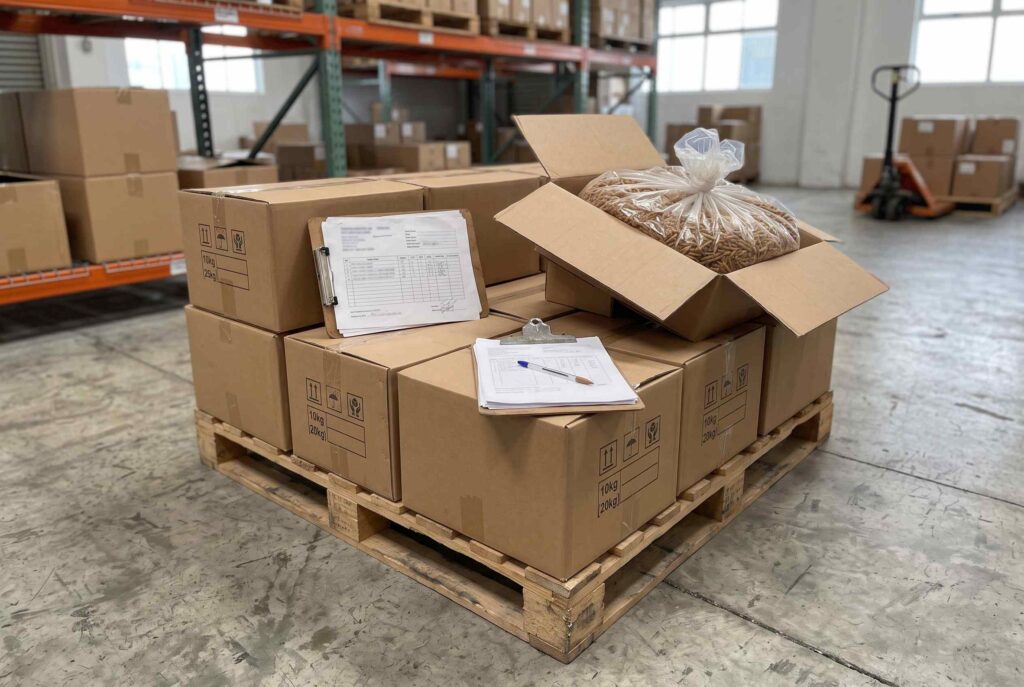
Before cargo is released for export, the buyer and supplier should review the required documents against the actual shipment rather than relying on a generic checklist copied from a previous order.
At a minimum, the commercial parties should verify the product description, species where relevant, quantity, packaging, invoice, packing list, transport documentation, and agreed quality documents. They should then confirm whether proof of origin, an official health certificate, an import permit, prior notification, or other destination-specific documentation is required.
The final check should ensure that names, quantities, weights, consignee information, product descriptions, and certificate references are consistent across the document set. Resolving inconsistencies before departure is generally much easier than correcting them while cargo is waiting for clearance.
Frequently Asked Questions
Do all bulk dried insect shipments require a Health Certificate?
No. Whether an official health or veterinary certificate is required depends on the product, origin, intended use, and destination regulations. The importer should confirm the applicable certificate before shipment.
Is a Certificate of Origin always required?
Not necessarily. Origin documentation requirements depend on the customs procedure, tariff treatment, destination, and applicable trade rules. Buyers should confirm the required form of proof of origin with their customs broker or importing authority.
What FDA requirements apply to dried insects imported as animal food?
Requirements depend on the product and use, but the FDA identifies areas including ingredient acceptability, food-facility registration, prior notice, labeling, and importer-side requirements such as FSVP compliance. The exact obligations should be confirmed for the shipment.
Does USDA APHIS regulate dried insect imports?
APHIS may be relevant to animal-origin materials. Whether an import permit or other requirement applies depends on the product, country of origin, processing, and intended use. Buyers should verify the specific product before shipment.
Does every EU shipment need to be entered in TRACES?
No. TRACES is used where applicable EU legislation requires official certification or controls. The product’s regulatory category determines which procedure and certificate, if any, apply.
Who should confirm import requirements before ordering?
The importer should work with its customs broker, the relevant competent authorities, and the supplier. The exporter can provide product and shipment documentation, but destination-specific import requirements should be confirmed by the importing side before shipment.
Final Buying Review
When importing bulk insects, compliance should be treated as part of the purchasing process rather than as paperwork added after the commercial order is finished. Product identity, intended use, origin, and destination should be established before the buyer confirms which customs, regulatory, and health documents are required.
A strong import process connects the commercial invoice and packing list with the correct product description, customs classification, regulatory documents, and shipment information. Certificates should be requested because they are actually applicable to the shipment, not simply because they appeared in another buyer’s checklist.
BulkInsects supports commercial buyers with product information, batch documentation, and export-document coordination for whole dried insect orders. Buyers can review our whole dried insect supply or contact BulkInsects with the product, intended use, destination, and quantity so that documentation requirements can be discussed before shipment.