
Choosing a reliable dried insect supplier is an important purchasing decision for wholesalers, distributors, pet product businesses, farms and feed-related commercial buyers. Product appearance, cleanliness, moisture, breakage, documentation and shipment consistency can all affect the commercial value of an order.
A low quotation alone does not show whether a supplier can deliver the required quality across multiple batches. Before placing a bulk order, buyers should evaluate the product, the supplier’s quality-control process and the practical details of packaging and export.
This guide explains the main points to check when comparing dried insect suppliers.
1. Confirm That the Supplier Understands Your Product Requirements
“Dried insects” is a broad product category. Requirements can vary according to insect species, intended use, destination market and customer expectations.
Start by confirming exactly what the supplier offers. Important questions include:
- Which dried insect species are available?
- Are the products supplied whole rather than as powder?
- Which drying methods are used?
- What grades or quality options are available?
- Can the supplier meet requirements for size, colour, cleanliness or breakage?
- Is the product intended for wholesale, repacking, farming or further processing?
A suitable supplier should be able to discuss these points clearly instead of treating every order as an identical commodity.
For example, a reseller may place greater emphasis on whole appearance and low breakage, while an aquaculture or poultry buyer may focus more on nutritional indicators, moisture and delivered cost. A pet product business may require a cleaner and more uniform grade for retail packing.
2. Evaluate the Actual Product, Not Only the Specification Sheet
Specifications are useful, but they should be considered together with a physical sample and batch information.
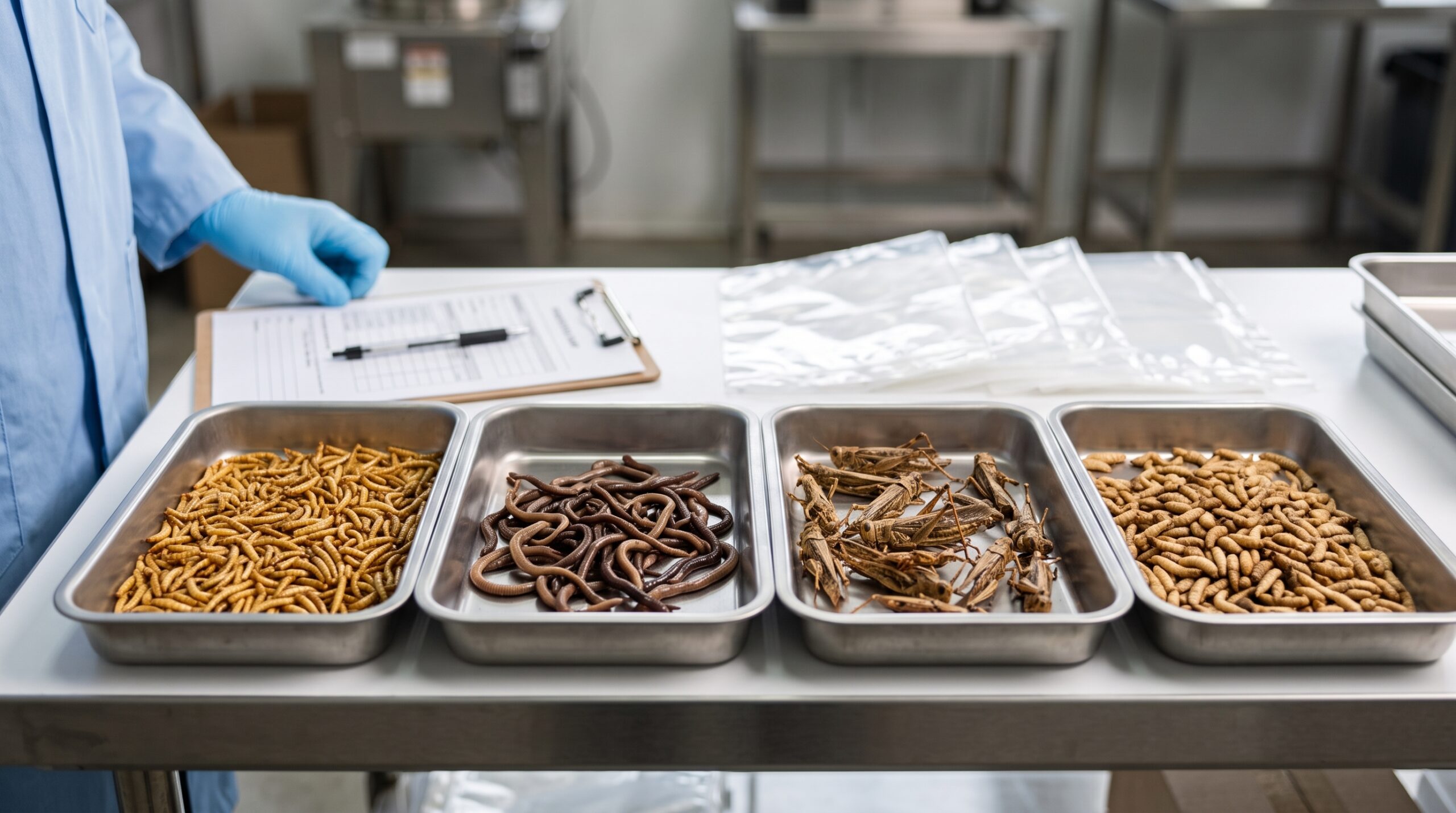
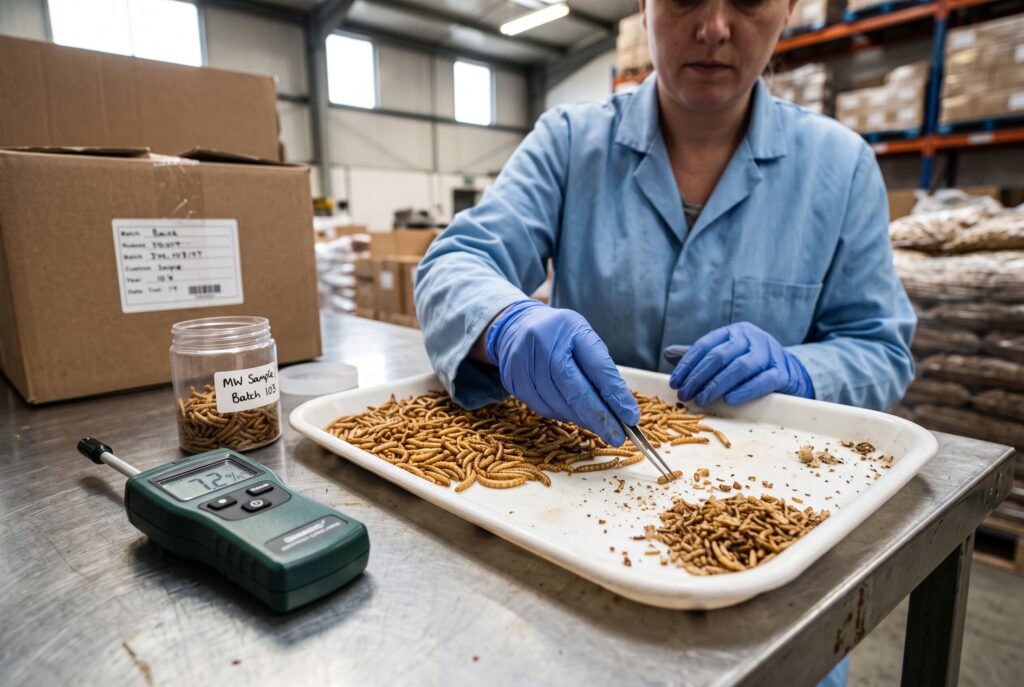
When checking a sample of whole dried insects, review:
- overall colour and odour;
- percentage of whole pieces;
- level of fragments and dust;
- visible soil or foreign matter;
- uniformity of size;
- dryness and storage condition;
- signs of mould, moisture damage or insect activity.
The sample should also be representative of the commercial grade being quoted. Buyers should ask whether the shipment will come from the same batch as the sample or whether final quality will be confirmed again before dispatch.
For products such as dried earthworms, cleaning and removal of soil may be especially important. For dried mealworms or dried grasshoppers intended for repacking, colour, whole-product appearance and breakage may have a greater influence on resale value.
3. Ask How Quality Is Controlled Between Batches
Natural agricultural products are not perfectly identical. Differences in raw material, season, processing and storage can affect colour, size and other characteristics. A reliable dried insect supplier should therefore have a practical method for evaluating each batch.
Ask the supplier how it manages:
- incoming raw-material checks;
- drying and moisture control;
- cleaning and impurity removal;
- screening or grading;
- storage conditions;
- batch identification;
- inspection before packing;
- retention of samples or production records.
The goal is not to obtain a vague promise that every shipment is “premium.” The goal is to understand which measurable or observable criteria the supplier uses to decide whether a batch meets the agreed requirement.
For repeat orders, agree on a reference specification and acceptable tolerance. This makes communication clearer when normal product variation occurs.
4. Review Testing and Documentation
Testing requirements depend on the product, intended use and importing market. Buyers should not assume that one standard certificate is suitable for every order.
Depending on the transaction, useful documents may include:
- a batch-specific Certificate of Analysis (COA);
- moisture or nutritional test results;
- microbiological or contaminant testing where applicable;
- product specification sheet;
- packing list and commercial invoice;
- certificate of origin or other export documents when required;
- inspection records or third-party test reports agreed for the order.
Ask whether documents relate to the actual shipment batch and whether third-party testing can be arranged when commercially necessary. Confirm the required test items before production or packing, because laboratory testing can add both cost and lead time.
Buyers are responsible for checking the import rules and permitted uses in their destination market. A supplier can support documentation, but should not replace the buyer’s local regulatory review.
5. Check Packaging and Protection Against Moisture and Breakage
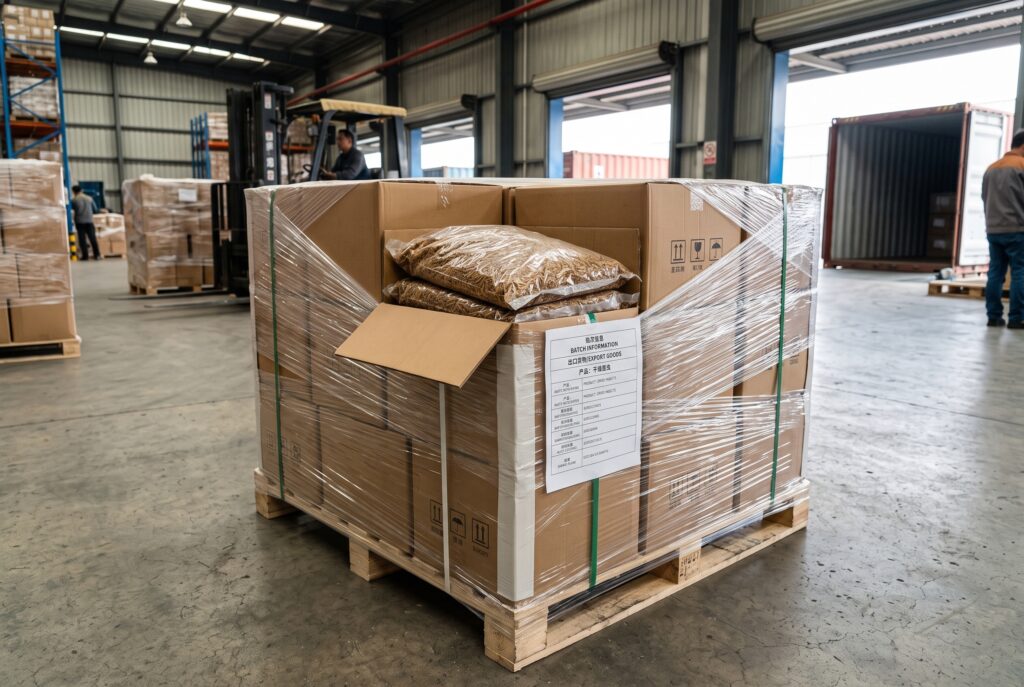
Packaging has a direct effect on the condition of dried insects when they arrive. Even a good production batch may lose value if the product absorbs moisture or is crushed during handling.
Discuss the following details before ordering:
- inner and outer packaging materials;
- net weight per bag or carton;
- sealing method;
- moisture protection;
- carton strength;
- pallet configuration;
- use of stretch film or other load protection;
- product and batch labels;
- container loading method.
Packaging should match both the product and the buyer’s operation. A distributor purchasing for repacking may prefer manageable bag sizes and clear batch labels. A larger farm or processing business may prioritise efficient handling and container utilisation.
If whole-product appearance is important, ask the supplier how it reduces compression and breakage during packing, palletising and container transport.
6. Verify Supply Capacity and Lead Time
A supplier’s ability to provide one good sample does not automatically prove that it can support recurring commercial orders.
Ask for realistic information about:
- normal order quantity;
- current monthly or seasonal availability;
- production and preparation lead time;
- stock versus made-to-order supply;
- capacity for repeat purchases;
- peak-season constraints;
- time required for testing and documents.
The answer should be specific to the product and quantity under discussion. Dried mealworms, dried earthworms, dried grasshoppers and dried maggots may have different supply conditions.
For a first transaction, a sample order or smaller commercial trial can help both parties confirm product quality, packing and shipment procedures before scaling up.
7. Assess Export and Communication Capability
International B2B orders require more than product preparation. The supplier should be able to coordinate commercial documents, packing details, freight requirements and pre-shipment confirmation.
Good communication normally includes:
- a clear quotation with product grade and packing basis;
- confirmation of Incoterms and shipment method;
- realistic production and dispatch dates;
- photos or videos of the relevant batch when requested;
- confirmation of labels and shipping marks;
- prompt notice if the batch or schedule changes;
- organised documents before shipment.
Pay attention to whether the supplier answers detailed questions directly. Incomplete or inconsistent answers during the quotation stage may indicate greater communication risk after payment.
8. Compare Quotations on the Same Basis
The lowest unit price is not always the lowest purchasing cost. Two quotations may refer to different product grades, levels of cleaning, packing methods, testing arrangements or trade terms.
Before comparing prices, make sure each quotation states:
- insect species and product form;
- grade or agreed specification;
- net weight and packaging;
- quantity and price basis;
- testing included or excluded;
- Incoterm;
- lead time;
- payment terms;
- quotation validity.
Also consider the possible cost of excess fragments, inconsistent quality, repacking, delayed documents or a rejected shipment. A slightly higher price may be commercially reasonable if it reduces these risks.
9. Use a Sample and Trial Order to Reduce Risk
A structured approval process is one of the most effective ways to select a dried insect supplier.
The process can include:
- Send a written purchasing requirement.
- Review the supplier’s specification and quotation.
- Request representative samples.
- Evaluate appearance, cleanliness and packaging.
- Confirm required tests and documents.
- Place a manageable trial order.
- Inspect the batch before shipment where appropriate.
- Record the result and reference standard for repeat orders.
Do not approve a supplier based only on polished marketing photographs. Request current batch images, labels, packaging details and supporting records relevant to the proposed order.
Supplier Evaluation Checklist
Use the following checklist when comparing potential suppliers:
| Evaluation area | Questions to ask |
|---|---|
| Product | Is the species, whole-product form and grade clearly defined? |
| Quality | How are moisture, impurities, fragments and appearance controlled? |
| Sample | Is it representative of the quoted commercial product? |
| Testing | Can batch-related reports or agreed third-party tests be supplied? |
| Packaging | Will it protect the product from moisture and excessive breakage? |
| Capacity | Can the supplier meet the required quantity and repeat-order schedule? |
| Traceability | Are batches, labels and shipment records clearly managed? |
| Export support | Can the supplier prepare and coordinate the agreed documents? |
| Communication | Are specifications, prices and timelines explained clearly? |
| Trial order | Can quality and service be verified before scaling up? |
Questions to Send to a Dried Insect Supplier
When requesting a quotation, provide the intended product, destination, quantity and packing preference. You can also ask:
- What commercial grades are available for this dried insect?
- What is the typical percentage of whole pieces and fragments?
- How are moisture and foreign matter controlled?
- Can you provide current batch photos and a representative sample?
- Which test reports and export documents are available?
- What packaging options do you recommend for this quantity?
- What is the current lead time?
- Can the final batch be checked before shipment?
- What information is required to prepare an accurate quotation?
Clear purchasing information helps the supplier recommend a suitable grade instead of quoting a product that may not match the intended use.
Choosing the Right Supplier for Long-Term Purchasing
A reliable dried insect supplier should provide more than an attractive price. Buyers need clear specifications, representative samples, batch-level quality evaluation, suitable packaging and dependable communication.
The strongest supplier relationship starts with a precise requirement and a transparent approval process. By comparing suppliers on the same basis and verifying the first order carefully, buyers can reduce quality disputes and build a more stable purchasing programme.
BulkInsects supplies whole dried insects for wholesalers, distributors, resellers, pet product businesses, farms and feed-related commercial buyers. Available products include dried mealworms, dried earthworms, dried grasshoppers and dried maggots, with product grade, packaging, testing and shipment details discussed according to each enquiry.
Planning a bulk purchase? Send us the product name, destination country, expected quantity, intended use and packaging preference. We will review the requirement and provide the relevant product information and quotation basis.
Recommended FAQ Section
What should I check before choosing a dried insect supplier?
Check the offered species and grade, whole-product condition, cleanliness, moisture control, testing, packaging, batch identification, supply capacity, export support and communication. A representative sample and trial order can help verify these points.
Can a dried insect supplier provide a Certificate of Analysis?
Availability depends on the product and order. Ask whether the supplier can provide a batch-specific COA or arrange agreed third-party testing. Confirm the required test items before ordering.
Why do prices differ between dried insect suppliers?
Prices can reflect differences in species, grade, size, cleaning, percentage of whole pieces, moisture, packaging, testing, order quantity and trade terms. Compare quotations using the same specification and delivery basis.
Should I request a sample before placing a bulk order?
Yes. A representative sample helps you assess appearance, odour, cleanliness, breakage and packing. For a new supplier, a manageable trial order provides a better test of batch consistency and export service.
What information should I include in a dried insect enquiry?
Include the product, required quantity, destination country, intended use, quality priorities, packaging preference and any testing or documentation requirements.