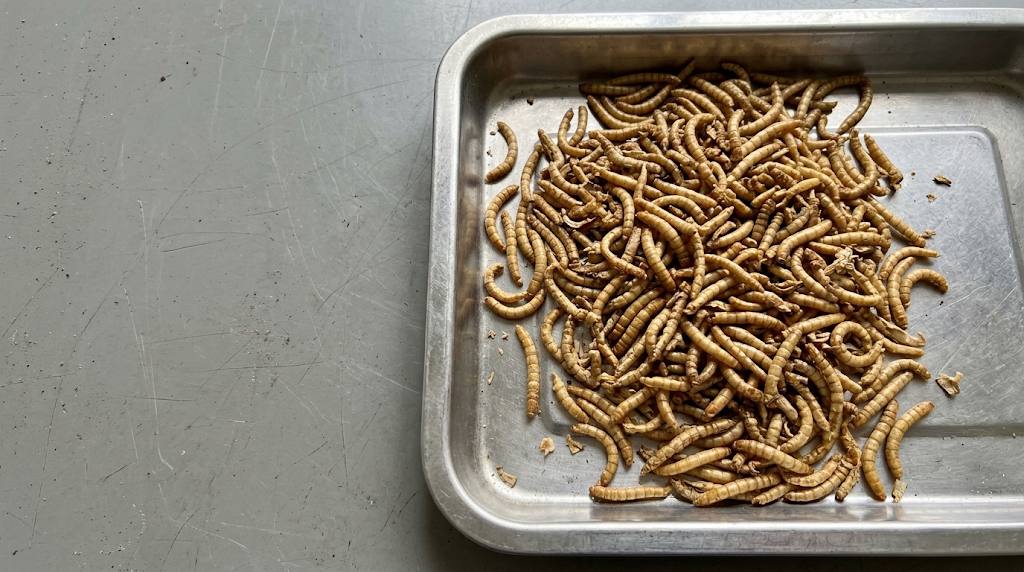

Buyers can assess dried mealworm size consistency by examining representative samples, measuring intact insects using a defined method, and comparing length distributions across cartons or production lots. Average length alone is insufficient because two batches can have similar averages but very different proportions of short, long, or broken insects. A practical evaluation should include sample collection, measurement conditions, size-range distribution, physical integrity, and agreed acceptance tolerances. B2B buyers should document these requirements before ordering and confirm that approved samples are representative of commercial shipments.
1. Why Does Dried Mealworm Size Matter to B2B Buyers?
Dried mealworm size is an important physical quality characteristic for businesses purchasing whole dried mealworms for commercial distribution, pet products, bird food, reptile food, and other permitted feed applications. Although size does not independently determine nutritional quality, it can influence product appearance, packaging consistency, customer expectations, and suitability for specific feeding applications.
For wholesalers and distributors, inconsistent insect sizes may create problems when a commercial batch differs noticeably from the samples previously approved by a buyer. A shipment containing a wide mixture of short and long insects may still be usable, but it may not match the agreed product presentation. Similarly, excessive broken pieces can affect perceived quality even when the remaining intact insects fall within the expected length range.
Buyers should distinguish dried mealworm size from overall product weight or packaging density. A kilogram of whole dried mealworms does not indicate how uniform the individual insects are. Size evaluation therefore requires direct observation and measurement rather than relying solely on carton weight, nutritional analysis, or general product descriptions.
Key Physical Characteristics to Review
| Characteristic | What Buyers Should Examine | Commercial Relevance |
|---|---|---|
| Body length | Length of intact dried insects | Size classification and visual consistency |
| Size distribution | Proportion within defined length ranges | Batch uniformity |
| Body width | Variation in body thickness | Appearance and product presentation |
| Physical integrity | Intact versus broken insects | Whole-insect quality |
| Shape and curvature | Straight, curved, or irregular bodies | Measurement repeatability |
| Color and dryness | Visible product condition | Supporting physical quality assessment |
| Foreign material | Non-product particles or debris | Cleanliness and acceptance |
These characteristics should be evaluated together. A batch may show consistent body length but still have an unacceptable proportion of broken insects or foreign material under the buyer’s specifications.
2. How Should Buyers Measure Dried Mealworm Size?
A reliable measurement procedure begins with a clear definition of what is being measured. For whole dried mealworms, buyers commonly focus on body length, but the measurement method should account for natural curvature and variation in the dried product.
The first step is to separate intact insects from broken fragments. Buyers should not include broken pieces in the intact-body length distribution because doing so would artificially increase the proportion of short specimens. Broken material should be recorded separately as a physical integrity measure.
Measuring Intact Body Length
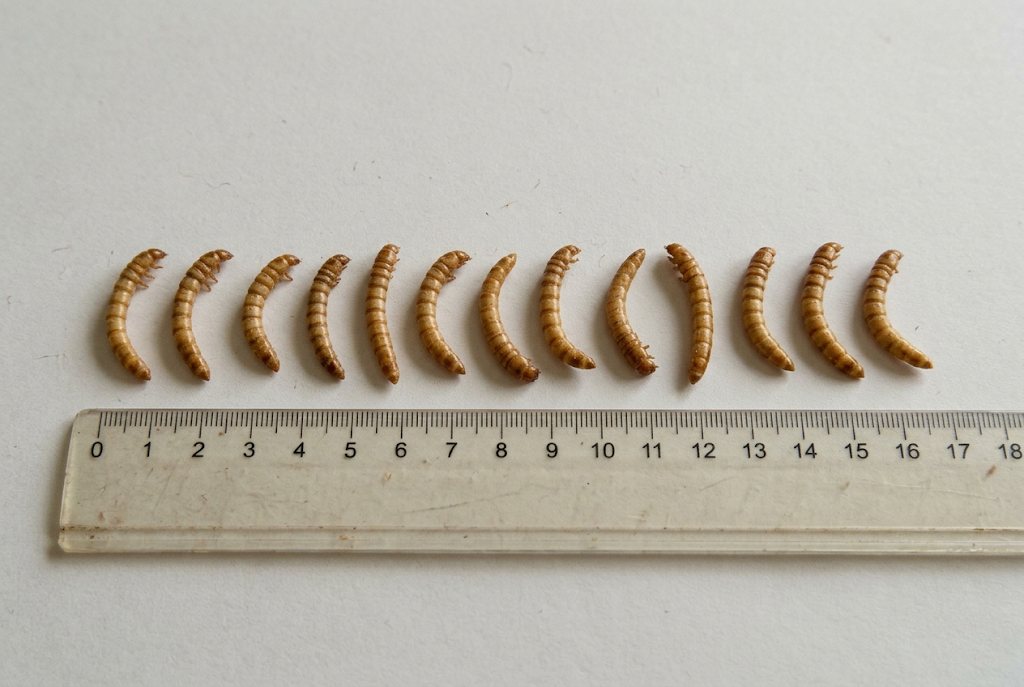
A practical inspection method uses a clean, flat surface, a millimeter ruler or calibrated digital caliper, and adequate lighting. Individual insects should be selected from a representative sample and measured using the same defined endpoints.
For routine commercial comparison, buyers may use the following procedure:
- Place an intact dried mealworm on a clean inspection surface without stretching or damaging it.
- Identify the anterior and posterior ends of the body, excluding detached fragments or unrelated debris.
- Measure its end-to-end length using the agreed convention.
- Record the result in millimeters, along with any notable curvature or damage.
- Repeat the procedure across the agreed number of insects from different sample locations.
For strongly curved insects, straight end-to-end length and length measured along the body curve can produce different results. Neither should be mixed with the other in the same dataset. The buyer and supplier should agree on one convention and apply it consistently.
If the measurement procedure requires straightening a specimen, the amount of manipulation should be standardized because excessive force may damage brittle dried insects. A non-destructive end-to-end measurement is often more practical for routine commercial inspection, provided the method is documented.
Measurement Tools and Recording
A ruler may be sufficient for an initial visual screening, while a calibrated digital caliper or image-based measurement system can support more detailed evaluations. Instrument precision should be appropriate for the acceptance tolerance; additional decimal places do not automatically improve the reliability of a poorly defined measurement method.
For traceability, the inspection record should identify the sample source, measurement date, number of insects measured, measurement convention, and relevant observations. Photographs taken beside a visible metric scale can provide supporting evidence, although photographs should not replace controlled measurements when a numerical specification is required.
3. How Can Buyers Evaluate Size Distribution and Batch Consistency?
Average length is useful, but it does not describe the full size distribution. Two batches can have identical average lengths while differing substantially in the proportion of small and large insects.
For example, one batch might contain mostly insects clustered around the average, while another contains a mixture of much shorter and longer specimens. Both could have the same mean, yet only one may satisfy the buyer’s desired appearance specification.
Hypothetical Size Distribution Comparison
The following example uses an illustrative buyer-defined target range of 18–24 mm. These figures are not BulkInsects product specifications or universal industry grading standards.
| Measurement | Batch A | Batch B |
|---|---|---|
| Number of intact insects measured | 100 | 100 |
| Average length | 21.0 mm | 21.0 mm |
| Below 18 mm | 5% | 20% |
| Within 18–24 mm | 90% | 60% |
| Above 24 mm | 5% | 20% |
| Overall interpretation | More concentrated distribution | Wider distribution |
Although the two batches share the same average length, Batch A has a higher proportion of insects within the hypothetical target range. If the purchasing agreement requires at least 85% of measured intact insects to fall within that range, Batch A would meet this illustrative size-distribution criterion, while Batch B would not.
This example evaluates only one physical parameter. It does not establish that Batch A passes all product quality requirements.
Useful Size Distribution Metrics
Buyers can use several measurements to describe size consistency:
| Metric | Meaning | Practical Use |
|---|---|---|
| Mean length | Average measured body length | General size reference |
| Median length | Middle value of the ordered measurements | Reduces sensitivity to extreme values |
| Minimum and maximum | Smallest and largest observed lengths | Identifies observed extremes |
| P10 and P90 | Approximate 10th and 90th percentiles | Describes the central spread |
| In-range percentage | Share within the agreed size interval | Direct commercial acceptance measure |
| Broken-piece percentage | Share of damaged material under a defined basis | Separate physical integrity assessment |
Percentiles and the in-range percentage are often more informative than average length alone. However, the sample size and sampling method affect how confidently these statistics can represent the commercial lot.
Comparing Samples Across Cartons
Batch consistency should also be assessed across packaging units. If samples are collected only from the top of one carton, the results may not represent variation across the shipment.
A better approach is to collect samples from multiple selected cartons according to an agreed sampling plan. Buyers can then compare both the overall size distribution and any meaningful differences between cartons.
If the results vary substantially across cartons, the buyer may need to investigate whether the lot was mixed from different size grades, whether the sampling procedure was adequate, or whether additional inspection is required.
4. What Should Buyers Look for During Real Sample Inspection?
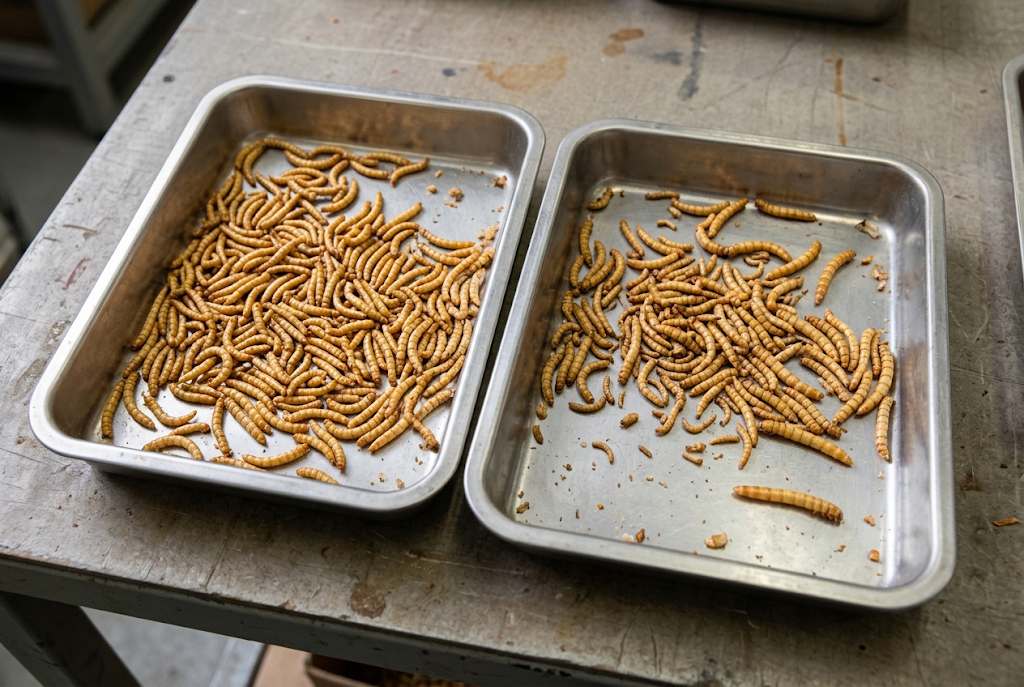
Numerical measurements should be supported by direct inspection of the actual dried insects. Product photographs, approved reference samples, and physical inspection records help buyers evaluate characteristics that a single average length cannot describe.
For whole dried mealworms, the inspection should focus on recognizable insect morphology, natural size variation, dryness, color consistency, and physical integrity. A realistic commercial batch will not contain perfectly identical specimens. The objective is to establish acceptable variation, not to demand unnatural uniformity.
Visual Inspection of Whole Dried Mealworms
Buyers should examine samples spread in a shallow tray under consistent lighting. A crowded pile can conceal shorter insects, fragments, and foreign material, so a portion of the sample should be separated for closer inspection.
The inspection should consider whether the insects are generally intact, whether the size distribution matches the approved reference, and whether there is an unusual concentration of broken pieces. Small natural differences in curvature and body thickness should be expected, but large differences between approved samples and shipment samples may require further review.
Photographic records should include a wider view of the sample and a closer view with a metric scale. The scale must be positioned on the same plane as the insects to reduce perspective distortion.
Why Approved Samples Matter
An approved sample can serve as a useful commercial reference, but it should be supported by measurable specifications. Descriptions such as “medium size,” “large grade,” or “uniform appearance” are difficult to enforce without defined ranges and tolerances.
Buyers should identify whether the approved sample represents a particular production lot or a general target grade. Where possible, the reference should be accompanied by a documented size range, measurement procedure, and acceptable percentage of out-of-range insects.
For ongoing purchasing, reference samples should be stored and identified in a way that minimizes confusion between different specifications or shipment periods.
5. How Should Buyers Set Dried Mealworm Size Acceptance Criteria?
A practical size specification should be measurable, relevant to the intended application, and achievable under normal commercial supply conditions. Buyers should avoid relying exclusively on subjective descriptions or a few visually selected insects.
The acceptance agreement should define the target length range, measurement convention, sample selection procedure, minimum in-range percentage, and separate limits for broken material where required.
Dried Mealworm Batch Acceptance Checklist
| Checkpoint | Buyer Requirement |
|---|---|
| Product identity | Confirm whole dried Tenebrio molitor larvae |
| Approved reference | Identify the approved sample or agreed grade |
| Length definition | Specify measurement endpoints and curvature convention |
| Target range | State minimum and maximum acceptable lengths |
| Measurement sample | Define the number of insects and the selection procedure |
| Sampling locations | Identify cartons or lot locations to be sampled |
| In-range tolerance | Set the minimum acceptable percentage |
| Broken material | Define separate limits and measurement basis |
| Inspection evidence | Require measurements and appropriate sample photos |
| Batch traceability | Link results to the offered commercial lot |
| Nonconformance | Agree on review, resampling, or rejection procedures |
The target range and tolerance should reflect the buyer’s commercial requirements rather than an assumed universal grading standard.
For example, a buyer might request that a defined percentage of intact insects fall within a particular length interval, with broken material assessed separately by weight. This can be more practical than requiring every individual insect to fall within an exact size range.
What Should Be Confirmed Before an RFQ?
Before requesting a bulk quotation, buyers should communicate the required product form, approximate size grade, estimated order quantity, intended application, destination market, packaging requirements, and any specific physical inspection criteria.
If a particular size distribution is essential, buyers should provide the target length range and required tolerance or request representative samples for evaluation. The parties should also clarify whether size grading is available, whether additional sorting is required, and how any grading requirements may affect pricing or supply lead time.
For buyers sourcing wholesale dried mealworms, defining these requirements before shipment can reduce sample disputes and improve consistency between approved references and delivered commercial lots.
Evidence & Verification: What Supports a Reliable Size Assessment?
Dried mealworm size assessment is primarily a physical measurement and sampling task. Its reliability depends on clear measurement definitions, representative sample selection, consistent recording, and an agreed decision rule.
General measurement principles, including calibration, repeatability, and measurement uncertainty, are relevant when developing a quantitative inspection procedure. However, these principles do not establish a universal commercial length grade for dried mealworms.
Similarly, general sampling standards can help buyers design appropriate inspection procedures, but a sampling plan should be adapted to the product, packaging configuration, lot definition, and intended acceptance decision. A method designed for another commodity should not automatically be treated as validated for whole dried mealworms.
For commercial purchasing, the strongest evidence combines representative physical samples, a documented measurement method, actual size-distribution results, and batch identification. Supplier photographs can support visual comparison, but they should not be treated as a substitute for representative sampling and measured data.
Buyers should also distinguish size consistency from overall product quality. A batch that meets the agreed length distribution may still require separate verification of moisture, cleanliness, nutritional composition, and relevant safety parameters under broader dried insect acceptance criteria.
Buyer FAQs
What is the typical size of dried mealworms?
There is no single universal commercial size specification for all dried mealworms. Length varies with the original larvae, production conditions, drying-related changes, and any grading or sorting process. Buyers should request a measured size distribution for the specific product offered.
How many dried mealworms should buyers measure?
The appropriate number depends on lot size, expected variability, required confidence, and the acceptance plan. Measuring 100 intact insects can provide a convenient preliminary descriptive sample, but it is not a universally validated sample size or a guarantee of representative batch acceptance.
Should curved dried mealworms be straightened before measurement?
Buyers should use one documented measurement convention. Straight end-to-end measurements and measurements along the body curve can produce different results. Excessive manipulation may damage brittle dried insects, so the chosen procedure should be practical and repeatable.
Is the average dried mealworm length enough to determine consistency?
No. Average length can conceal a wide size distribution. Buyers should also evaluate the proportion of insects within the target range, distribution spread, and differences among samples collected from different cartons.
Should broken dried mealworms be included in size measurements?
Broken pieces should normally be assessed separately from intact-body length measurements. Including fragments as short as insects can distort the size distribution. The purchasing specification should define how broken material is measured and evaluated.
Key Takeaways: Verify Size Consistency Before Shipment
Dried mealworm size consistency should be assessed using representative samples, a clearly defined measurement procedure, and documented size-distribution results. Average length alone is not sufficient to establish batch uniformity.
B2B buyers should evaluate the percentage of intact insects within the agreed size range, physical integrity, sample variation across cartons, and the relationship between approved reference samples and commercial lots. Clear acceptance tolerances help reduce disputes and improve purchasing predictability.
BulkInsects supports international B2B buyers with whole dried mealworm sourcing, product specification reviews, sample coordination, and packaging requirements. Contact our team to discuss your preferred size range, order quantity, and destination before requesting a commercial quotation.