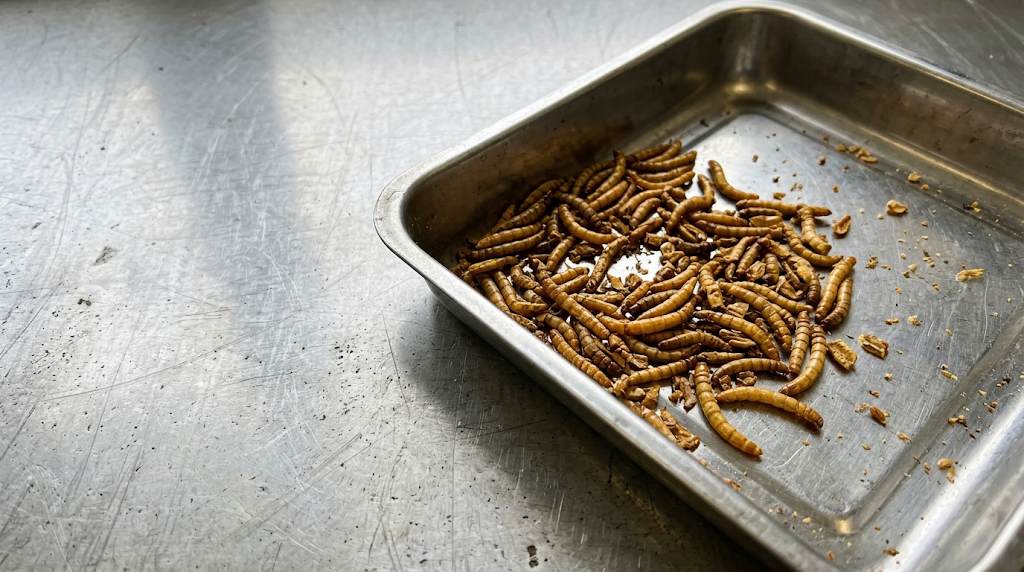

For feed manufacturers, pet food brands, importers, and commercial distributors, broken dried mealworms are an important consideration when evaluating the physical condition of whole dried mealworm products. Some broken pieces may occur during drying, handling, packing, and transportation, but excessive fragmentation can affect product appearance, grading, packaging performance, and suitability for the buyer’s intended application.
Not every damaged mealworm should be treated as foreign matter or product waste. A partially broken larva, a small insect fragment, and unrelated material such as soil or packaging debris represent different quality categories. Buyers need to define these categories before measuring breakage or deciding whether a commercial batch meets their requirements.
This guide explains the common causes of breakage, practical measurement methods, sampling considerations, and how to establish clear physical-integrity criteria for bulk purchasing.
1. Why Dried Mealworms Become Broken
Dried mealworms can become damaged at several stages of the supply chain. Drying changes the moisture content and physical characteristics of the larvae, while subsequent handling may expose the product to mechanical impact, pressure, vibration, and repeated movement. The extent of breakage depends on the product’s condition, processing method, equipment, and handling practices.
Mechanical handling is one potential source of physical damage. Conveying, screening, transferring between containers, weighing, and filling cartons can create opportunities for larvae to collide with equipment or one another. Rough handling and excessive product movement may increase the number of broken pieces, particularly when the product is already brittle.
Packaging and transportation can also influence the final condition. Compression from stacking, insufficient protection inside cartons, repeated movement during transit, and handling at loading or unloading points may contribute to additional breakage. A batch that appears acceptable before packing may therefore show a different physical condition when inspected at destination.
The drying process itself should also be considered. Different drying methods and process conditions can produce differences in moisture level and physical characteristics. However, the drying method alone does not establish how much breakage will occur. Buyers should evaluate the finished product and its handling history rather than assume that one drying method always produces more intact mealworms.
2. How to Measure Broken Mealworms
A useful breakage assessment starts with a clear classification system. Buyers and suppliers should agree on what counts as an intact mealworm, a broken mealworm, a small fragment, and fine material. Without these definitions, two inspectors may classify the same sample differently.
For a weight-based assessment, the proportion of classified broken material can be calculated as follows:
Broken material (%) = Weight of classified broken material ÷ Total sample weight × 100
For example, if a representative 1,000 g sample contains 60 g of material classified as broken mealworms and fragments, the measured broken-material proportion is 6% by weight. This is a hypothetical calculation example, not a recommended commercial acceptance limit.
The calculation must specify which material is included in the numerator. A buyer may choose to count all visibly broken insect pieces, only fragments below an agreed size, or several categories separately. If fine material is commercially important, it is often more informative to report it separately instead of combining it with larger broken pieces.
Weight-based measurement is useful for commercial comparison, but it does not describe the number of intact insects in the sample. A small number of large fragments and many tiny fragments can produce different visual conditions even when their combined weight is similar. Where appearance or feeding characteristics are important, buyers may also define visual grading categories or a fragment-size assessment.

3. What Breakage Levels Are Commercially Acceptable?
There is no single breakage percentage that is suitable for every dried mealworm application. Acceptable physical condition depends on the buyer’s product requirements, intended use, processing equipment, packaging format, and commercial grade.
For products sold with visible whole mealworms, such as certain bird food, reptile food, or specialty pet food applications, buyers may place greater emphasis on intact body appearance and a low proportion of small fragments. For applications where dried mealworms are incorporated into a wider feed formulation, the buyer may prioritize nutritional specifications, cleanliness, particle distribution, and processing suitability alongside physical integrity.
The purchasing agreement should therefore define the expected condition instead of relying on vague terms such as “mostly whole” or “low breakage.” A practical specification can identify the minimum proportion of intact insects, the maximum permitted broken-material percentage, and a separate limit or rejection rule for fine particles where relevant.
Buyers should also distinguish breakage from foreign matter. Fragments of the intended mealworm product should be evaluated under the physical-integrity specification, while soil, stones, packaging pieces, or unrelated substances should be assessed under foreign-matter requirements. Combining these categories can make inspection results difficult to interpret and corrective actions less precise.
4. Sampling, Packaging, and Transportation
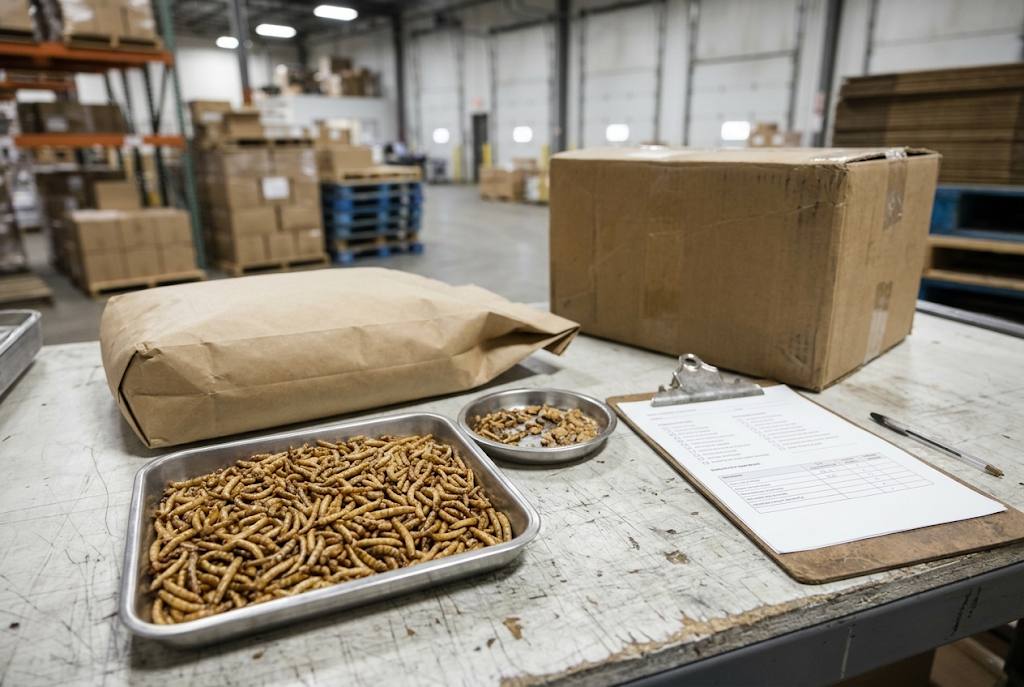
Breakage measurements are meaningful only when the sample represents the commercial lot. A sample collected from a single carton or only from the top layer may not reflect the condition of the full shipment. Buyers and suppliers should agree on the number of cartons, sampling locations, sample quantity, and method used to combine or assess samples.
For pre-shipment evaluation, the inspection should be linked to an identifiable batch and performed before the goods are packed or dispatched, where practical. A separate inspection after arrival can help determine whether the product’s physical condition changed during transportation. Comparing these records may help identify where additional breakage occurred, although the difference alone does not prove a specific cause.
Packaging design should be considered as part of breakage control. Carton strength, inner-bag protection, packing density, stacking pressure, and the amount of movement inside the package can all affect the physical condition. The most suitable arrangement depends on the product, carton dimensions, loading method, and transport route.
Photographs can support the inspection record, especially when they show the full sample, representative intact insects, broken pieces, and fine material under consistent conditions. However, photographs cannot replace representative sampling or a weight-based measurement when the contract specifies a numerical breakage limit.
5. Practical Considerations for B2B Buyers
Before requesting a quotation, buyers should identify the intended application, required product grade, order quantity, packaging preference, and destination. If physical integrity is important, the RFQ should state the expected proportion of intact mealworms and how broken pieces and fines will be classified.
Buyers should request a representative sample and confirm whether the sample reflects the proposed commercial batch. If the buyer approves a sample as the reference standard, the parties should agree on how future shipments will be compared with it and how any significant deviation will be documented.
The purchase specification should define the sampling procedure, calculation method, acceptance limits, and treatment of disputed results. It should also clarify whether the inspection takes place before shipment, after arrival, or at both stages. This is particularly important when the buyer needs to distinguish processing-related breakage from damage that may occur during international transportation.
For recurring orders, suppliers should maintain consistent handling and packaging practices and provide relevant batch information. Buyers should evaluate not only the initial sample but also the supplier’s ability to maintain the agreed physical condition across repeat shipments.
Frequently Asked Questions
Why do dried mealworms break during transportation?
Movement, vibration, compression, stacking pressure, and repeated handling can contribute to breakage. The actual extent depends on product condition, packaging design, loading, and transport handling.
Are broken dried mealworms still acceptable for commercial use?
They may be acceptable depending on the intended application and agreed purchasing specification. Buyers should establish requirements for intact insects, broken pieces, and fine material before confirming an order.
How do buyers calculate the breakage rate?
A weight-based method divides the weight of material classified as broken by the total inspected sample weight, then multiplies the result by 100. The classification rules must be agreed upon before measurement.
Are broken mealworms considered foreign matter?
No, not automatically. Broken mealworms and their fragments are parts of the intended product. Foreign matter refers to unrelated materials such as soil, stones, or packaging debris and should be assessed separately.
Can packaging reduce dried mealworm breakage?
Appropriate packaging can help limit movement, compression, and mechanical damage, but it cannot guarantee that all mealworms will remain intact. Packaging should be evaluated against the product, carton configuration, loading conditions, and transport route.
Conclusion: Define Breakage Requirements Before Ordering
Evaluating broken dried mealworms requires clear classification, representative sampling, and measurable acceptance criteria. The presence of some broken pieces does not automatically make a batch unsuitable, but excessive fragmentation may affect appearance, handling, and the buyer’s intended application.
For more consistent commercial purchasing, buyers should agree on intact-product requirements, broken-material calculations, fine-particle controls, packaging expectations, and inspection timing before shipment. These measures help reduce disputes and make physical-integrity requirements easier to verify across repeat orders.
Buyers can review our whole dried mealworms or contact BulkInsects with their target intact-product proportion, acceptable breakage level, quantity, packaging, and destination. We can discuss available product options and coordinate representative samples and relevant batch information for evaluation.