
Dried mealworm appearance is an important quality consideration for commercial buyers sourcing whole dried insects for bird food, reptile products, pet food, and other permitted feed applications. Although laboratory testing provides essential information about moisture, nutritional composition, and microbiological characteristics, physical inspection helps buyers evaluate product presentation, identify visible inconsistencies, and determine whether a batch meets agreed purchasing requirements.
For wholesale buyers, appearance evaluation should go beyond whether dried mealworms look attractive. Color, odor, and texture can vary with processing methods, raw material characteristics, storage conditions, and handling. Understanding these variations helps buyers distinguish normal product differences from observations that require further investigation before accepting a commercial shipment.
1. What Does an Acceptable Dried Mealworm Appearance Look Like?
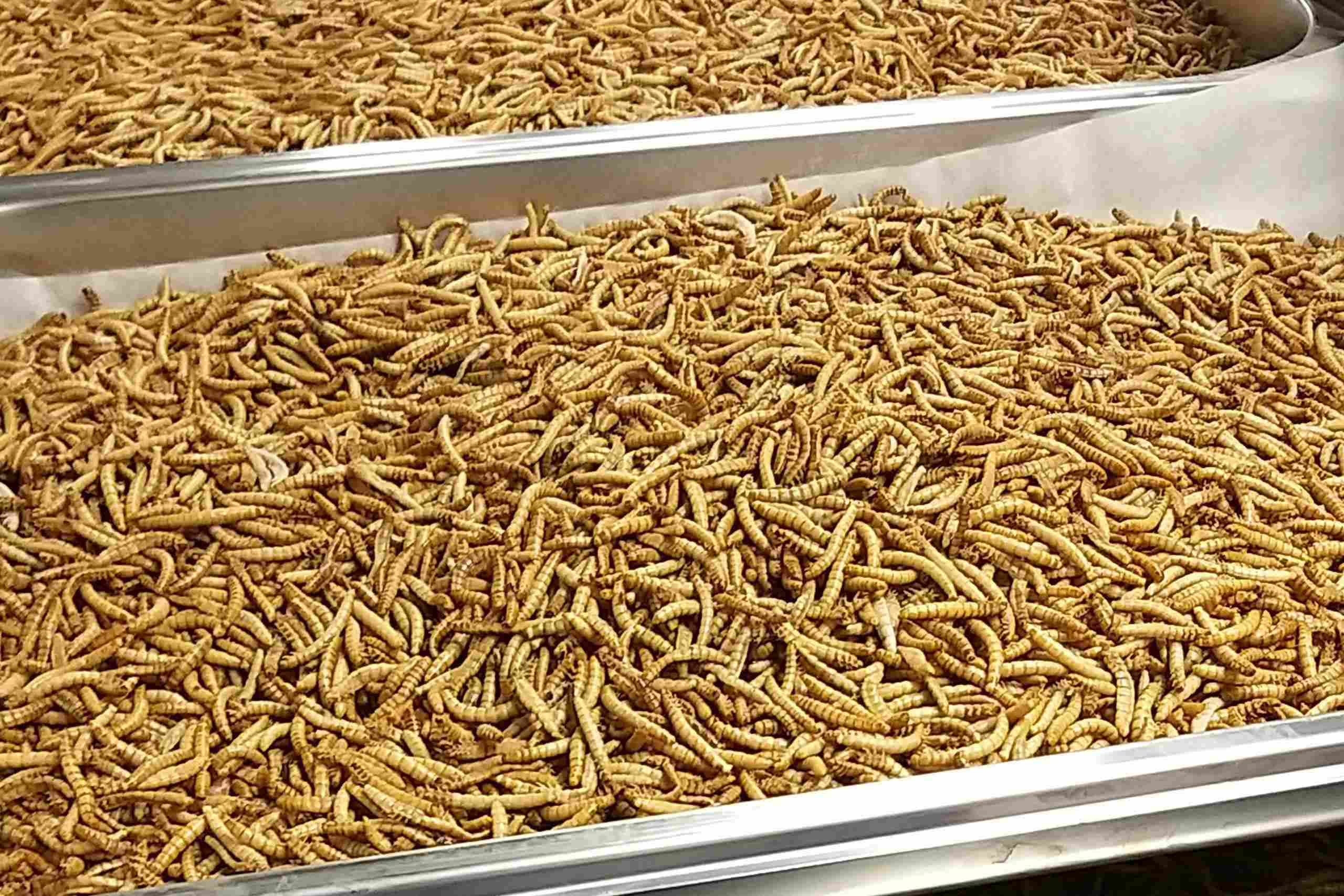
Commercial whole dried mealworms typically have elongated, segmented bodies with a dry surface and colors ranging from golden yellow to amber and brown. The exact appearance depends on several factors, including the insects’ development stage, drying temperature, processing duration, and storage conditions. A batch containing slightly different shades or body shapes is not necessarily defective, provided the material remains within the agreed product specification.
Acceptable appearance should be defined through commercial requirements rather than a single universal visual standard. Buyers may specify a preferred color range, characteristic odor, physical texture, minimum whole-insect integrity, and limits for broken material or foreign matter. These requirements can differ depending on whether the insects will be visibly packaged as whole products, repacked for distribution, or used in an approved feed application.
Appearance alone cannot establish food or feed safety. A visually consistent batch may still require moisture, microbiological, or contaminant testing, while an unusual appearance does not automatically establish that a product is unsafe. Physical inspection is most useful when combined with representative sampling, documented specifications, and relevant laboratory evidence.
2. How to Evaluate Dried Mealworm Color Consistency
Color is one of the most noticeable characteristics of dried mealworm appearance. Commercial samples commonly contain golden, yellow-brown, amber, and darker brown specimens. Some variation is expected because individual insects differ in size, development, and exposure to drying conditions. Buyers should therefore assess the overall distribution of colors rather than treating every darker or lighter insect as a defect.
For a meaningful comparison, samples should be inspected under consistent lighting conditions and placed in a shallow tray where individual insects remain visible. Neutral daylight or standardized inspection lighting can reduce misleading differences caused by shadows or artificial color casts. When comparing supplier photographs, buyers should consider lighting, camera exposure, sample quantity, and background color, since these factors can significantly change the perceived appearance of a batch.
Unusual discoloration, visible mold-like growth, unexpected staining, or substantial differences from an approved reference sample should prompt additional investigation. However, color changes do not always identify a specific problem. Processing conditions, oxidation, moisture exposure, and storage history may contribute to visual differences. Buyers should document unusual observations and review available production records or test results before making a final acceptance decision.

3. Assessing Odor and Texture in Whole Dried Mealworms
Odor is another useful characteristic when evaluating dried mealworms. Depending on the drying method, a typical batch may have a mild roasted, nutty, or characteristic dried-insect smell. Buyers should assess odor using a representative sample in a clean inspection environment, taking into account that packaging materials and nearby stored products can temporarily influence the smell when a carton is first opened.
Strong, sour, musty, rancid, or otherwise unexpected odors should be treated as warning signs that require investigation. Such observations may be associated with oxidation, moisture exposure, storage deterioration, or external contamination, but sensory inspection cannot establish the underlying cause. When an unusual odor is detected, the affected material should be identified and held for further assessment, with relevant laboratory testing requested when necessary.
Texture provides additional information about the physical condition. Whole dried mealworms are generally lightweight, firm, and relatively brittle, although brittleness varies with drying methods and residual moisture. Excessive softness, dampness, clumping, or unusual stickiness may justify moisture-related investigation. Conversely, very brittle insects can produce more broken material during packing and transportation. Buyers should consider texture together with moisture results, packaging condition, and the agreed limits for broken insects.
4. Batch Inspection and Supporting Quality Documentation
A reliable dried mealworm appearance assessment requires representative sampling rather than inspection of a single convenient handful. Where practical, buyers should examine material from multiple cartons or sampling locations within a lot using an agreed procedure. This reduces the risk of overlooking differences between packaging units and provides a more reliable basis for comparing samples with the commercial specification.
During inspection, buyers should record the observed color range, characteristic odor, texture, whole-insect integrity, broken material, and any visible foreign matter. An approved reference sample can provide a useful comparison for repeat orders, especially when consistent product presentation matters to downstream customers. Inspection photographs should show the actual sampled material under comparable conditions, while written records should identify the batch and the observations made.

Supporting documents may include batch identification, production or drying information, packaging records, moisture test results, and a Certificate of Analysis (COA) covering the tests actually performed. Depending on the intended use and destination market, relevant microbiological or contaminant testing may also be necessary. A COA should not be interpreted as proof of acceptable color, odor, or texture unless these characteristics were specifically inspected and reported.
5. Practical Considerations for B2B Buyers
Before purchasing whole dried mealworms in commercial quantities, buyers should request a representative sample and confirm the applicable product specification. This specification should describe the acceptable color range, expected odor, physical texture, moisture requirements, limits for broken material, and foreign matter criteria. These conditions should reflect the intended application and be agreed upon before shipment rather than negotiated after a quality dispute develops.
Buyers should also clarify whether the approved sample represents one specific production lot or the expected characteristics of future shipments. Natural differences may occur between batches because of changes in raw materials, processing conditions, or storage periods. Where visual consistency is particularly important, the purchasing agreement should identify how samples will be compared, what constitutes a significant deviation, and which evidence will be used to resolve disagreements.
For international procurement, buyers should confirm the timing of quality inspection, the party responsible for assessment, and the documentation available before dispatch. Pre-shipment photographs, batch identification, moisture results, packaging details, and applicable laboratory reports can support purchasing decisions. The agreement should also establish how questionable or nonconforming material will be handled, including additional sampling, retesting, replacement, or rejection where appropriate.
6. Frequently Asked Questions
What color should good-quality dried mealworms be?
Whole dried mealworms commonly range from golden yellow to amber and brown. The acceptable color range depends on the drying method, intended application, and agreed product specification. Color alone cannot establish safety or nutritional quality.
Is a roasted or nutty smell normal in dried mealworms?
A mild roasted, nutty, or characteristic dried-insect odor may be normal depending on the processing method. Strong, sour, musty, rancid, or unfamiliar odors should be documented and investigated before acceptance.
Should dried mealworms be hard and brittle?
Dried mealworms are generally firm and relatively brittle, but texture varies with processing conditions and residual moisture. Unexpected softness, dampness, clumping, or stickiness may require further examination and moisture testing.
Can visual inspection replace laboratory testing?
No. Visual and sensory inspection can identify physical differences but cannot reliably establish moisture content, microbiological safety, nutritional composition, or contaminant levels. Buyers should use appropriate laboratory evidence alongside physical inspection.
7. Conclusion
Dried mealworm appearance is a practical consideration in commercial quality evaluation. Color, odor, and texture can provide useful information about product presentation and possible batch differences, but none of these characteristics should be treated as independent proof of overall quality. Normal variation should be distinguished from unusual observations that require further investigation.
For repeat purchasing, buyers benefit from clear specifications, approved reference samples, representative sampling, and consistent inspection records. Combining physical assessment with relevant laboratory results can reduce misunderstandings and support more predictable decisions when evaluating shipments from different suppliers.
BulkInsects supports international B2B buyers sourcing whole dried insects through product information, sample coordination, and available batch documentation. To discuss appearance specifications, estimated order quantity, destination market, and inspection requirements, contact BulkInsects for a bulk quotation.