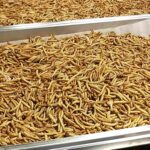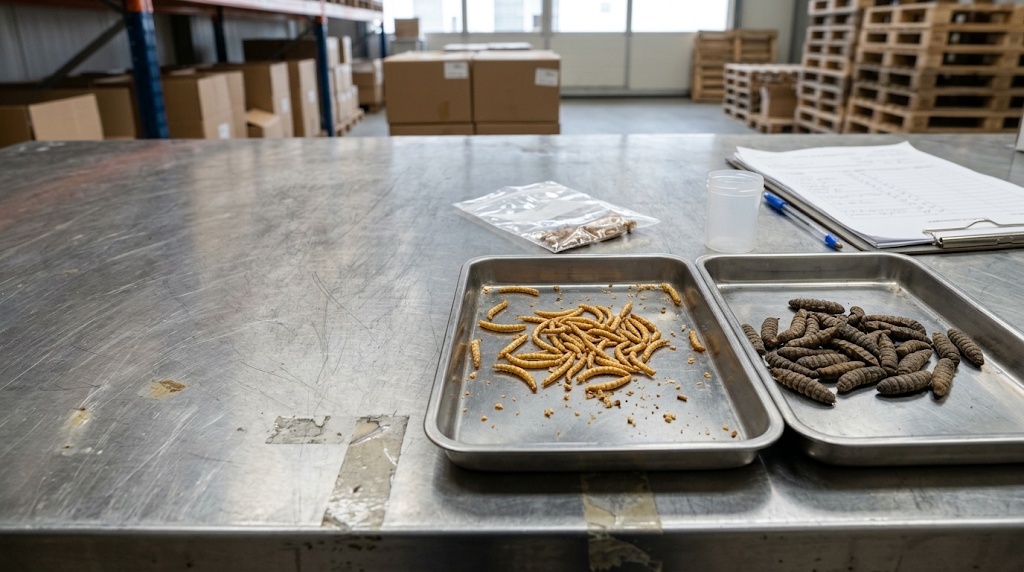

For feed manufacturers, pet food brands, distributors, and commercial importers, dried insect fat content is an important specification when evaluating whole dried insect ingredients. Fat contributes to the nutritional composition of the product, but it also influences storage stability, formulation decisions, and the way buyers assess different insect species and commercial batches.
A higher or lower fat percentage does not automatically indicate better quality. The appropriate range depends on the intended application, the overall nutrient profile, the analytical method, and the buyer’s purchasing requirements. For whole dried insects, it is especially important to distinguish natural variation in fat content from changes associated with moisture, processing, and storage.
This guide explains how B2B buyers can interpret fat test results, identify relevant quality risks, and establish practical acceptance criteria before placing a bulk order.
1. Understanding Fat Content in Whole Dried Insects
Whole dried insects contain varying proportions of protein, fat, minerals, and other components. Fat concentration can differ between species, developmental stages, feeding conditions, and individual production batches. Whole dried mealworms and black soldier fly larvae (BSFL), for example, should not be assumed to have identical fat profiles, even when both products are supplied in recognizable whole-insect form.
Buyers should also distinguish whole dried insects from defatted insect meals or extracted insect oils. Removing fat changes the composition of the remaining material, so specifications published for defatted products cannot be directly applied to whole dried insects. When comparing suppliers, the first step is to confirm that every laboratory result refers to the same product form.
For buyers reviewing our whole dried insect product range, fat content should be evaluated together with moisture, protein, ash, physical condition, and intended application. A single nutrient percentage is rarely sufficient to establish whether a commercial product meets a purchasing specification.
2. How Fat Content Affects Product Selection
Fat contributes energy to animal diets, making its concentration relevant to commercial feed formulation. However, the value of a particular fat level depends on the target animal species, the complete diet, and the role the insect ingredient is expected to perform. A product suitable for one application may not be the preferred option for another.
Different whole dried insect species may also have different fatty acid profiles. This means two products with similar total fat percentages can differ in nutritional characteristics and oxidative behavior. Where the fatty acid profile matters to the finished formulation, buyers should request suitable laboratory data rather than relying exclusively on total fat.
Fat content can also affect purchasing economics. Comparing products only by price per kilogram may overlook differences in nutrient composition and usable formulation value. Buyers should therefore assess fat alongside other analytical results, commercial specifications, and the expected contribution of the ingredient to the finished product.
3. Testing Methods and Reporting Basis
Laboratory fat results require careful interpretation because different analytical methods may measure somewhat different fractions of the product. Reports may refer to crude fat, ether extract, or total fat, depending on the procedure used. These terms should not automatically be treated as interchangeable without reviewing the test method.
The reporting basis is equally important. An as-fed result expresses fat as a percentage of the product at its measured moisture level, while a dry matter result excludes moisture from the denominator. Two batches with different residual moisture levels may therefore report different as-fed fat percentages even when their dry matter fat concentrations are similar.
The conversion is:
Fat (dry matter %) = Fat (as-fed %) ÷ [100 − Moisture (%)] × 100
For example, a hypothetical sample containing 28% fat and 8% moisture on an as-fed basis would contain approximately 30.4% fat on a dry matter basis. This example demonstrates the calculation and is not a product specification for any particular insect species.
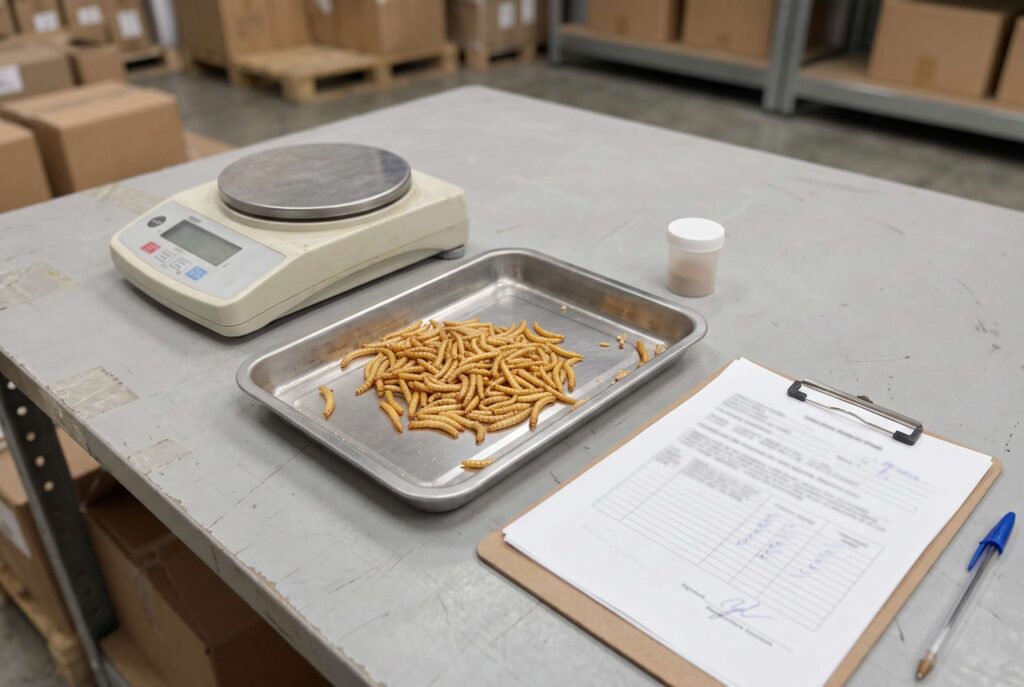
When reviewing a Certificate of Analysis (COA), buyers should confirm the sample identification, fat result, moisture result, test method, reporting basis, and laboratory information. Where different suppliers use different methods, additional clarification or comparable testing may be needed before a purchasing decision is made.
4. Oxidation, Storage, and Batch Consistency
Fat-containing ingredients can undergo oxidation during storage, particularly when exposed to unfavorable combinations of oxygen, heat, light, and time. Oxidation may contribute to undesirable odors and changes in product quality, although the rate and extent depend on fatty acid composition, processing history, packaging, and storage conditions.
Total fat percentage alone does not establish whether a batch is oxidized or suitable for use. Buyers should consider the product’s sensory condition, production and storage history, packaging integrity, and any relevant laboratory results. Where oxidative stability is a critical requirement, appropriate tests such as peroxide value or other oxidation indicators may be considered, with methods and limits agreed for the product.
Batch consistency is also important for recurring commercial orders. Natural variation can affect fat concentration, and differences in moisture or testing procedures may make results appear more variable than they actually are. Buyers should establish acceptable specification ranges and review results over multiple batches rather than expecting identical values from every shipment.
Packaging and logistics form part of this evaluation. Moisture protection, suitable inner packaging, reasonable storage temperatures, and controlled handling can help maintain product condition during international transportation. These measures should be assessed according to the actual product and route rather than treated as universal guarantees of shelf life.

5. Practical Considerations for B2B Buyers
Before requesting a quotation, buyers should identify the insect species, intended application, target fat range, and any other nutritional parameters needed for product evaluation. If fat content is important to formulation performance, the RFQ should state whether the requirement is expressed on an as-fed or dry matter basis.
Buyers should request representative samples and clarify which analytical results are available for the proposed product or batch. A supplier’s typical specification can support preliminary screening, but batch-specific results are more useful when compliance with a contractual limit must be demonstrated. Any additional testing requirements should be agreed before the order is finalized.
The purchasing specification should also explain how results will be evaluated, including sampling procedures, test methods, acceptance limits, and handling of disputed findings. Where storage stability is important, buyers may need to agree on packaging, storage conditions, shipment timing, and relevant quality evidence.
These details help reduce repeated sample discussions and make comparisons between commercial suppliers more consistent. They also allow buyers to assess product suitability without treating a single fat percentage as a complete quality guarantee.
Frequently Asked Questions
What is the typical fat content of dried insects?
Fat content varies by insect species, developmental stage, feeding conditions, processing, moisture level, and analytical method. Commercial buyers should review product-specific data and obtain relevant batch results instead of relying on one universal percentage.
Is lower fat content always better for dried insects?
No. Fat contributes nutritional energy, and the preferred level depends on the intended application. Buyers should evaluate total fat alongside fatty acid composition, formulation requirements, and storage considerations.
Does higher fat content always mean faster oxidation?
Not necessarily. Oxidative stability depends on several factors, including fatty acid composition, processing history, exposure to oxygen, temperature, light, and storage duration. Total fat percentage alone cannot predict shelf life.
Can a COA confirm dried insect fat content?
Yes, if fat content has been tested and reported for the relevant sample or batch. Buyers should verify the method, reporting basis, sample identification, and whether the result meets the agreed specification.
Does freeze-drying reduce fat content?
Freeze-drying primarily removes moisture and does not inherently remove fat in the way a defatting process does. Reported fat percentages may change because the moisture basis changes, but the actual outcome should be evaluated using comparable analytical data.
Conclusion: Evaluate Fat Content in Context
Understanding dried insect fat content helps commercial buyers compare products more accurately, but the fat percentage should never be interpreted in isolation. Species, moisture basis, laboratory method, fatty acid composition, storage conditions, and batch variation all influence the usefulness of the result.
For reliable purchasing decisions, buyers should establish clear specifications, request relevant laboratory evidence, and confirm how acceptance will be determined. This approach is particularly valuable when sourcing whole dried insects for recurring commercial orders or applications with defined nutritional requirements.
If you are evaluating whole dried insect ingredients, contact BulkInsects with your required species, target fat range, quantity, destination, and testing requirements. We can review available product options and coordinate relevant sample and batch information for your purchasing assessment.