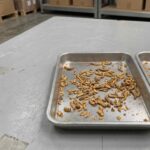
For feed manufacturers, pet food brands, distributors, and commercial importers, dried insect ash content is an important analytical parameter when evaluating whole dried insect ingredients. Ash testing provides information about the inorganic residue remaining after a sample is heated under specified laboratory conditions, but the result must be interpreted alongside species, moisture, processing, and other quality indicators.
A higher ash percentage does not automatically indicate contamination, and a lower result does not necessarily mean superior product quality. Different insect species can have different natural mineral compositions, while environmental exposure, handling, and sample preparation may also affect the reported value.
This guide explains how B2B buyers should interpret ash test results, review Certificates of Analysis (COAs), and establish practical acceptance criteria before confirming a commercial order.
1. Understanding Ash Content in Whole Dried Insects
Ash content is commonly used in feed analysis to estimate the total inorganic residue remaining after organic material has been removed through controlled heating. The resulting measurement is generally expressed as a percentage of the original sample or its dry matter, depending on the reporting convention.
For whole dried insects, ash can reflect naturally occurring mineral constituents associated with the insect’s biological composition. However, ash testing does not identify individual minerals or establish whether an elevated result comes from the product itself or from unwanted inorganic material.
This distinction is important when buyers compare products across species. Whole dried mealworms, black soldier fly larvae (BSFL), crickets, grasshoppers, earthworms, and maggots should not automatically be evaluated against one universal ash specification. Buyers reviewing our whole dried insect product range should assess ash results in the context of the particular species and intended application.
2. Why Ash Content Varies Between Insect Products
Ash content can vary naturally according to insect species, developmental stage, feeding conditions, substrate composition, and production practices. These differences can affect the mineral fraction of the finished dried product even when the material is properly processed and commercially acceptable.
Black soldier fly larvae, for example, may have a different mineral profile from mealworms. Their respective ash values should therefore be interpreted using comparable laboratory methods and an appropriate understanding of each species rather than assuming that the lower result always represents the better ingredient.
Processing and handling can introduce additional variation. Residual moisture influences percentage calculations, while inadequate cleaning or exposure to soil, dust, and other inorganic material may increase measured ash in some circumstances. This makes the product’s origin, handling process, and sample condition relevant to interpretation.
For commercial procurement, the objective is not simply to find the lowest ash percentage. It is to determine whether the reported value is consistent with the product’s expected composition and meets the buyer’s agreed specification.
3. Testing Methods and Reporting Basis
Ash is typically measured by heating a prepared sample in a laboratory furnace under defined conditions until the required residue is obtained. Results depend on the analytical procedure, including sample preparation, temperature, duration, and the method used to determine the remaining mass.
Laboratory reports may describe the measurement as crude ash, total ash, or ash content. Buyers should verify the method rather than assume that every laboratory uses identical procedures. Where ash is a critical contractual parameter, the supplier and buyer should agree on an appropriate recognized method and reporting basis.
Moisture is another essential consideration. An as-fed ash result expresses ash relative to the product’s existing weight, while a dry matter result excludes moisture from the denominator. The relationship is:
Ash (dry matter %) = Ash (as-fed %) ÷ [100 − Moisture (%)] × 100
For example, a hypothetical sample with 6% ash and 10% moisture on an as-fed basis would contain approximately 6.67% ash on a dry matter basis. This is a mathematical example, not a claimed specification for any particular dried insect product.
When reviewing a COA, buyers should confirm the sample or batch identification, ash result, moisture content, analytical method, reporting basis, and laboratory information. Results obtained using different methods or reporting conventions may require clarification before they can be compared reliably.

4. Interpreting Ash Results and Contamination Risks
Ash testing can help identify unexpected differences between commercial batches, but the result alone cannot determine the cause. A higher-than-expected value may reflect natural mineral composition, differences in the production material, sample preparation, or the presence of unwanted inorganic residues.
Where contamination is suspected, additional investigation may be necessary. For example, buyers may need to consider visible foreign matter, cleaning procedures, sampling conditions, and targeted laboratory tests. Total ash cannot independently establish the presence or concentration of specific heavy metals, soil particles, or other contaminants.
The same caution applies to nutritional interpretation. Ash provides a broad measure of inorganic residue, but it does not show the individual concentrations or bioavailability of calcium, phosphorus, or other minerals. If the mineral profile is important for feed formulation, buyers should request appropriate mineral analysis rather than relying only on total ash.
For recurring orders, ash results are most useful when evaluated against a documented product specification and relevant batch history. A single unusual result should prompt review of the sampling and testing circumstances before a conclusion is reached about overall product quality.
5. Practical Considerations for B2B Buyers
Before requesting a quotation, buyers should identify the required whole dried insect species, intended application, target ash range if applicable, and any additional nutritional or contamination parameters. These requirements should reflect the actual commercial use rather than a generic specification copied from another insect product.
Buyers should request representative samples and available batch documentation. A typical specification may support preliminary screening, but a batch-linked laboratory report is more useful when verifying whether a shipment meets an agreed acceptance limit.
If ash is included in the purchase specification, the parties should define the analytical method, reporting basis, sampling procedure, acceptance threshold, and process for resolving conflicting results. Where unexpected ash values could affect product acceptance, the agreement should also address retesting and corrective action.
For applications requiring additional mineral or contaminant controls, buyers should identify those tests separately. A compliant ash result should never be treated as proof that every other quality or safety requirement has been satisfied.

Frequently Asked Questions
What does ash content mean in dried insects?
Ash content measures the inorganic residue remaining after a sample undergoes a specified laboratory heating procedure. It provides an aggregate analytical value but does not identify individual minerals or contamination sources.
Does high ash content mean dried insects contain dirt or sand?
Not necessarily. Elevated ash can reflect natural mineral composition or other factors. If contamination is suspected, buyers should use appropriate inspections and targeted tests rather than relying on ash percentage alone.
Is lower ash content always better?
No. The preferred range depends on the insect species, nutritional application, and agreed product specification. Lower ash does not automatically indicate better quality or greater safety.
Can a COA confirm dried insect ash content?
Yes, if ash has been measured and reported for the relevant sample or batch. Buyers should check the analytical method, moisture basis, sample identification, and whether the result meets the agreed specification.
Is ash content the same as calcium or phosphorus content?
No. Total ash represents aggregate inorganic residue and cannot determine the concentration of individual minerals. Calcium, phosphorus, and other mineral values require appropriate separate analytical measurements.
Conclusion: Evaluate Ash Content in Context
Understanding dried insect ash content helps commercial buyers interpret laboratory reports and identify potential differences between whole dried insect products. However, the ash percentage should always be evaluated alongside species, moisture, analytical methods, mineral composition, and other relevant quality indicators.
A reliable purchasing specification defines what is being tested, how results are reported, and which limits apply to the intended product. Representative samples, batch-linked documentation, and agreed acceptance procedures can reduce uncertainty and support more consistent commercial sourcing.
If you are evaluating whole dried insect ingredients, contact BulkInsects with your required species, order quantity, destination, target ash range, and testing requirements. We can review available product options and coordinate relevant sample and batch information for your purchasing assessment.