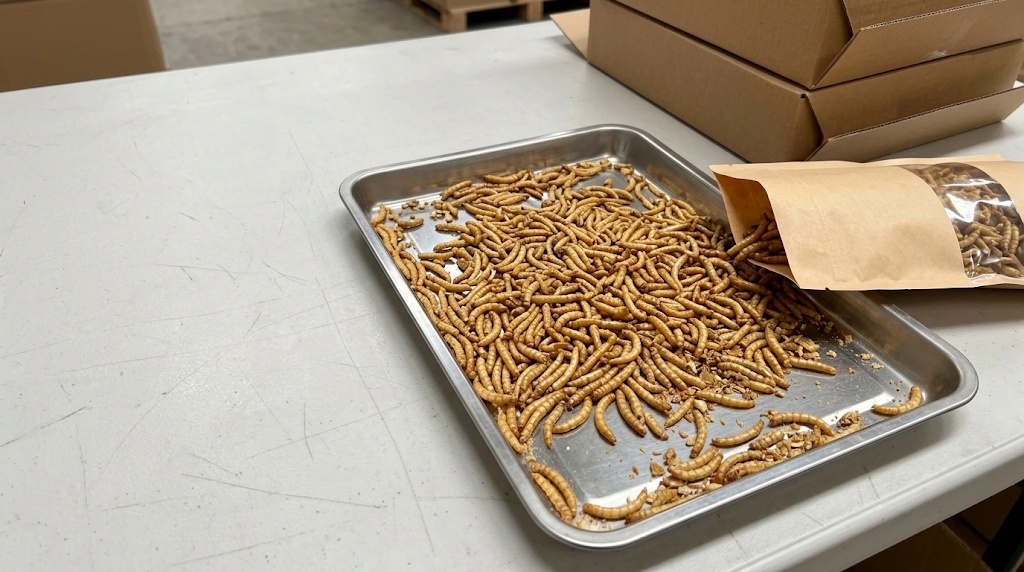

For commercial buyers, the price of wholesale dried mealworms cannot be evaluated accurately from a single price-per-kilogram quotation. Raw material availability, drying method, product grade, order volume, packaging, testing, freight, and trade terms can all affect the final purchasing cost. Two suppliers quoting the same product name may therefore be offering materially different commercial propositions.
Importers, distributors, wholesalers, farms, pet-related businesses, and other B2B buyers should compare dried mealworm quotations on an equivalent basis. A lower initial price may be less competitive if the product experiences excessive breakage, has unsuitable packaging, has inconsistent batches, or incurs higher logistics costs. Conversely, a higher quoted price may offer better overall value when product condition, usable yield, and supply reliability are taken into account.
This guide explains the main factors that influence wholesale dried mealworm pricing and shows how commercial buyers can evaluate costs more systematically when sourcing whole dried mealworms in bulk.
1. Why Wholesale Dried Mealworm Prices Vary
Wholesale pricing reflects more than the cost of the dried product itself. The final quotation may incorporate raw material availability, processing, drying, sorting, quality control, packaging, inland transportation, export preparation, and the commercial terms requested by the buyer.
This is why a buyer may receive substantially different quotations for products that appear similar at first glance. Differences in moisture specification, whole-body condition, breakage tolerance, packaging, or trade terms can make direct price comparisons misleading.
Before asking why one supplier is cheaper than another, buyers should first determine whether the quotations are based on equivalent specifications and commercial conditions.
2. Raw Material Supply and Seasonality
Raw material availability is one of the underlying variables that can influence dried mealworm pricing. Production volume, demand, growing conditions, production scheduling, and seasonal changes in supply can affect the availability and cost of mealworms entering the drying process.
The effect of seasonality should not be treated as a fixed percentage or universal price pattern. Supply conditions can vary across producers and over time, while commercial inventory and production planning can reduce or amplify short-term fluctuations.
For larger buyers, this makes purchasing timing and forecasting important. Providing realistic volume forecasts can help suppliers evaluate production requirements earlier and may create a more stable basis for recurring commercial orders.
3. Drying Method and Processing Cost
Drying method can materially affect both production economics and finished-product characteristics. Commercial dried mealworms may be produced using methods such as microwave drying or other controlled heat-drying processes, while freeze-dried products represent a different processing and cost structure.
The buyer should not assume that the most expensive drying method automatically produces the most appropriate commercial product. Different processes can affect appearance, texture, body condition, moisture, and handling characteristics, and the appropriate option depends on the intended market and purchasing specification.
When comparing quotations, buyers should therefore confirm the processing method and evaluate the resulting product rather than comparing prices without understanding how the dried mealworms were produced.
4. Product Grade, Breakage, and Usable Yield
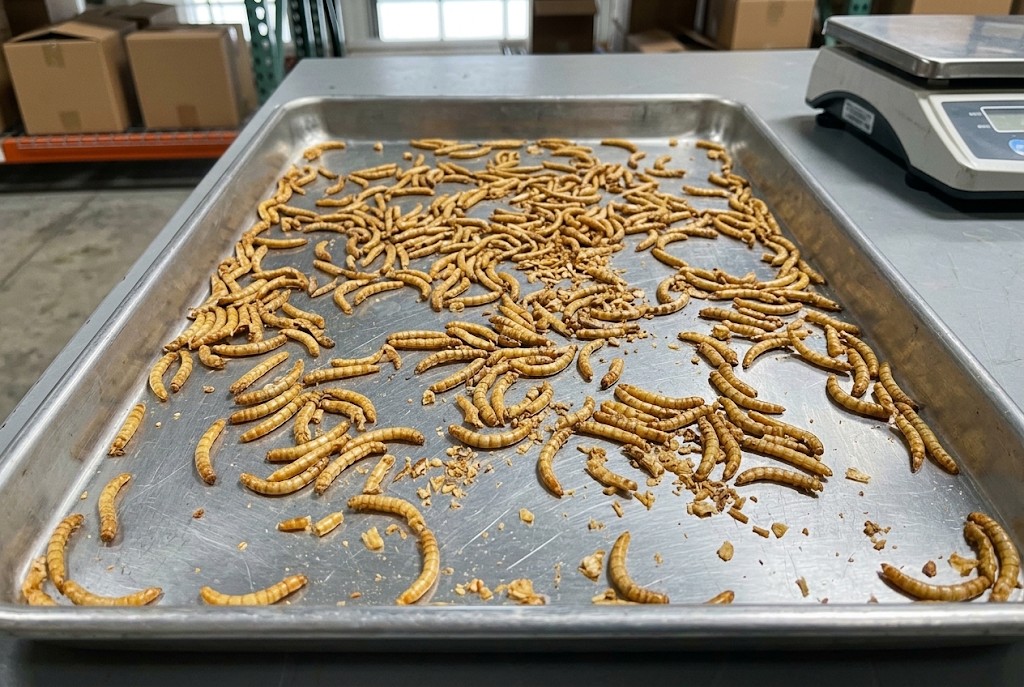
Whole-body condition can influence the commercial value of dried mealworms. Buyers selling recognizable whole insects may require a higher proportion of intact mealworms, while businesses using the product in subsequent processing may accept more broken material.
Sorting and handling requirements can affect cost. A specification demanding tighter appearance consistency or lower breakage may require additional control and can influence the supplier’s quotation. At the same time, paying less for a batch with excessive fines or unusable material may not represent a genuine saving.
For this reason, commercial buyers should consider usable yield. The relevant question is not simply how much one kilogram costs, but how much of the delivered kilogram meets the buyer’s actual requirements.
5. Order Volume and MOQ
Order quantity is another major component of wholesale pricing. Larger orders can distribute certain fixed costs across more products and may improve packaging, handling, and logistics efficiency. However, buyers should not assume that every increase in quantity will produce the same percentage reduction in unit price.
Supplier capacity, available inventory, production scheduling, and packaging requirements can all influence volume pricing. A very large order may also require staged production or multiple shipments rather than one immediate delivery.
Buyers should therefore request quotations for realistic volume levels. Where demand is recurring, discussing monthly, quarterly, or annual requirements can provide a more useful commercial picture than negotiating only around a single trial order.
6. Packaging and Palletization Costs
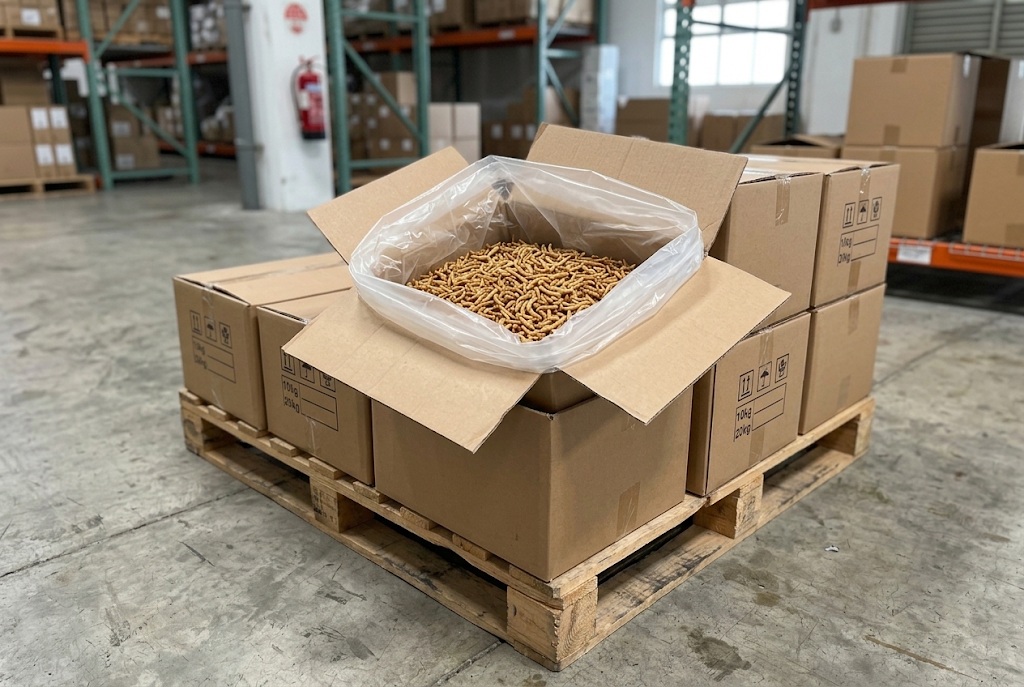
Packaging contributes directly to both product cost and shipment performance. Bulk buyers may require different inner liners, bags, cartons, net weights, pallet configurations, or labeling depending on their handling and destination requirements.
Reducing packaging cost without considering product protection can be counterproductive. Dried mealworms can experience breakage during compression, repeated handling, and international transportation, so packaging should balance cost efficiency with appropriate protection.
Buyers should compare quotations using the same packaging specification. A price based on a basic bulk bag should not be compared directly with a quotation that includes stronger cartons, liners, customized labeling or palletization without accounting for those differences.
7. Freight and Trade Terms
International freight can materially change the economics of a dried mealworm order. Shipment size, package dimensions, route, transportation mode, destination, and current freight conditions can all influence the final landed cost.
Trade terms also matter. An FOB quotation and a CIF quotation do not represent the same cost responsibility, so buyers should avoid comparing them as though they were equivalent. The quotation should clearly state what is included and where responsibility and cost transfer under the agreed Incoterm.
For large orders, packaging efficiency can also affect logistics economics. Buyers should therefore consider not only product weight but also carton configuration, pallet utilization, and the practical loading efficiency of the shipment.
8. Testing and Documentation Costs
Commercial buyers may require specifications, batch testing, Certificates of Analysis, or other documentation depending on the intended application and destination. More extensive testing or buyer-specific analytical requirements can add cost and lead time.
These requirements should be communicated before the supplier prepares the final quotation. Adding new testing requirements after price confirmation can change the commercial basis of the order and make comparisons between suppliers less meaningful.
For products intended for the United States as animal food or feed, buyers should also review applicable animal food import requirements. FDA identifies requirements that may include ingredient acceptability, food-facility registration, and prior notice, while USDA APHIS requirements may also apply to certain animal-origin materials depending on the product and circumstances.
9. Why the Lowest Price per Kilogram May Cost More
A low unit price can be attractive during initial supplier comparison, but it does not necessarily indicate the lowest effective purchasing cost. Product loss, excessive breakage, inconsistent moisture, unsuitable packaging, or additional sorting can reduce the economic value of a cheaper shipment.
Consider two quotations where one product has a slightly higher price but consistently meets the buyer’s whole-body and packaging requirements, while the cheaper option requires additional sorting or produces more unusable material. The price difference at the quotation stage may not reflect the cost difference after arrival.
This is why professional purchasing decisions should consider usable yield, quality consistency, and logistics alongside the quoted price per kilogram.
10. How Commercial Buyers Can Optimize Purchasing Cost
Cost optimization does not simply mean negotiating the lowest possible unit price. A more effective approach is to identify which specifications create commercial value and which add cost without materially improving the buyer’s application.
For example, a buyer who does not require a highly uniform appearance may be able to accept greater natural variation. Another buyer may reduce logistics costs by optimizing package weight or shipment quantity. Buyers with predictable demand may benefit from communicating forecasts earlier so that production and shipment planning can be coordinated more efficiently.
Consolidating requirements can also improve quotation quality. Product specification, quantity, packaging, destination, testing, and trade terms should ideally be communicated together so that the supplier can calculate the commercial offer on a consistent basis.
11. Build a Better RFQ for Price Comparison
A request that simply asks, “What is your dried mealworm price?” provides too little information for a meaningful wholesale quotation. Suppliers may respond using different assumptions about quantity, grade, packaging, and delivery terms, making the resulting prices difficult to compare.
A commercial RFQ should identify the required whole dried mealworm product, approximate quantity, intended application, destination, packaging, and preferred trade term. Where relevant, buyers should also specify moisture, whole-body condition, testing, or documentation requirements.
The buyer can then request pricing at several realistic quantity levels. This provides greater visibility into volume economics and makes it easier to determine whether increasing the order size produces a meaningful reduction in total purchasing cost.
12. Compare Suppliers on Total Landed Value
The final supplier comparison should combine product cost with the other costs required to receive a commercially usable shipment. Depending on the transaction, these may include packaging, inland transportation, international freight, testing, and other import-related costs.
Quality should remain part of this calculation. A quotation that produces a lower landed price but higher product loss may ultimately be less competitive than a more consistent product with a slightly higher initial price.
For recurring purchases, supply reliability also has economic value. Consistent specifications, realistic lead times, predictable packaging, and clear batch documentation can reduce operational uncertainty and make long-term procurement easier to manage.
Frequently Asked Questions
What affects the price of wholesale dried mealworms?
Wholesale dried mealworm prices can be influenced by raw material availability, seasonality, processing method, product grade, order quantity, packaging, testing, freight, and trade terms.
Are larger dried mealworm orders always cheaper per kilogram?
Not necessarily. Larger orders can improve certain production and logistics efficiencies, but actual pricing also depends on supplier capacity, inventory, processing requirements, packaging, and shipment arrangements.
Does the drying method affect dried mealworm pricing?
Yes. Different drying processes can involve different equipment, energy, production time, and handling requirements. Buyers should compare both the processing method and the characteristics of the finished product.
Should buyers choose the lowest wholesale price?
Not automatically. Buyers should consider usable yield, breakage, moisture, product consistency, packaging, testing, freight, and landed cost alongside the quoted unit price.
How can buyers get a more accurate dried mealworm quotation?
Provide the supplier with the required product form, quantity, application, destination, packaging, quality requirements and preferred trade term. Clear RFQ information reduces assumptions and improves price comparability.
Can long-term purchasing help control dried mealworm costs?
Predictable purchasing schedules and volume forecasts can improve production and shipment planning. Actual pricing arrangements depend on supply conditions, specifications, quantities, and the commercial agreement between buyer and supplier.
Final Buying Review
When evaluating wholesale dried mealworms, the most useful price comparison is not simply USD per kilogram. Buyers should understand what is included in each quotation and how raw material supply, processing, product condition, order volume, packaging, testing, and logistics affect the final cost.
A stronger sourcing decision compares suppliers on equivalent specifications and calculates the value of the usable product after delivery. This helps buyers avoid apparent savings that may later be offset by excessive breakage, unsuitable packaging, inconsistent batches, or additional handling costs.
Commercial buyers can review our dried mealworms wholesale supply or contact BulkInsects with the required quantity, destination, packaging, and application to request a commercial quotation.