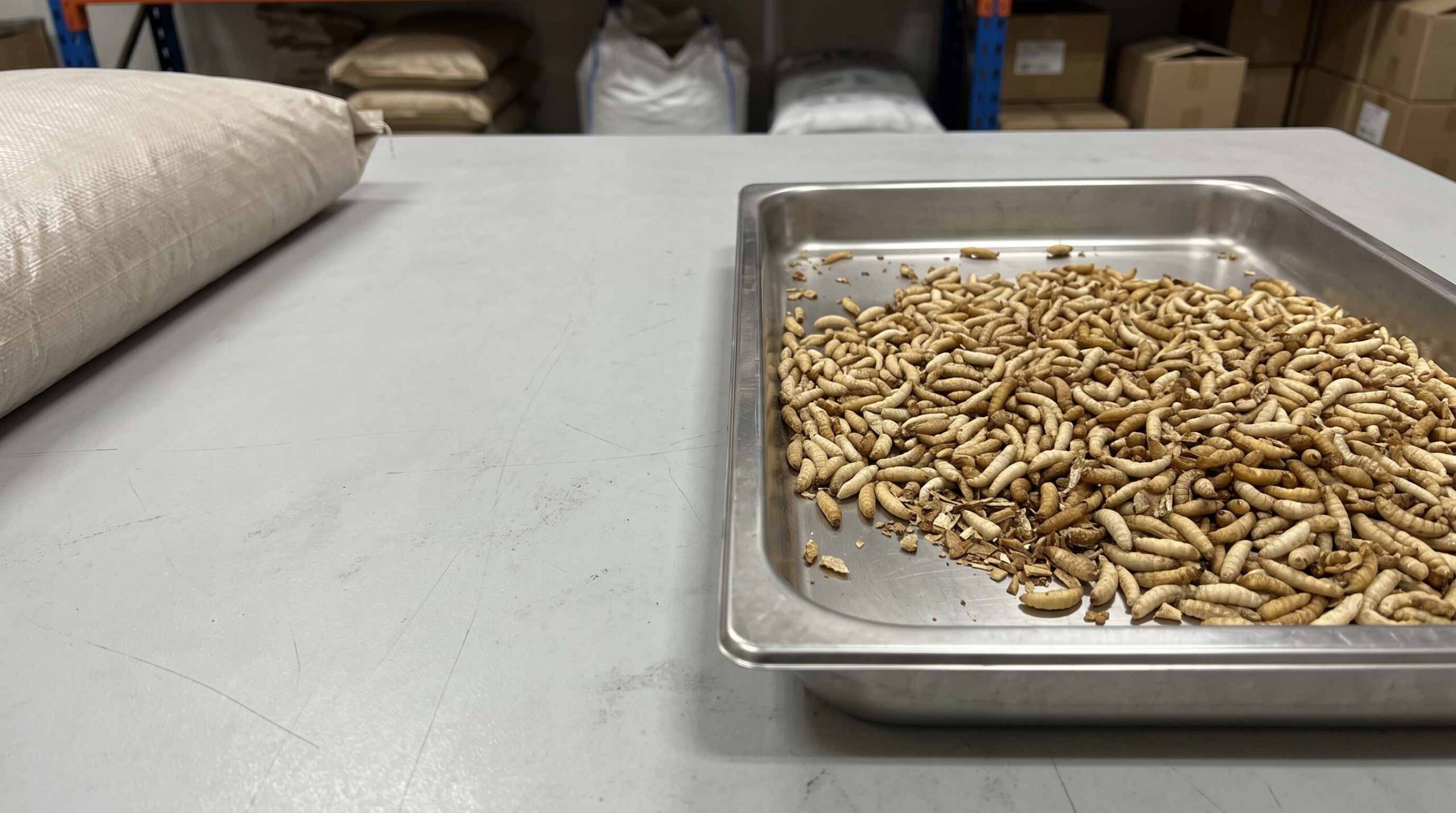

For importers, distributors, wholesalers, farms, and other commercial buyers, sourcing bulk dried maggots requires more than comparing price per kilogram. Product identity, whole-body condition, cleanliness, moisture, odor, breakage, packaging, and batch documentation can all influence whether a shipment is suitable for its intended commercial application.
Dried maggots can vary naturally in appearance, size, and physical condition, while suppliers may also use different processing, screening, and packaging practices. There is therefore no single visual characteristic or universal specification that determines commercial quality. Buyers should define their requirements before requesting quotations and then evaluate samples, specifications, batch information, and shipment conditions against the same purchasing standard.
This guide explains the main factors B2B buyers should review when sourcing dried maggots in commercial quantities, from initial product identification through sampling, documentation, packaging, and final shipment inspection.
1. Confirm Product Identity and Commercial Form
The first step is to establish exactly what product is being offered. The term “dried maggots” may appear straightforward, but commercial products can differ in source, processing method, size distribution, body condition, and the proportion of broken material. Buyers should not assume that products sold under the same general name are commercially equivalent.
For buyers requiring whole dried maggots, the RFQ should clearly distinguish the required product from live larvae, insect powder, insect meal, or other further-processed insect ingredients. If species, production source, or processing information is important to the intended application or destination market, these requirements should also be confirmed with the supplier before an order is placed.
Product descriptions should correspond with representative samples and subsequent commercial shipments. Clear product identification at the beginning of the sourcing process reduces the risk of comparing quotations for materially different products.
2. Define the Application Before Comparing Suppliers
The appropriate specification depends partly on how the dried maggots will be used. Buyers purchasing for bird food, poultry, aquaculture, reptile products, pet-related applications, or further commercial formulation may place different emphasis on appearance, whole-body condition, size consistency, cleanliness, packaging, and other characteristics.
A distributor selling recognizable whole insects, for example, may place greater value on appearance and a low level of visible breakage. A buyer using the product as an ingredient in a subsequent manufacturing process may evaluate physical appearance differently while placing greater emphasis on consistency, testing, and supply economics.
For this reason, the intended application should be established before comparing suppliers. The purchasing specification can then reflect what matters to the actual business rather than relying on a generic definition of “premium” quality.
3. Evaluate Whole-Body Condition and Breakage
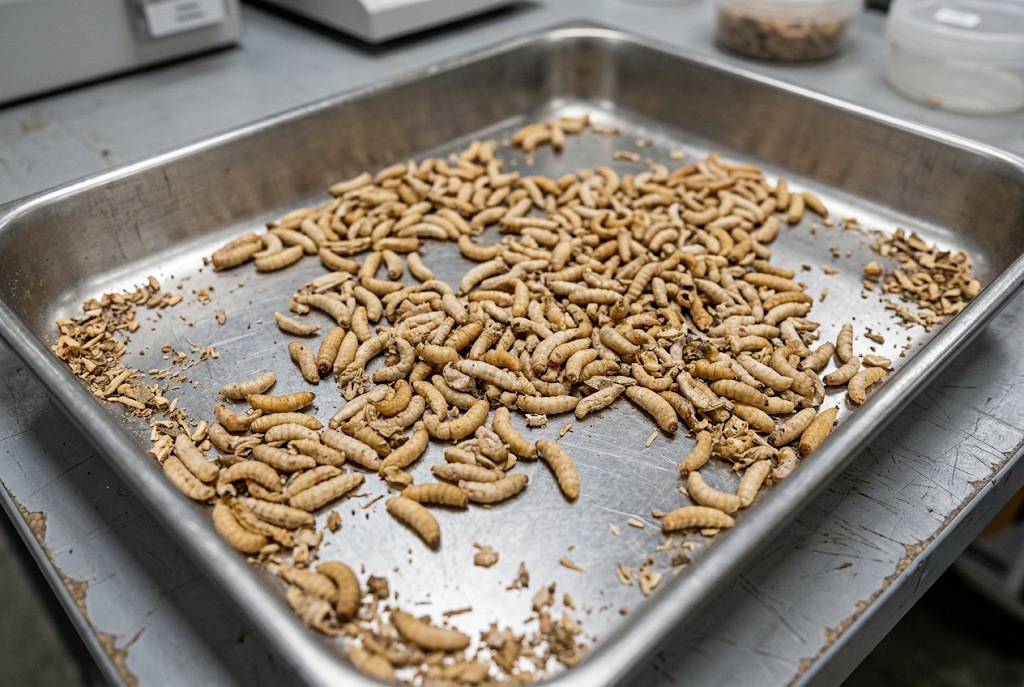
Whole-body condition is one of the most visible characteristics when evaluating dried maggots. A representative sample should be examined for intact larvae, partially damaged pieces, excessive fines, and the overall consistency of the product.
Some degree of variation and breakage can occur during drying, screening, packing, and transportation. The relevant commercial question is therefore not whether every individual larva is perfectly intact, but whether the overall condition meets the buyer’s agreed specification and intended use.
Buyers should also consider how the product may change during international transportation. A sample inspected immediately after production may not experience the same handling pressure as cartons or bags moving through warehousing, palletization, and international freight. Packaging and product fragility should therefore be considered together when establishing an acceptable breakage level.
4. Check Color, Texture, and Odor
Color can provide useful information during inspection, but it should not be treated as a standalone quality score. Dried maggots may show natural color variation depending on the raw material, processing conditions, and other production variables. A darker product is not automatically inferior, just as a lighter product is not automatically superior.
Instead, buyers should establish an acceptable appearance range and investigate unusual discoloration or substantial differences between the approved sample and the commercial batch. Consistency is often more useful for commercial purchasing than an arbitrary preference for one exact color.
Texture and odor should be assessed at the same time. The product should correspond with the agreed dried condition, while unusual odors, unexpected softness, or other abnormal characteristics should trigger further investigation rather than being judged independently of storage, packaging, and batch information.
5. Evaluate Cleanliness and Foreign Matter
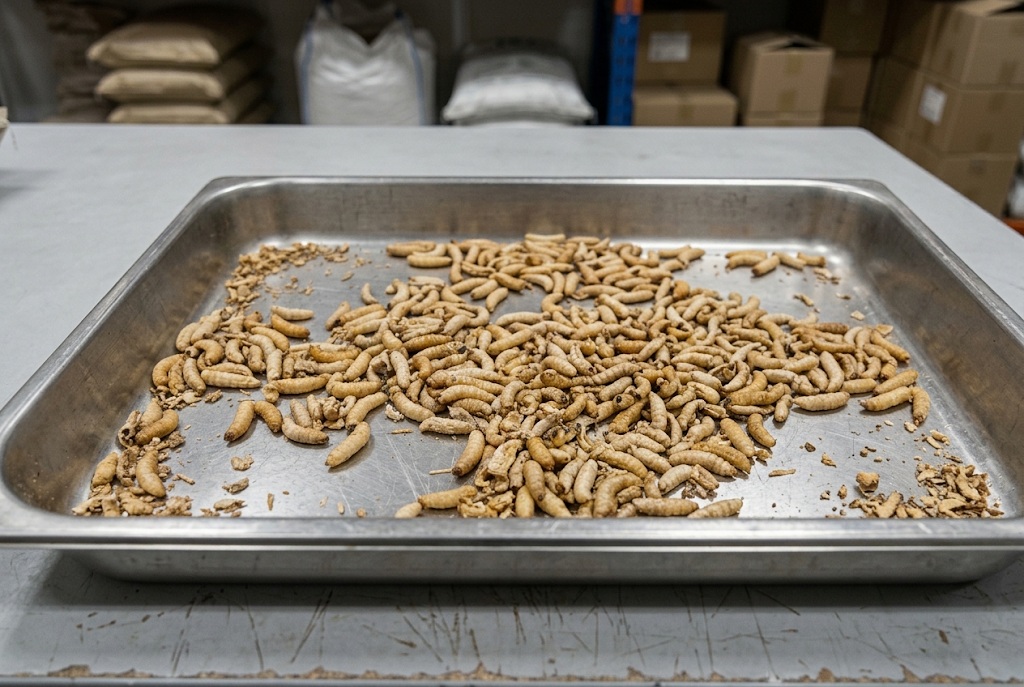
Cleanliness is particularly important when evaluating a whole dried insect product. Buyers should inspect representative samples for visible residue, foreign matter, excessive debris, and other material that does not correspond with the agreed commercial product.
The inspection should cover more than the surface of a sample container. Material from different parts of a representative sample should be examined because heavier or finer foreign matter can distribute unevenly during handling and transportation.
Visual cleanliness is useful for commercial grading, but it does not replace appropriate laboratory testing or supplier documentation. A product can appear visually clean while still requiring analytical verification according to the intended application and destination requirements.
6. Moisture and Storage Condition
Moisture should be treated as a measurable purchasing parameter rather than judged only by touch. The appropriate specification may depend on the product, processing method, packaging system, expected storage period, and buyer requirements.
Buyers should therefore request a defined moisture specification where relevant and confirm how the supplier controls the product before packaging. When reviewing samples or shipments, signs of unexpected softness, clumping, condensation, or other changes in physical condition should be investigated.
Storage and transportation conditions also matter. Even a properly dried product can be affected if the packaging does not provide appropriate protection during warehousing and international transportation. Moisture specification, packaging, and storage should therefore be evaluated as connected parts of the same quality-control system.
7. Review Batch Testing and Documentation
Physical inspection should be supported by appropriate batch information. Depending on the product, intended application, and destination, buyers may request a product specification, Certificate of Analysis, microbiological results, or other relevant documentation before approving a commercial shipment.
The exact testing requirements should not be assumed to be identical for every buyer or market. Instead, the supplier and buyer should agree on the relevant parameters before production or shipment, and the documentation should be traceable to the commercial batch being supplied.
For products intended for the United States, importers should review applicable U.S. animal food import requirements before shipment. FDA guidance explains that imported animal food must meet applicable U.S. requirements, which may include requirements related to ingredient acceptability, facility registration, and prior notice. The exact requirements depend on the product, intended use, and circumstances of importation.
8. Packaging for Bulk Dried Maggots
Packaging is not simply a logistics decision. It can directly affect breakage, moisture exposure, and the condition in which dried maggots arrive at the buyer’s warehouse.
Commercial buyers should confirm the inner and outer packaging materials, net weight per package, sealing method, carton or bag dimensions, palletization requirements, and labeling before shipment. The selected packaging should be appropriate for the product’s physical characteristics and expected transportation conditions.
For buyers comparing several quotations, packaging differences should also be included in the commercial calculation. A lower unit price may not represent a better value if inadequate packaging leads to higher breakage, handling issues, or product loss upon arrival.
9. Use Representative Samples Before Ordering
Samples are most useful when they represent the product that can actually be supplied commercially. Buyers should avoid evaluating only specially selected pieces that may not reflect normal batch variation.
A representative sample can be used to review appearance, size distribution, whole-body condition, breakage, cleanliness, texture, and odor. When analytical requirements are important, the buyer can also compare the physical sample against the corresponding specification or available test data.
The approved sample should become part of the commercial reference for subsequent discussions. However, sample approval should not replace an agreed written specification because normal variation can occur between production batches.
10. Build a Clear Commercial RFQ
A well-structured RFQ makes quotations easier to compare and reduces unnecessary back-and-forth with suppliers. Instead of asking only for a price for dried maggots, buyers should provide enough information for the supplier to understand the actual purchasing requirement.
The RFQ should normally identify the required product form, intended application, approximate quantity, destination, packaging requirement, and any relevant quality or testing requirements. Buyers can also request information on MOQ, available processing options, lead time, sample availability, and preferred trade terms such as FOB or CIF.
Where appearance, moisture, breakage or other physical characteristics are commercially important, these should be discussed before the final quotation rather than after production has begun.
11. Compare Suppliers on the Same Commercial Basis
Supplier quotations should be normalized before a purchasing decision is made. Comparing two prices per kilogram without considering specifications, packaging, quantity, testing, trade terms, and shipping conditions can yield a misleading result.
Buyers should consider the usable product they expect to receive rather than focusing exclusively on the quoted unit price. Excessive breakage, inconsistent batches, unsuitable packaging, or unclear documentation can increase the effective purchasing cost even when the initial quotation appears attractive.
The most useful comparison, therefore, combines product quality, commercial terms, and supply reliability. This makes it easier to identify which supplier offers the most appropriate total value for the intended application.
12. Pre-Shipment and Arrival Inspection
Before shipment, the buyer and supplier should confirm that the commercial batch corresponds with the agreed product, packaging, and documentation requirements. Depending on the order, this may include reviewing batch information, photographs, test documents, packing details, or an inspection sample.
When the shipment arrives, buyers should inspect the packaging condition before evaluating the product itself. Damaged cartons, compromised liners, moisture exposure, or unusual handling conditions can affect the interpretation of product quality.
The received product can then be compared with the approved specification and reference sample. Any significant difference in appearance, odor, moisture condition, cleanliness, or breakage should be documented promptly so that the buyer and supplier can determine whether the variation falls within the agreed commercial standard.
Frequently Asked Questions
What should buyers check when sourcing bulk dried maggots?
Commercial buyers should evaluate product identity, whole-body condition, breakage, color, cleanliness, moisture, odor, packaging, batch documentation, and supplier consistency. The final specification should reflect the intended application and destination requirements.
Are darker dried maggots lower quality?
Not necessarily. Color can vary because of the product and processing conditions. Buyers should evaluate whether the color falls within the agreed commercial range and consider it together with odor, texture, cleanliness, moisture, and other quality indicators.
How important is whole-body condition?
It depends on the application. Buyers selling recognizable whole insects may place greater value on intact appearance, while buyers using dried maggots in further processing may accept a different level of breakage. The acceptable condition should be defined before ordering.
Should buyers request a sample before placing a bulk order?
For a new supplier or specification, a representative sample can help establish expectations for appearance, cleanliness, size distribution, breakage, texture, and odor. The sample should be evaluated together with a written specification rather than used as the only quality standard.
What documents should be requested for commercial dried maggots?
Requirements vary by product, application, and destination. Buyers may need product specifications, batch identification, a Certificate of Analysis, relevant test results, and export or import documentation where applicable.
How should buyers compare dried maggots, suppliers?
Suppliers should be compared using the same product requirements, quantity, packaging, testing requirements, trade terms, and destination. Unit price should be considered together with usable yield, product consistency, documentation, lead time, and landed cost.
Final Buying Review
Sourcing bulk dried maggots successfully requires a purchasing standard that connects the product sample with the specification, commercial batch, documentation, packaging, and final shipment. Appearance is important, but it should not be evaluated independently of cleanliness, moisture, breakage, odor, testing, and intended application.
Before confirming a commercial order, buyers should know exactly what product they are purchasing, what level of physical variation is acceptable, what documentation is required, and how the shipment will be packed and inspected. These requirements provide a clearer basis for comparing suppliers and reducing quality disputes after delivery.
For buyers evaluating a new supply program, BulkInsects can provide product information, available specifications, representative samples, and commercial quotations based on required quantity, packaging, application, and destination. Buyers can contact BulkInsects with their purchasing requirements to begin the RFQ process.