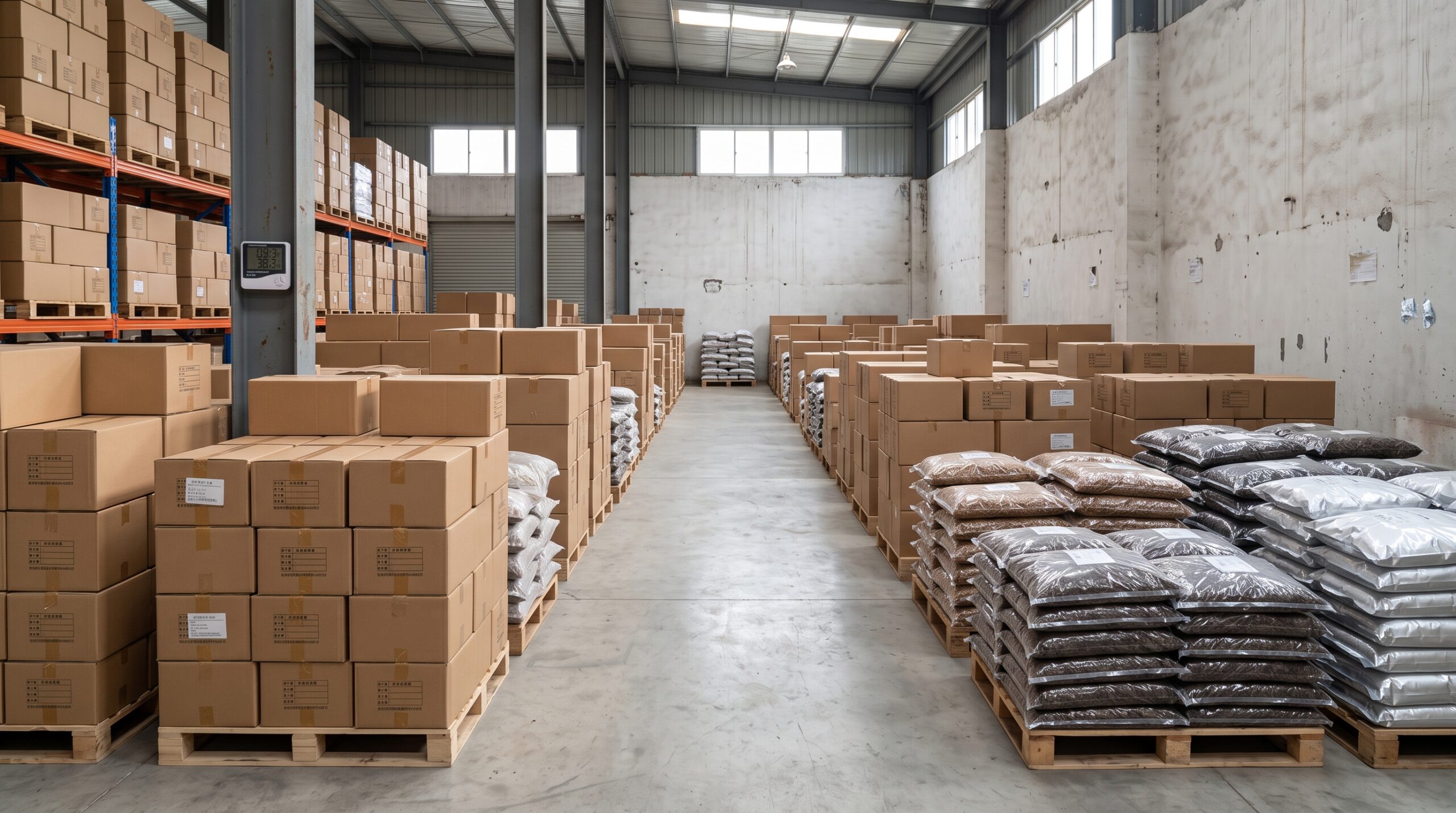

Dried insect storage begins before the first pallet enters a warehouse. Commercial buyers need to confirm the product condition, packaging, batch identity, and storage assumptions upon ordering. After arrival, warehouse practices can affect moisture, breakage, cleanliness, traceability, and the usable condition of inventory.
For wholesalers, distributors, repackers, farms, pet product businesses**, and** feed-related buyers, a storage plan should reflect the insect species, whole-product form, packaging barrier, local climate, expected holding time**, and** intended application. No single temperature, humidity level, or shelf-life period should be copied across every dried insect product.
This guide explains how B2B buyers can plan receiving, warehouse layout, environmental monitoring, stock rotation and corrective action without treating storage as a substitute for suitable processing, packaging or batch evaluation.
Define Storage Requirements Before Purchasing
The supplier and buyer should discuss storage before confirming the order. This is especially important when goods will remain in inventory for several months, move through more than one warehouse, or be opened and repacked after arrival.
The purchasing team should confirm:
- insect species and whole-product form;
- processing method and commercial grade;
- proposed inner and outer packaging;
- net weight per package;
- batch or lot identification;
- available storage guidance;
- packing and expected shipment dates;
- destination climate and transport route;
- expected warehouse holding period;
- whether packages will remain sealed or be opened for repacking; and
- any buyer- or market-specific handling requirements.
Storage statements should be interpreted carefully. “Store in a cool, dry place” serves as a general direction, but it does not define warehouse, packaging, or monitoring responsibilities. Buyers should ask what conditions and packaging were assumed when any shelf-life or reference information was established.
Inspect the Shipment Before Warehouse Release
Receiving inspection creates the starting record for stored inventory. If cartons are wet, liners are punctured, or batch labels are inconsistent upon arrival, placing everything into normal stock can make the cause and scope of a later problem hard to determine.
Before releasing goods into the warehouse, check:
- container or vehicle condition;
- signs of rain exposure, condensation or strong odours;
- pallet stability and movement during transit;
- crushed, stained, punctured or open packages;
- inner-liner and seal condition where visible;
- product, batch and package identification;
- package count and net-weight information;
- consistency with the packing list and other records; and
- unusual product condition near damaged packaging.
Photograph the container, pallets, labels, and any damaged units before unloading is completed. Isolate questionable packages rather than mixing them immediately with accepted stock. An abnormal package does not automatically mean that the entire batch is unsuitable, but it must be assessed before distribution or repacking.
How Moisture Affects Dried Insect Storage
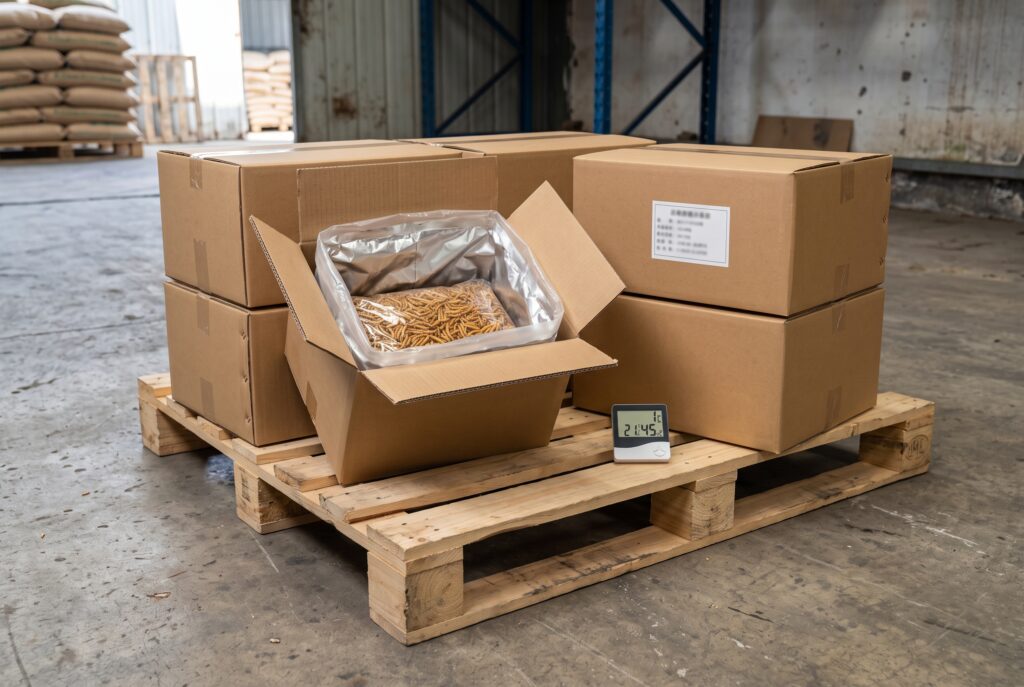
Whole dried insects can exchange moisture with the surrounding environment if packaging is opened, damaged, or has insufficient barrier performance. High warehouse humidity, condensation, and repeated exposure during repacking can change product feel, flow, and storage behaviour. Very dry product can also become more brittle during handling.
Moisture content and water activity are different measurements, and neither should be interpreted without the method and product context. Buyers can review how to evaluate dried insect moisture before setting receiving or storage checks.
Practical moisture-control measures include:
- keeping inner liners sealed until needed;
- closing partly used packages promptly;
- avoiding storage beneath leaking roofs or near open doors;
- protecting stock during rainy loading and unloading;
- monitoring warehouse conditions over time;
- investigating condensation rather than simply wiping it away;
- avoiding direct contact between packages and damp floors or walls; and
- checking packaging after major temperature or humidity events.
A single room reading does not describe the condition of every pallet. Position sensors where they provide useful information, and review records for trends and excursions. Appropriate limits must be set on the product, packaging, intended use, and applicable requirements rather than an unsupported universal number.
IMAGE 2 POSITION — insert immediately after this section and before the next H2, “Build a Suitable Warehouse Layout.”
Build a Suitable Warehouse Layout
A suitable layout supports cleaning, inspection, airflow, traceability, and safe material handling. Position pallets properly so warehouse staff can inspect packages and identify lots without dismantling the entire storage area.
Good layout practices may include:
- storing packages on clean, sound pallets or appropriate racking;
- maintaining practical clearance from walls and floors;
- keeping aisles open for inspection and material movement;
- separating dried insects from chemicals, waste and strong-smelling materials;
- preventing contact with wet goods or incompatible cargo;
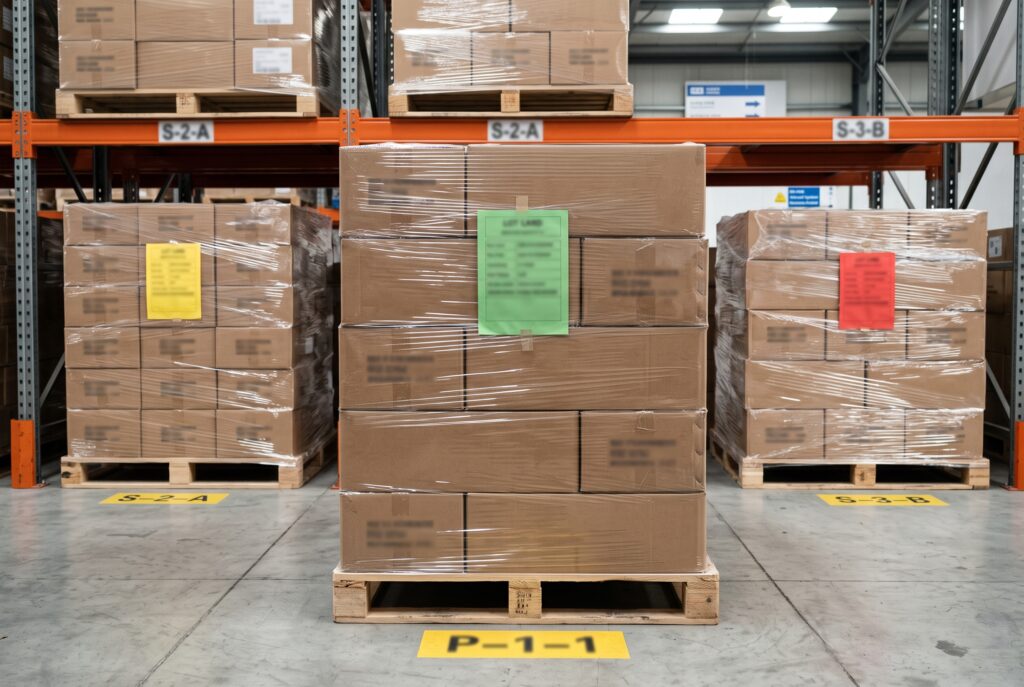
- assigning clear locations to each product and batch;
- protecting lightweight cartons from unstable heavy loads; and
- identifying quarantine, released, and rejected stock areas.
Stacking height should reflect carton strength, package weight, pallet pattern, and expected storage period. A pallet that remains stable during loading may compress over time in a warehouse. Inspect lower cartons for bulging or crushing, and avoid adding loads above the agreed design.
Sunlight and localized heat can also create uneven conditions. Avoid placing stock against hot surfaces or in areas with direct sun exposure unless the packaging and storage plan has undergone evaluation.
Keep Packaging Intact During Storage
Packaging is the main physical boundary between the product and the warehouse environment. Inspect it when received and at planned intervals during storage.
Check for:
- pinholes, tears, or open seals;
- loose ties or incomplete closures;
- carton compression or collapsed corners;
- damaged stretch wrap or strapping;
- labels that have detached or become unreadable;
- evidence of moisture, dust or product leakage; and
- movement that makes the pallet unsafe.
Do not repair a damaged package without recording the original condition and maintaining the lot identity. If product must be transferred to a new liner or carton, use suitable clean packaging and document the date, quantity, reason and responsible person.
Correct packaging structure must be agreed upon before shipment. Our dried insect packaging guide explains the roles of inner liners, outer bags or cartons, labels, pallets and container preparation.
Separate Products, Batches and Statuses
Traceability becomes more difficult when similar-looking products or batches share an unmarked storage area. Each package should remain connected to the product name, batch number, and receiving record.
Warehouse locations should distinguish:
- different insect species;
- different commercial grades;
- separate production batches;
- released and pending-inspection stock;
- returned or damaged goods;
- customer-reserved inventory; and
- opened packages awaiting repacking or use.
Physical separation may involve different pallet positions, racks, zones, or clearly controlled status labels. The exact system can vary, but staff should be able to identify a package without relying on memory.
When product is repacked, the new package should retain an appropriate connection to the original batch. Combining partial bags from different lots may reduce traceability and complicate investigation unless the process is controlled and documented.
Use Stock Rotation Based on Batch and Condition
First-in, first-out can be useful, but first-expired, first-out may be more appropriate when batches have different packing dates, remaining shelf-life assumptions, or customer requirements. The warehouse system should show both the location and status of each batch.
A stock-rotation record may include:
- product and grade;
- batch or lot number;
- quantity received;
- packing and receiving dates;
- supplier or order reference;
- available shelf-life or review date;
- package status;
- quantity issued or repacked; and
- remaining balance.
Do not assign a new shelf life simply because the package appears normal. If a stated period has been exceeded or storage records show an important deviation, determine whether inspection, sampling, testing, or another documented decision is needed.
Monitor Pests, Cleanliness and Cross-Contamination Risks
Dry warehouses can still face insects, rodents, dust, and cross-contamination. A pest-management program should focus on prevention, inspection and documented response, while avoiding uncontrolled treatment around exposed product.
Warehouse controls may include:
- keeping doors, screens and building openings in suitable condition;
- cleaning product spills promptly;
- avoiding unnecessary cardboard or waste accumulation;
- inspecting pallets and storage areas;
- monitoring for pest evidence;
- protecting open product during repacking;
- controlling tools and cleaning materials; and
- documenting findings and corrective actions.
The current US animal-food CGMP provisions in 21 CFR §507.25 illustrate principles such as suitable packaging materials, protection against contamination, and holding under appropriate temperature and relative humidity. These provisions should not be treated as a universal storage specification for every dried insect order or destination; buyers remain responsible for identifying the requirements that apply to their product and market.
If pest evidence appears, isolate the affected area and assess the packaging, nearby stock, and warehouse condition. Do not assume that applying chemicals directly around stored product is an acceptable corrective action.
Manage Opened Packages and Repacking
Once an inner liner is opened, the product has less protection from humidity, dust, handling, and mix-ups. Repacking areas should be clean, organized, and linked to the relevant batch records.
A practical opened-package procedure should specify:
- who may open and reseal packages;
- how the original batch is recorded;
- how long product may remain exposed;
- which clean tools and containers are used;
- how remaining product is resealed;
- how new package labels are created;
- how fragments or spills are handled; and
- when an opened package requires additional review.
Avoid returning unidentified loose product to a batch. Product collected from floors, damaged cartons, or uncontrolled areas should not be mixed into saleable inventory without an appropriate documented assessment.
Review Stored Inventory at Planned Intervals
Storage is not a set-and-forget process. Inspection frequency should reflect inventory value, warehouse conditions, product sensitivity, holding time, and past findings.
Routine reviews can examine:
- temperature and relative-humidity records;
- roof, wall and floor condition;
- seals, liners and carton strength;
- pallet stability;
- pest-monitoring findings;
- label readability and batch identification;
- stock age and rotation status;
- opened or partly used packages; and
- any odour, clumping, softness, colour change or leakage.
Observations should be recorded consistently. A simple checklist is more useful than relying on different staff members to remember different details.
IMAGE 3 POSITION — insert immediately after this section and before the next H2, “Respond to Storage Deviations Systematically.”
Respond to Storage Deviations Systematically
When a warehouse deviation occurs, protect the evidence and determine the affected scope before making a release decision.
A basic response can include:
- identify the event and time period;
- place potentially affected stock on hold;
- record batch numbers, locations and quantities;
- photograph packages and warehouse conditions;
- review environmental and handling records;
- inspect representative packages;
- collect samples when appropriate;
- decide whether testing or supplier discussion is needed; and
- document the final disposition.
A short humidity excursion, one crushed carton, and a visibly wet pallet are different situations. Avoid treating every event identically. The decision should consider duration, package integrity, product observations, test results where applicable, and intended use.
Storage inspection should form part of a wider dried insect quality control process rather than being judged from appearance alone.
Questions Buyers Should Ask in an RFQ
Before purchasing bulk inventory, ask:
- What packaging structure is offered?
- What storage guidance is available for the specific product?
- On what packaging and conditions is any shelf-life statement based?
- Will each commercial batch be clearly identified?
- Can current package photographs and label details be reviewed?
- What are the packing date and expected shipment schedule?
- Are retained samples or batch documents available?
- What should the buyer inspect on arrival?
- Are custom pack weights or pallet formats available?
- How should opened packages be resealed?
Include the product, quantity, destination, packaging, expected holding period, and intended use when requesting a quotation. Buyers can submit these requirements through the contact form so that available packaging, testing, and documentation arrangements can be reviewed for the order.
Dried Insect Storage Checklist
| Stage | Point to confirm |
|---|---|
| Purchasing | Storage assumptions and expected holding time are discussed |
| Receiving | Container, pallets, packages, and labels are inspected |
| Release | Accepted, pending, and damaged stock are separated |
| Location | Packages are kept off damp surfaces and away from incompatible materials |
| Environment | Relevant conditions are monitored and records reviewed |
| Packaging | Liners, seals, cartons and pallet stability remain intact |
| Traceability | Product, batch and status remain identifiable |
| Rotation | Stock is issued according to batch condition and applicable dates |
| Open packages | Exposure, resealing and relabelling are controlled |
| Deviations | Affected inventory is held, assessed and documented |
Conclusion
Effective dried insect storage combines suitable packaging, receiving inspection, warehouse control, traceability, stock rotation and documented responses to deviations. No single temperature, humidity level or shelf-life period is appropriate for every species, package and destination.
B2B buyers should define storage expectations before purchase and confirm what any supplier guidance assumes. Once goods arrive, keeping packages dry, intact, identified, and separated makes later inspection and inventory decisions more reliable. Storage supports product condition, but it cannot correct unsuitable initial quality, damaged packaging, or unclear batch documentation.
Frequently Asked Questions
What temperature should dried insects be stored at?
There is no universal temperature for every dried insect product. The appropriate condition depends on the species, moisture condition, packaging, intended use, and applicable requirements. Buyers should use product-specific guidance and monitor their actual warehouse environment.
Should dried insects be refrigerated?
Bulk whole dried insects are not automatically refrigeration products. Refrigeration can also introduce condensation risks when packages move between environments. Confirm product-specific requirements before choosing cold storage.
How should opened bags of dried insects be stored?
Minimize exposure, use clean handling tools, reseal the liner promptly, and keep the original batch identification. Opened-product procedures should reflect the warehouse climate, packaging, and expected time before use.
Can different dried insect batches be stored together?
They may be held in the same warehouse if identities and statuses remain controlled, but batches should not be mixed physically without a documented reason and traceability system.
What should buyers do if packaging becomes wet or damaged?
Isolate affected packages, record the batch and location, photograph the condition, and assess the product before release. Depending on the event, sampling, testing, or supplier discussion may be appropriate.