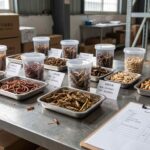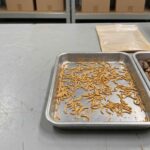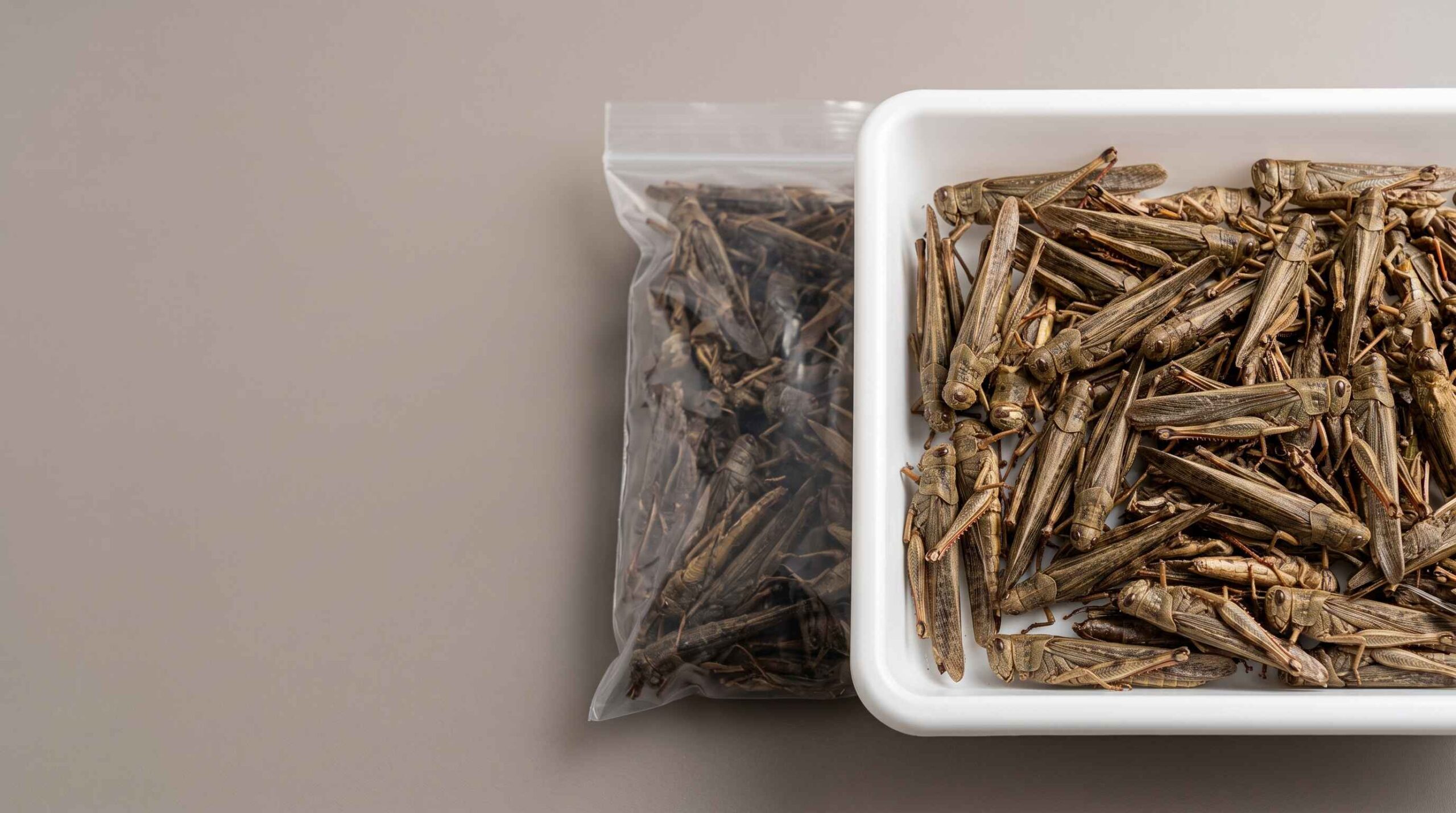

Buying bulk dried grasshoppers requires more than comparing prices and product photographs. Commercial buyers need to confirm exactly which insect is being offered, whether the body condition suits the intended market, how the product was processed, what testing applies to the batch, and whether the packaging can protect a relatively fragile whole insect during international transport.
These questions matter because dried grasshoppers are purchased for different uses. A distributor or pet-treat brand may prioritise large, recognisable bodies and visual presentation. A feed-related buyer may place greater emphasis on cleanliness, moisture, composition, and batch documents. Freeze-dried and heat-dried products may also serve different price and appearance segments.
This guide explains how importers, distributors, wholesalers, resellers, farms, and other B2B buyers can define requirements and compare offers. It does not establish one universal specification or imply that every species is permitted for every market. Final product, testing, and import requirements should be confirmed for the intended application and destination.
Key Takeaways
- Confirm the species or commercial identity before comparing suppliers.
- Define what “whole” means, including the treatment of missing legs, wings, and antennae.
- Match freeze-dried or heat-dried options to the required market position rather than assuming one method is always better.
- Evaluate colour, odour, texture, cleanliness, moisture, and breakage separately.
- Connect the approved sample, written specification, batch documents, and shipment inspection.
- Compare landed value and usable yield, not only the quoted price per kilogram.
1. Why Product Identity Comes First
“Grasshopper” can be used broadly in commerce, and common names may vary between suppliers and countries. Some offers may also use the terms grasshopper and locust inconsistently. A product photograph or common name alone is therefore not enough for an international order.
Ask the supplier to confirm, where available:
- scientific and common name;
- country and production origin;
- farmed or collected source;
- whole, broken, or milled commercial form;
- life stage and typical size range;
- processing method;
- intended application; and
- lot or batch identification.
The identity should remain consistent across the quotation, specification, label, Certificate of Analysis and shipping documents. Buyers should also confirm that the offered species and intended use are acceptable in the destination market. Commercial availability does not by itself establish regulatory acceptance.
For the current whole-product offer, review the dried grasshoppers product page before sending detailed requirements.
2. Define the Application and Buyer Type
The intended use determines which quality characteristics deserve the most attention. Potential buyers include:
- importers and national distributors;
- wholesalers and regional resellers;
- reptile, bird and pet-treat brands;
- aquaculture and farm-related buyers;
- feed businesses using whole insects; and
- processors requiring a whole dried raw material.
A reseller displaying whole grasshoppers may require consistent size, clear species identity and strong body presentation. A buyer incorporating the product into another format may accept more breakage but require tighter limits for foreign matter, moisture or composition.
State the destination country, application, target customers and whether the grasshoppers will be sold whole, repacked or processed further. These details help the supplier propose an appropriate grade rather than simply quoting the lowest available product.
3. Understand Commercial Grades
Terms such as premium, export grade, and commercial grade are not universal standards. Each supplier may use them differently, so the description must be converted into measurable requirements.
A whole-product grade may consider:
- proportion of recognisable bodies;
- missing or detached legs, wings, and antennae;
- size distribution;
- colour range;
- loose fragments and fines;
- visible foreign matter;
- drying condition; and
- packaging protection.
For a premium visual grade, the buyer may request more intact appendages, a narrower size range, and greater colour consistency. A commercial grade may allow more natural variation and detached parts while maintaining acceptable identity, cleanliness, moisture, and batch control.
Do not assume that every missing leg makes the whole body unacceptable. Dried grasshoppers are brittle, and appendages can detach during processing and transport. The contract should distinguish substantially whole bodies from detached appendages and from small fragments or powder.
4. Measure Whole-Body Condition and Breakage
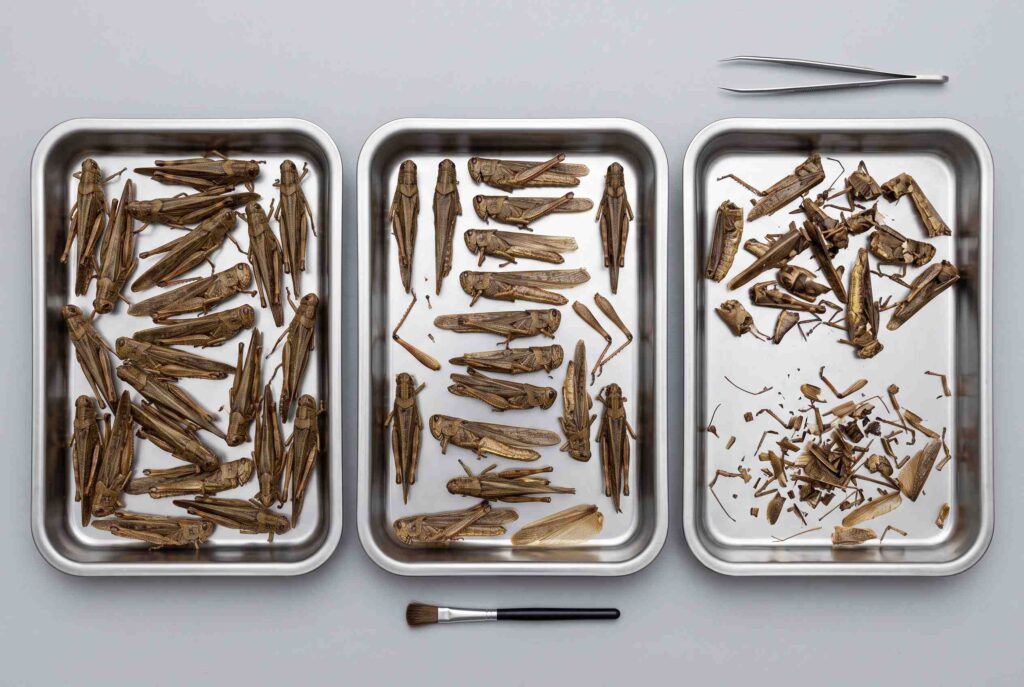
Whole-body appearance is often a central purchasing factor, but the inspection method must be clear. Evaluate a known sample weight taken from a representative package rather than selecting several attractive insects from the top.
Separate the sample into categories such as:
- Recognizable whole bodies: the main body remains substantially intact.
- Whole bodies with missing appendages: the body is identifiable, but one or more legs, wings, or antennae are absent.
- Large broken pieces: substantial portions remain, but do not meet the agreed whole-body definition.
- Small fragments and fines: small pieces or powder collected throughout the pack.
Record each category by count or weight using the agreed method. Count-based and weight-based results are not directly interchangeable, so the purchasing document should state which basis applies.
The lower part of a package may contain more loose pieces than the upper layer. Sample different positions when practical and inspect the material collected at the bottom.
5. Evaluate Size and Natural Variation
Grasshoppers can vary substantially in body length, body mass, and appendage size. Size affects visual presentation, retail pack count, carton density, and sometimes customer preference.
A size requirement should define:
- how body length is measured;
- whether antennae and extended legs are excluded;
- typical or permitted range;
- tolerance for small or large outliers; and
- whether mixed sizes are acceptable.
Avoid relying only on labels such as small, medium, or large. Ask for a ruler-based reference photograph and confirm that the sample represents commercial production.
Some natural variation should be expected. The goal is not identical insects but a distribution suitable for the application. If size is commercially important, retain an approved sample and use the same inspection method for repeat orders.
6. Compare Freeze-Dried and Heat-Dried Options
Drying method can affect appearance, structure, texture, cost, and handling behaviour. BulkInsects may coordinate different options according to availability and buyer requirements, but the exact process and offered grade should be confirmed for each quotation.
Freeze-dried grasshoppers
Freeze-drying may better preserve three-dimensional body shape and a lighter visual appearance. It is often positioned for premium whole-product presentation. However, the process is generally more costly, and the porous product can still be fragile or vulnerable to moisture uptake if packaging is inadequate.
Heat-dried grasshoppers
Heat drying is commonly suited to commercial-volume supply. It may produce a denser texture and deeper colour, depending on time, temperature, and pretreatment. A darker appearance does not automatically indicate poor quality or overprocessing.
Neither method is automatically superior for every buyer. Compare:
- body shape and appendage retention;
- target colour and texture;
- moisture specification;
- expected breakage during transport;
- packaging requirement;
- order quantity and lead time; and
- total commercial cost.
The process name alone does not prove safety, shelf life or microbiological status. Those questions require appropriate controls and batch evidence.
7. Check Colour, Odour and Texture
Colour can vary with species, maturity, feed, pretreatment, drying, and storage. Evaluate whether the batch falls within the agreed reference range rather than judging quality solely by whether it is light or dark.
Investigate:
- severe or localised scorching;
- unexplained blackened areas;
- damp, sticky or greasy surfaces;
- visible mould-like growth;
- unusual staining; and
- major variation from the approved sample.
The odour should be consistent with the product and processing method. Strong rancid, sour, musty, chemical, or excessively burnt odours warrant investigation. Odour is a screening check and does not replace microbiological or chemical testing.
Texture should be dry and consistent with the agreed process. Unexpected softness, clumping or surface moisture may indicate moisture exposure. Excessive brittleness can increase fragments and reduce usable whole-product yield.
8. Inspect Cleanliness and Foreign Matter
Spread a representative sample over a contrasting inspection tray under consistent lighting. Examine both intact insects and loose material from the package.
Potential unwanted material includes:
- soil, sand, or stones;
- plant or collection debris;
- unrelated insect material;
- string, plastic, metal, or packaging fragments;
- abnormal clumps; and
- unidentified particles.
The inspection should separate foreign matter from grasshopper material. Detached legs and wings may affect visual grade, but they are not the same as stones, fibers, or plastic.
Farmed and collected supply chains may present different control questions, but source type alone does not determine final quality. Buyers should ask how raw material is received, cleaned, sorted, heat-treated where applicable, dried, inspected, and protected after processing.
Define critical defects, measurable tolerances, sample size, and rejection procedures. The single word “clean” is not an adequate specification.
9. Review Moisture and Storage Stability
Moisture affects brittleness, clumping, transport condition, and storage behavior. A useful requirement should state:
- agreed maximum or range;
- analytical method;
- reporting unit and basis;
- sample preparation;
- batch or lot represented; and
- timing of testing relative to packing.
Visual crispness is not a substitute for measurement. A small sample from the top of one package may also fail to represent the lot.
Buyers should distinguish moisture content from water activity. Moisture content measures water under a defined method, while water activity concerns the availability of water for reactions and microbial growth. Neither value alone guarantees a universal shelf life.
The broader guide to dried insect moisture explains testing, packaging, and storage considerations in more detail.
10. Request Batch Testing and Documentation
The required documentation depends on product identity, application, destination, and buyer risk assessment. A typical review may include:
- product specification;
- Certificate of Analysis linked to the lot;
- moisture and proximate composition;
- relevant microbiological parameters;
- contaminants required for the market or application;
- origin and species information;
- production and best-before dates;
- packaging and label details; and
- health or export documentation, where applicable.
Do not assume that one standard test panel suits every market. Confirm the required parameters and limits with qualified regulatory or technical advisers.
When reviewing results, verify that names, lot numbers, units, methods, and dates correspond to the shipment. The guide on how to read a COA for dried insects provides a structured document-review process.
For US animal-food contexts, 21 CFR Part 507 provides background on current good manufacturing practice and risk-based preventive controls for animal food. It does not establish approval for a particular grasshopper species, product, or intended use.
11. Evaluate Packaging for a Fragile Whole Product
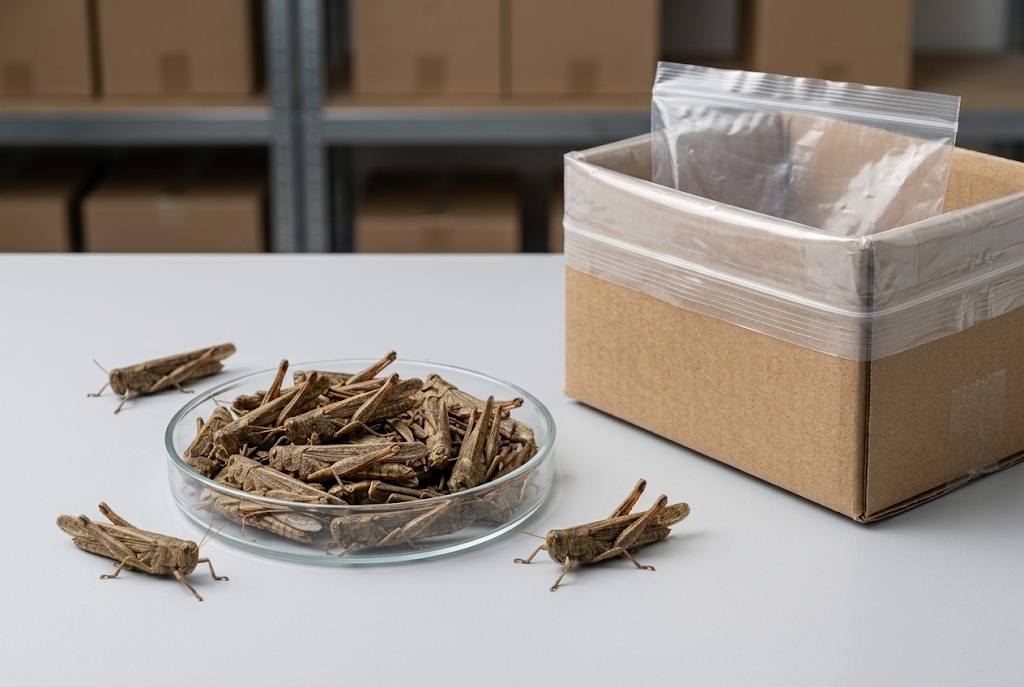
Packaging should protect the product from crushing, moisture, pests, contamination and strong external odours. Because grasshoppers have long legs, wings and antennae, the chosen pack format can materially affect arrival condition.
Review:
- inner-liner material and seal;
- carton or outer-bag strength;
- net weight per unit;
- fill density and compression;
- headspace and product movement;
- pallet stacking pattern;
- moisture-barrier requirements;
- lot labels and traceability; and
- container conditions and route.
Overfilled bags or heavily stacked cartons may reduce shipping volume but increase damage. A lower pack weight with stronger outer support may be appropriate when visual presentation matters.
Ask for photographs of the proposed inner pack, closed carton, and finished pallet. If intactness is a critical specification, a transport trial or post-transit sample provides more relevant evidence than a sample collected immediately after production.
12. Use Representative Samples Before Ordering
A pre-order sample allows the buyer to evaluate identity, appearance, odour, texture, cleanliness and breakage. It should represent the offered commercial grade rather than a hand-selected group of the best-looking insects.
Record:
- sample and lot reference;
- sample weight and packaging;
- species or declared identity;
- drying method;
- body-condition categories;
- size distribution;
- colour, odour and texture;
- foreign matter and loose residue; and
- moisture or other relevant results.
Retain an approved reference sample when practical. Store it in a sealed, labeled container so it does not change before future comparisons. Controlled photographs can support the physical sample but should not replace it.
Buyers can use the dried insect sample service to define evaluation requirements before confirming commercial volume.
13. Build a Clear RFQ
A detailed request for quotation reduces unsuitable offers and makes comparisons more reliable. Include:
- destination country and delivery location;
- intended application;
- required species or identity information;
- whole-product grade;
- drying preference;
- typical size range;
- tolerance for missing appendages, fragments, and fines;
- moisture and cleanliness requirements;
- required testing and documents;
- packaging size and material;
- target quantity and order frequency;
- Incoterm and required delivery period; and
- sample-approval process.
If a requirement is mandatory, state it before the quotation and sample are approved. Avoid adding a new visual or laboratory condition after production unless both parties agree on how it will be handled.
14. Compare Quotations on the Same Basis
Two prices may refer to materially different products. Compare:
| Comparison area | Questions to ask | Commercial effect |
|---|---|---|
| Product identity | Are species, origin and form equivalent? | Regulatory and application suitability |
| Whole-body grade | How are missing appendages and fragments classified? | Usable yield and customer presentation |
| Drying method | Freeze-dried, heat-dried or another process? | Appearance, texture, cost, and handling |
| Size | Is the same measurement basis used? | Pack count and visual consistency |
| Moisture | Are the method, unit, and sample comparable? | Storage and transport behaviour |
| Testing | Which results are batch-specific? | Documentation strength and cost |
| Packaging | Are unit weight and protection equivalent? | Breakage and landed condition |
| Trade terms | Which Incoterm, port and services apply? | True landed cost |
Calculate the expected yield of saleable or usable product rather than looking only at gross weight. A cheaper lot with more fragments, mixed identity, or weak packaging may create higher sorting, repacking, and customer-service costs.
15. Pre-Shipment and Arrival Inspection
Before loading, check that the approved specification, sample, batch documents, labels, and packaging refer to the same commercial lot. Confirm carton condition and pallet protection.
Upon arrival, inspect:
- lot codes and documents;
- carton, bag, and liner condition;
- wet, punctured, or compressed packaging;
- condensation or clumping;
- abnormal odour;
- whole-body condition and loose fragments;
- visible foreign matter; and
- differences among selected packages.
If a deviation is found, isolate the affected material and preserve evidence. Record package numbers, photographs, sample weights, storage conditions, and inspection timing. Any retesting should follow an agreed sampling and dispute procedure.
16. Common Buying Mistakes
Ordering by photograph alone
Photographs do not establish species, moisture, cleanliness, batch identity or arrival condition. Use a representative sample and a written specification.
Treating every detached leg as a broken body
Define whole-body condition, missing appendages, and fragments separately so the grade reflects the actual application.
Assuming freeze-dried always means higher overall quality
Freeze-drying may suit a premium appearance, but heat-dried products can be appropriate for commercial applications. Evaluate the complete specification, not the process name alone.
Assuming darker colour means defective product
Colour depends on species and processing. Investigate abnormal scorching, but compare against the approved range.
Comparing prices without packaging and Incoterms
Pack format, breakage risk, freight efficiency, and trade terms can change the true cost substantially.
Using one sample as a permanent guarantee
Biological raw materials and batches vary. Apply the agreed verification process to repeat shipments.
Frequently Asked Questions
What should buyers specify when ordering bulk dried grasshoppers?
Buyers should state the species or required identity, destination, application, whole-body grade, size, drying method, fragment tolerance, moisture, cleanliness, testing, packaging, order quantity, and trade terms.
Are freeze-dried grasshoppers better than heat-dried grasshoppers?
Not for every application. Freeze-drying may support premium body shape and appearance, while heat drying may be more suitable for commercial-volume supply. Buyers should compare appearance, moisture, breakage, packaging, cost, and intended use.
Is a grasshopper still considered whole if a leg is missing?
That depends on the agreed definition. A recognizable main body may be classified as a whole even when an appendage is missing. The specification should separate intact bodies, bodies with missing appendages, broken pieces, and fines.
Which documents should accompany a bulk shipment?
Requirements vary, but buyers may request a product specification, batch-linked COA, origin and identity information, production dates, packing list, labels, and destination-specific health or export documents.
How can buyers reduce breakage during transport?
Use an appropriate unit weight, strong outer cartons, sealed liners, controlled fill density, stable pallets, and protection from compression and moisture. When whole-body presentation is critical, evaluate a transport-exposed sample.
Final Buying Review
Successful sourcing of bulk dried grasshoppers begins with precise product identity and a clear definition of the required commercial grade. Buyers should evaluate whole-body condition, detached appendages, fragments, size, colour, cleanliness, moisture, processing, documents, and packaging as separate but connected factors.
The strongest purchasing process combines a representative sample, written specification, batch-linked testing, protective packaging, and documented inspection before shipment and after arrival. This approach makes quotations easier to compare and reduces disagreement about subjective terms such as “whole,” “premium,” or “clean.”
To discuss available options, contact BulkInsects with the destination, application, quantity, drying preference, packaging, and required grade. Final parameters should be confirmed against the available product and applicable import requirements.