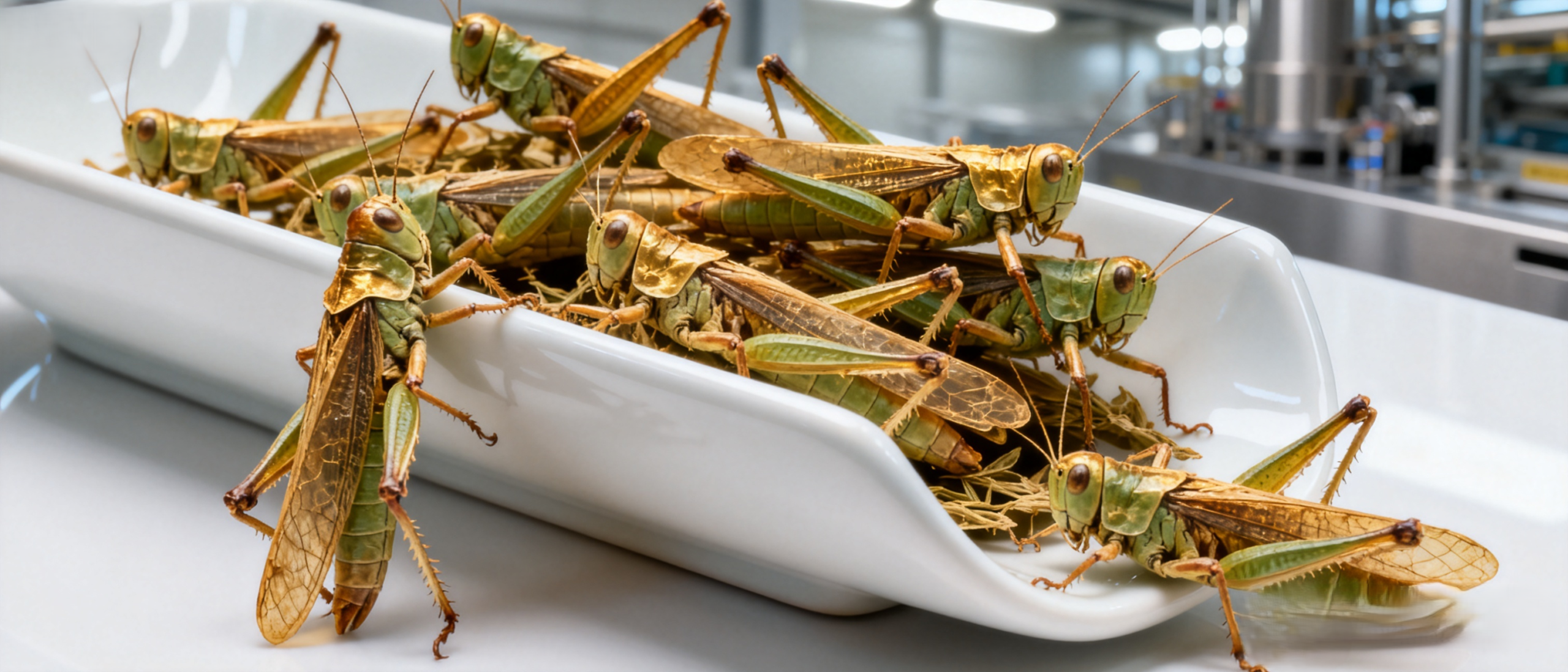

Importing dried grasshoppers (especially food-grade grasshopper powder) into the European and American markets faces compliance as the first hurdle. Regulations are still evolving as of 2026, and a lack of understanding of the latest requirements could result in the entire shipment being detained or even destroyed by customs. This guide outlines the main regulatory requirements in the EU and the US.
EU Market: Novel Food Regulation Framework
In the EU, insects fall under the category of “novel foods” and require authorization for legal sale. To date, the EU has approved several insects, including mealworms, house crickets, and migratory locusts, as novel foods.
For dried grasshoppers to enter the EU market, the key is whether the specific species is on the approved list. Before purchasing, it is essential to verify the Latin name of the species provided by the supplier and compare it with the EU-approved species. Unapproved species can only be used for animal feed and cannot enter the human food chain.
US Market: GRAS Designation and FDA Regulation
The US regulation of insect protein is relatively flexible. If a supplier can prove that a specific species of grasshopper has a history of consumption before 1994, they can independently designate it as GRAS. Otherwise, a GRAS notification must be submitted to the FDA.
In practice, the import threshold for feed-grade dried grasshoppers is lower than that for food-grade. Human-consumption grade grasshoppers must comply with FDA food facility registration, labeling regulations, and production standards.
Document Preparation Checklist
Whether in the EU or the US, importing dried grasshoppers requires at least the following documents:
Certificate of Origin
Product Composition Analysis Report (including protein, moisture, ash, etc.)
Microbiological Testing Report
Heavy Metal Testing Report
Pesticide Residue Testing Report (especially crucial)
EU Additional Requirements: Novel Food Authorization Documents or Certificates
US Additional Requirements: FDA Registration Number and Label Review
Incomplete documentation can result in container delays at the port, incurring high demurrage and storage fees. It is recommended to obtain a complete set of electronic documents before shipment and send them to the customs broker for review in advance.
Label Compliance Easily Overlooked
Europe and the US have strict requirements for food labeling. When dried grasshoppers are sold as a raw material, the label should at least include: product name (including the scientific name of the insect species), net weight, production date and shelf life, storage conditions, country of origin, batch number, and supplier information. If the products are destined for the EU, allergen information must also be provided (insect proteins may cause cross-allergic reactions with crustaceans).
Compliance is not a one-time task; regulations are updated annually. Before signing long-term procurement contracts, taking the time to consult with customs brokers or food lawyers familiar with the insect protein sector can prevent significant future losses.