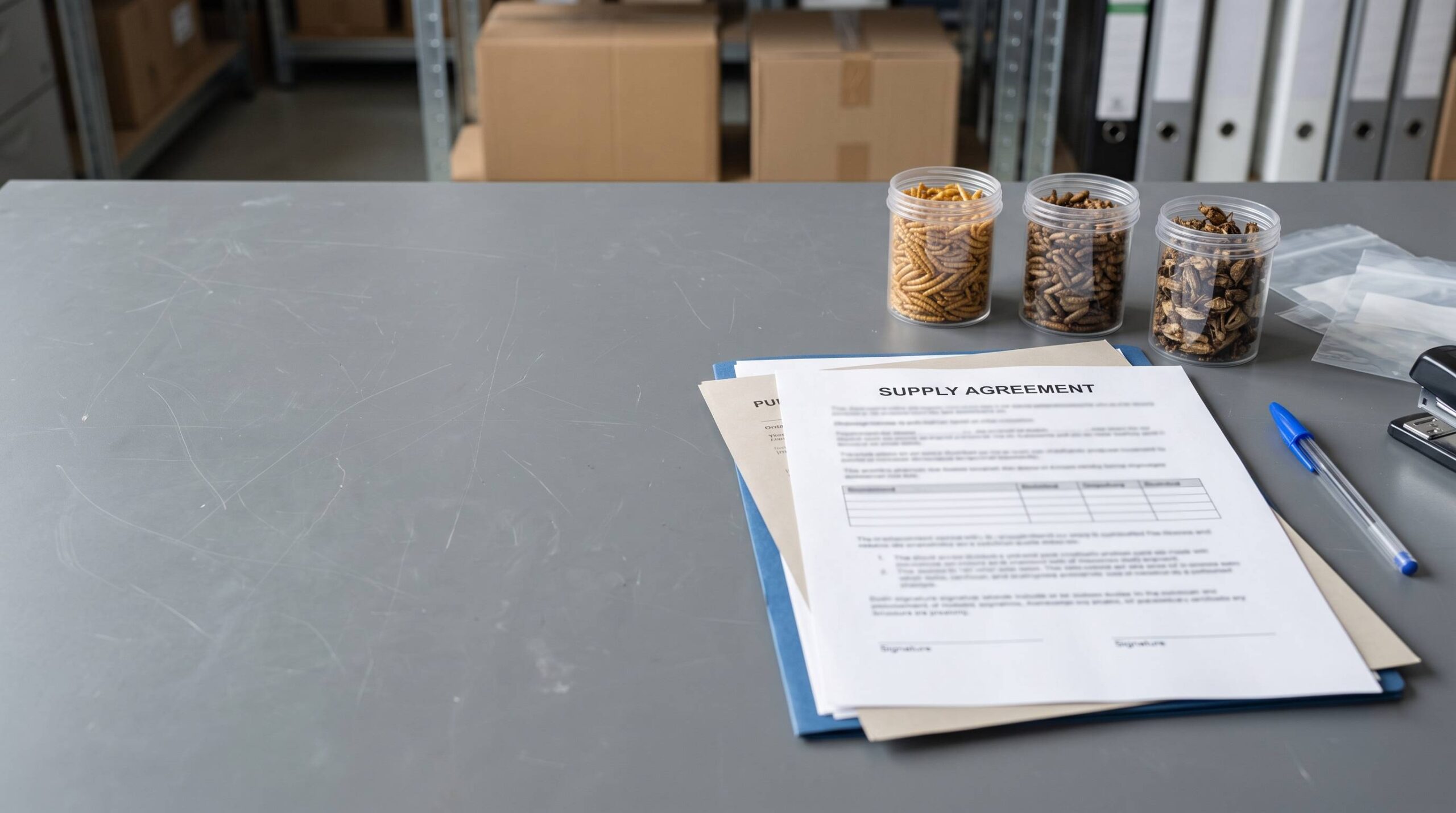

For procurement directors, importers, distributors, and commercial feed businesses, negotiating a bulk insect supply contract is an important step toward establishing a predictable supply of whole dried insect ingredients. A well-structured agreement helps both parties define product requirements, purchasing commitments, pricing mechanisms, quality expectations, and delivery responsibilities before recurring orders begin.
Long-term contracts can improve procurement planning, but they do not automatically guarantee lower prices or uninterrupted supply. Their commercial value depends on realistic volume commitments, measurable specifications, transparent communication, and clearly defined procedures for handling changes or nonconforming shipments.
This guide explains the key provisions buyers should evaluate when negotiating long-term supply agreements for whole dried mealworms, black soldier fly larvae (BSFL), crickets, grasshoppers, earthworms, and maggots.
1. Why Long-Term Supply Contracts Matter
Spot purchasing can provide flexibility when demand is uncertain or when buyers are testing a new product. However, repeated purchases without an agreed commercial framework may expose importers to changing prices, inconsistent product specifications, and difficulties coordinating shipment schedules.
A long-term supply contract establishes a framework for recurring transactions. It can define how orders are placed, which quality standards apply, how prices are reviewed, and what happens when either party cannot meet an agreed obligation. This is particularly useful for buyers managing regular import programs or distributing dried insect products to multiple commercial customers.
The agreement should balance supply continuity with flexibility. Buyers benefit from clear commitments, while suppliers need reliable demand forecasts and commercially realistic lead times. Contracts that place disproportionate obligations on either party can become difficult to perform when market conditions change.
2. Define the Product and Quality Specifications
The first priority is to identify exactly what the supplier must deliver. A contract describing the product only as “dried insects” is insufficient for a recurring commercial procurement program.
Product schedules should identify the insect species, product form, drying method, where relevant, intended application, packaging, and agreed quality parameters. For whole dried insects, buyers may also specify moisture limits, acceptable levels of breakage, foreign matter requirements, and other measurable characteristics appropriate to the product.
Different species require different evaluation criteria. For example, whole dried earthworms may require particular attention to soil and impurity removal, while whole dried crickets or grasshoppers may require agreed standards for physical integrity. Whole dried BSFL and mealworms may be evaluated against different moisture, appearance, and analytical requirements.
Specifications should be achievable and supported by an agreed inspection or testing procedure. Rather than demanding that every batch have identical natural characteristics, buyers should establish acceptable ranges, tolerances, and rejection criteria.
3. Negotiate Purchase Volumes and Forecasts
A long-term agreement should distinguish between estimated demand and binding purchase commitments. This distinction is essential because a buyer’s annual forecast may change as its downstream sales, production schedules, or inventory requirements evolve.
Some agreements establish a minimum annual purchase quantity, while others use quarterly commitments, monthly release orders, or nonbinding rolling forecasts. The appropriate structure depends on the buyer’s demand stability and the supplier’s ability to reserve or coordinate sufficient product availability.
For example, a buyer expecting to purchase 60 metric tons annually might negotiate monthly deliveries of approximately five metric tons. This is only a planning illustration; the actual schedule should account for seasonal demand, minimum shipment quantities, production lead times, and available inventory.
Buyers should also establish procedures for adjusting forecasts, requesting additional volume, and handling orders below an agreed minimum. A forecast should not silently become a legally binding purchase obligation unless that is the parties’ intended arrangement.
4. Choose the Right Pricing Structure
Pricing is often the most commercially sensitive part of a long-term supply negotiation. Buyers may prefer fixed prices for budget certainty, while suppliers may need flexibility when raw material, drying, packaging, energy, or transportation costs change.
A fixed-price arrangement can be appropriate for a defined period when both parties understand the underlying cost assumptions. Alternatively, a contract may provide for scheduled price reviews, agreed adjustment formulas, or separately negotiated prices for each purchase release.
Volume-based pricing may also be considered, but discounts should reflect genuine commercial efficiencies rather than arbitrary purchasing thresholds. Larger orders may reduce some handling or shipment costs, yet they can also create additional storage, financing, or supply-planning obligations.
Where prices are subject to adjustment, the contract should identify the review frequency, supporting evidence, notice period, and process for resolving disagreements. Buyers should avoid vague clauses allowing unilateral price changes without an agreed mechanism.
5. Establish Quality Control and Acceptance Terms
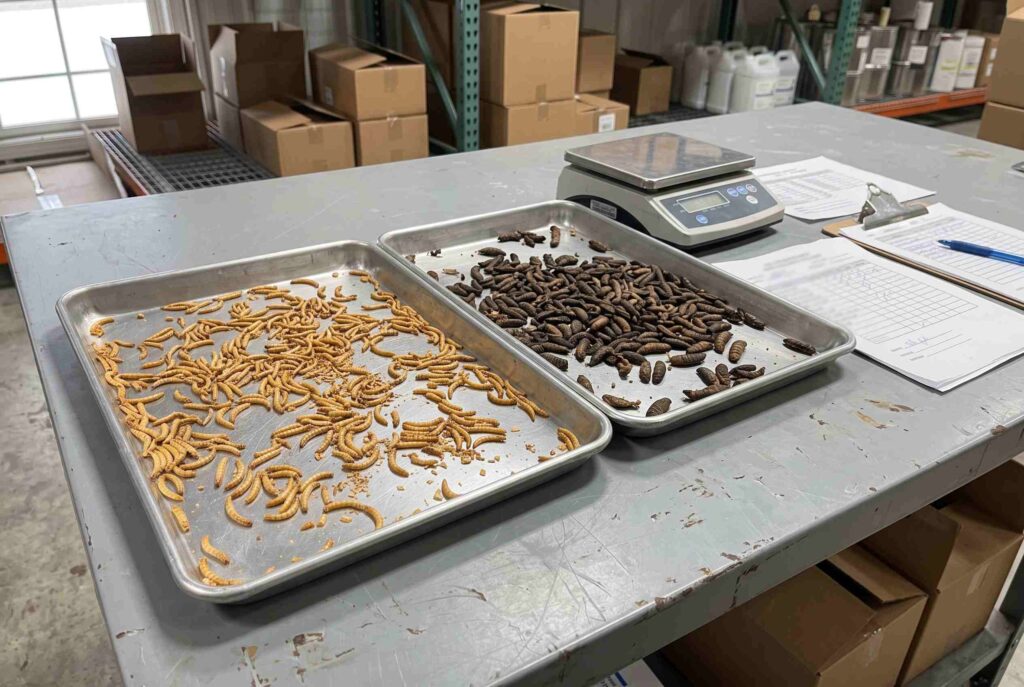
Quality assurance should be documented before the first commercial shipment. Buyers should agree on which tests are required, who performs them, how samples are collected, and which results determine whether a batch meets the contract.
A Certificate of Analysis may support quality verification, but the contract should distinguish between a general product specification and the analytical results of an identified batch. Where third-party testing is required, the parties should define the laboratory requirements, sampling arrangements, and responsibility for testing costs.
Acceptance provisions should explain when and how the buyer may inspect the goods, report nonconformities, and request corrective action. Potential remedies may include replacement, an agreed price adjustment, credit, or another contractually specified solution, depending on the nature of the problem.
Dispute procedures are equally important. If the supplier and buyer obtain conflicting test results, the contract should identify a method for independent review rather than leaving the outcome to informal negotiation after the shipment arrives.
6. Agree on Production and Delivery Schedules
Long-term procurement depends on realistic scheduling. Buyers should confirm the expected time between purchase order acceptance, product preparation, quality checks, packing, and shipment readiness.
A supplier’s available capacity does not necessarily mean that every quantity can be dispatched immediately. Actual lead times can depend on raw material availability, drying method, quality verification, packaging requirements, and existing commercial commitments.
The agreement should distinguish firm delivery obligations from estimated schedules. It should also establish how changes are communicated, when a shipment is considered delayed, and what procedures apply if a delivery cannot proceed as planned.
For recurring shipments, buyers may benefit from maintaining an agreed ordering calendar and reviewing expected requirements several weeks or months in advance, depending on the product and route.
7. Define Packaging and Logistics Responsibilities
Packaging specifications should form part of the commercial agreement rather than being negotiated separately for every shipment. Whole dried insects may require protection against moisture exposure, excessive compression, contamination, and unnecessary handling damage.
The contract should identify packaging materials, unit weights, carton or bag configurations, labeling requirements, and any applicable palletization arrangements. Buyers should confirm whether packaging costs are included in the quoted product price or charged separately.
Shipping terms must also be precise. When FOB or CIF is used, the agreement should identify the applicable Incoterms® 2020 rules and named port. Buyers should understand the allocation of freight arrangements, insurance obligations, costs, and risk transfer rather than assuming that one trade term covers every destination expense.
For containerized shipments, the parties should also consider whether FCA, CPT, or CIP may be more appropriate than traditional FOB or CIF arrangements, depending on the actual handover and transport structure.
8. Address Regulatory Documentation and Traceability
Import requirements for dried insect products can vary according to species, intended use, product form, origin, and destination market. A supply agreement should not assume that one certificate or registration is sufficient for every shipment.
Buyers should establish which party is responsible for preparing commercial documents, providing batch information, coordinating applicable certificates, and supplying records needed by the importer or customs broker. Documentation requirements should be reviewed before orders are confirmed.
Traceability is also important. Where feasible, shipment records should connect product identity, batch information, testing documentation, packing details, and commercial invoices so that the parties can investigate quality concerns or regulatory questions.
The agreement should allocate responsibilities for documentation accurately without representing that the supplier can guarantee import approval. Destination-country admissibility and the importer’s legal obligations require separate verification.
9. Allocate Supply and Performance Risks
Long-term contracts should address foreseeable disruptions rather than assuming that every shipment will proceed without difficulty. Potential issues include changes in product availability, unexpected quality failures, transportation interruptions, regulatory restrictions, and major cost changes.
The agreement should describe what happens when an agreed quantity cannot be supplied, when a shipment fails the specification, or when the buyer needs to postpone an order. Depending on the commercial relationship, the parties may negotiate notice periods, revised schedules, alternative supply arrangements, or specific remedies.
Force majeure provisions should be drafted carefully. They should define the relevant events, notification requirements, mitigation expectations, and consequences of prolonged disruption rather than treating every increase in cost or operational inconvenience as force majeure.
Exclusivity and capacity reservation also require attention. Buyers seeking dedicated supply may need to offer credible purchasing commitments, while suppliers should avoid promising exclusive capacity that has not actually been secured.
10. Establish Payment and Credit Terms
Payment arrangements affect both the buyer’s cash flow and the supplier’s working capital. Common commercial structures may include advance payments, deposits with a balance before shipment, documentary payment arrangements, or approved credit terms.
The appropriate structure depends on transaction history, order size, counterparty risk, and the parties’ financing capabilities. A new relationship may require different payment conditions from an established purchasing program with a documented record of successful shipments.
Contracts should identify the currency, payment milestones, required documents, bank charges, and consequences of late payment. Where credit is offered, the agreement should also define any applicable limits and procedures for overdue balances.
Payment terms should be evaluated together with price and delivery conditions. A lower unit price may not provide the best commercial outcome if the payment structure creates substantial financing or performance risk.
11. Set Contract Duration and Review Mechanisms
Long-term supply agreements commonly establish a defined initial period, but the appropriate duration depends on the product, purchasing program, and level of commitment. A twelve-month arrangement may provide a useful starting framework, although shorter or longer terms can also be appropriate.
The agreement should specify its effective date, renewal process, termination rights, and any notice requirements. Buyers should also consider how outstanding purchase orders, unpaid invoices, and goods already prepared for shipment will be handled when the agreement expires.
Periodic commercial reviews can help the parties assess product quality, delivery performance, pricing, and forecast accuracy. These reviews should support the existing contractual framework rather than create uncertainty about previously confirmed orders.
12. Evaluate Supplier Reliability
Before entering a long-term agreement, buyers should assess whether the supplier’s operating model can support the proposed purchasing program. This evaluation should go beyond price quotations and general statements about capacity.
Relevant factors include access to suitable production partners, documented product specifications, sample consistency, quality-control coordination, communication reliability, export documentation experience, and the ability to manage recurring shipment requirements.
Buyers should also distinguish between manufacturers and trading suppliers. A trading company may coordinate sourcing, quality verification, packaging, and export logistics through manufacturing partners, but its capabilities should be described accurately. Claims of owned factories, guaranteed production capacity, or exclusive supply should be supported by evidence.
A pilot order or staged purchasing arrangement can provide useful information before larger annual commitments are negotiated. Actual performance is often more informative than an unsupported promise of unlimited supply.

13. Build a Contract Negotiation Checklist
Before signing a long-term agreement, buyers should verify that the commercial terms are sufficiently specific to support recurring orders and resolve potential disagreements.
The contract should identify the parties, product specifications, agreed quantities, pricing structure, delivery procedures, quality verification methods, documentation responsibilities, payment terms, and available remedies. It should also address governing law, dispute resolution, confidentiality where appropriate, and procedures for amendments or termination.
For international transactions, legal review may be appropriate, particularly where significant volume commitments, exclusivity, credit exposure, or cross-border enforcement issues are involved. The commercial checklist in this guide supports procurement preparation but does not replace jurisdiction-specific legal advice.
Frequently Asked Questions
What should a bulk insect supply contract include?
A commercial agreement should define product specifications, quantities, pricing, delivery arrangements, quality-control procedures, documentation responsibilities, payment terms, and remedies for nonperformance. The level of detail should reflect the value and complexity of the purchasing relationship.
Is a fixed annual price better than a variable price?
Neither is universally better. Fixed pricing can support budget certainty, while an agreed adjustment mechanism can help address changes in production and logistics costs. The appropriate choice depends on the contract period, market conditions, and risk allocation.
Should buyers commit to a minimum annual purchase quantity?
A minimum commitment may help suppliers plan availability and may support commercial negotiations, but it should reflect realistic demand. Buyers should distinguish binding commitments from nonbinding forecasts and agree on procedures for changes.
Can a trading supplier provide a long-term supply agreement?
Yes. A trading supplier can contract to supply goods sourced through manufacturing partners, subject to its actual contractual commitments and operating capabilities. Buyers should evaluate how sourcing, quality control, documentation, and delivery performance will be managed.
How should quality disputes be handled?
The agreement should define the specification, sampling procedure, testing method, inspection period, notification requirements, and remedies. Where laboratory results conflict, an agreed independent testing procedure can help resolve the dispute.
Should the agreement guarantee uninterrupted supply?
An absolute guarantee may be commercially unrealistic. Buyers should instead negotiate measurable commitments, realistic lead times, communication procedures, contingency arrangements, and remedies appropriate to the transaction.
Is a long-term contract suitable for a first order?
It can be, but buyers may prefer an initial sample evaluation or pilot shipment before making substantial commitments. A staged agreement can allow both parties to assess product consistency and operational performance.
Final Buying Review
A successful bulk insect supply contract should establish a clear, commercially realistic framework for recurring purchases of whole dried insect products. The strongest agreements align product specifications, purchasing commitments, pricing, quality verification, and delivery obligations while providing practical procedures for managing changes.
For procurement directors and importers, supplier reliability should be evaluated through documented capabilities and actual performance rather than unsupported promises. Long-term purchasing relationships are most sustainable when both parties understand their responsibilities and can verify whether contractual commitments are being met.
Buyers planning recurring purchases can explore our whole dried insect products and contact BulkInsects to discuss available species, target specifications, expected annual volume, packaging, destination, and proposed delivery schedules. These details provide a starting point for evaluating a structured supply arrangement.