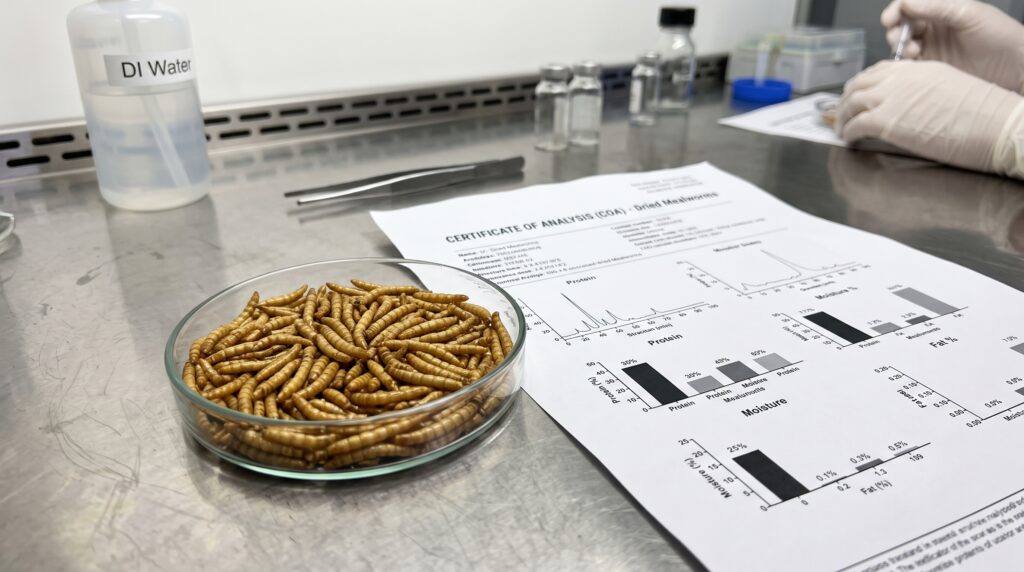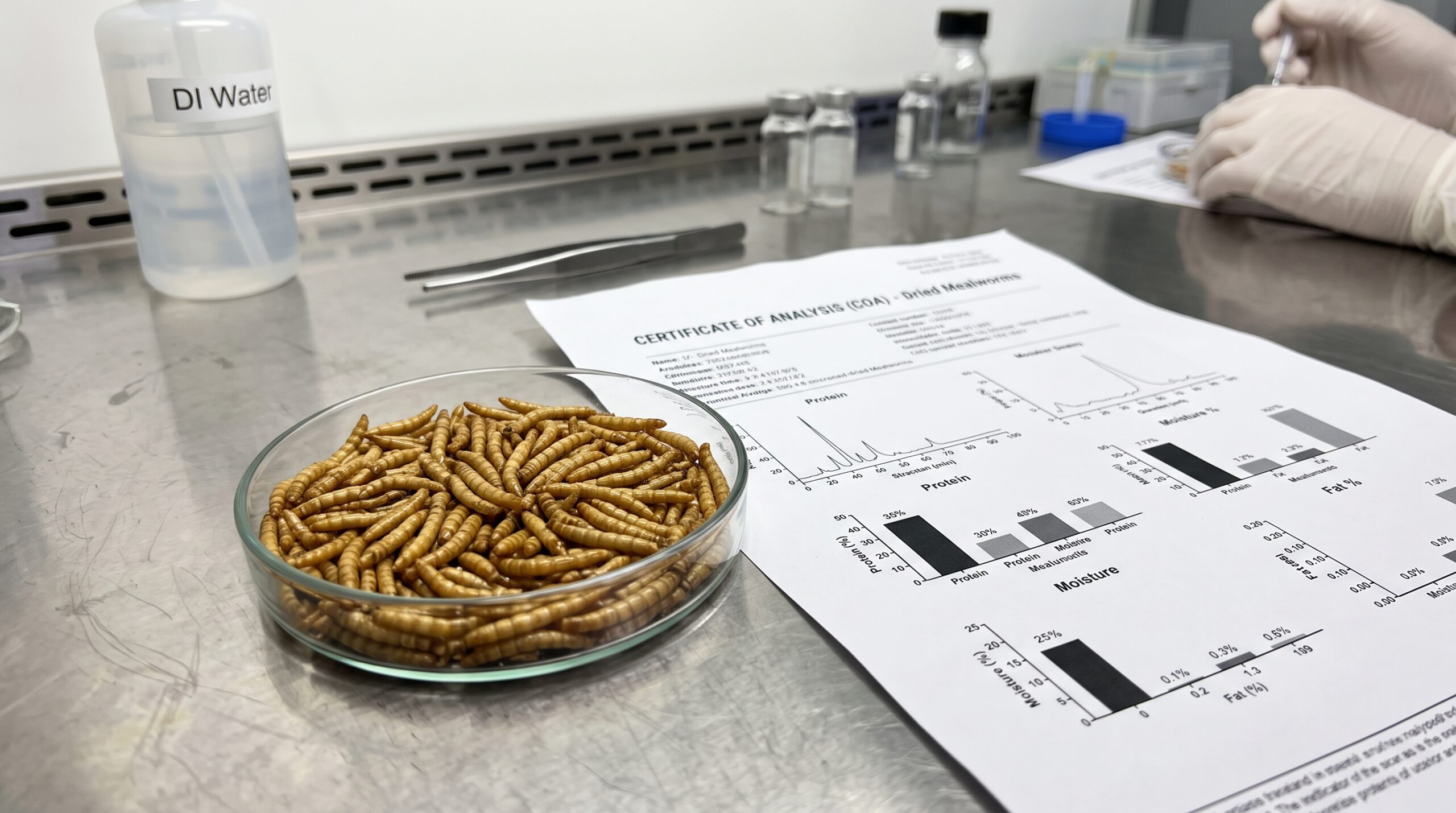

In the rapidly advancing sector of commercial livestock nutrition, international feed formulators are actively replacing volatile marine fishmeal with sustainable insect biomass. As global aquaculture and premium poultry brands scale their operations, securing a consistent supply of Wholesale Dried Mealworms is a top strategic priority. However, B2B procurement directors negotiating Full Container Load (FCL) contracts frequently encounter a massive discrepancy between a supplier’s Certificate of Analysis (COA) and the actual biological performance of the ingredient on the farm. The critical determining factor for this nutritional variance is the industrial dehydration methodology utilized by the primary manufacturer. Understanding why specific drying technologies preserve delicate proteins while others completely destroy them is essential for optimizing feed formulations and maximizing commercial Return on Investment (ROI).
Thermal Degradation and Amino Acid Binding
When evaluating a potential manufacturing partner for Wholesale Dried Mealworms, procurement teams must look far beyond the basic crude protein percentage listed on commercial invoices. The fundamental biological value of insect biomass relies entirely on the bioavailability of its essential amino acids, specifically limiting factors like lysine and methionine. Unfortunately, a vast majority of unverified agricultural brokers source raw materials from disparate localized farms that utilize conventional thermal oven-roasting or open-air sun-drying. These outdated methodologies apply intense, uneven external heat over prolonged processing cycles. This extended thermal stress inevitably triggers a severe Maillard reaction.
In biochemical terms, the Maillard reaction irreversibly binds heat-sensitive essential amino acids to reducing sugars. Consequently, the proteins become biologically locked. When commercial fish or poultry consume this heat-damaged feed, their digestive systems cannot metabolize the bound nutrients. This severe lack of bioavailability directly leads to an inferior Feed Conversion Ratio (FCR). To correct stunted livestock growth rates, feed mills must purchase expensive synthetic amino acids to supplement the formulation, immediately negating any upfront financial savings gained from purchasing cheap, improperly processed ingredients.
Preserving Bioavailability via Microwave Technology
To systematically protect these critical nutritional profiles in strict alignment with alternative protein guidelines established by the Food and Agriculture Organization (FAO), an industry-leading manufacturer utilizes advanced microwave dehydration. This state-of-the-art volumetric heating method completely revolutionizes the stabilization phase. Instead of applying external ambient heat, industrial microwaves generate heat directly from the water molecules within the cellular structure of the insect itself. This ensures extremely rapid, highly uniform moisture evaporation from the inside out, cutting the total processing time to a mere fraction of conventional roasting.
By successfully bypassing the thermal degradation zone, volumetric heating explicitly prevents amino acid binding. The resulting Wholesale Dried Mealworms retain a significantly higher percentage of intact, highly bioavailable protein. When livestock consume this high-performance feed, they absorb the vital nutrients effortlessly, driving rapid physical growth and robust immune health without the need for costly synthetic additives. Similar to the rigorous processing exactitude required when manufacturing premium Black Soldier Fly Larvae (BSFL) diets, this advanced industrial technology ensures measurable, high-performance results for the commercial feed mill.
Securing Logistical Stability and FCL Compliance
Beyond preserving delicate amino acids, advanced microwave dehydration effectively eliminates severe logistical and sanitary risks during multi-week ocean transit. High-volume insect biomass retains dangerous levels of hidden internal moisture if processed using slow thermal techniques. During a standard FCL shipment under CIF or FOB terms, extreme temperature fluctuations cause this trapped moisture to condense on the maritime container ceiling. This trapped humidity transforms the cargo into an active biological breeding ground for Salmonella, E. coli, and highly toxic aflatoxins, leading directly to catastrophic cargo seizures at destination ports.
A verified manufacturer uses microwave technology to guarantee a highly uniform internal moisture content strictly below the ≤5% moisture threshold. This sub-5% precision acts as an impenetrable biological barrier, effectively sterilizing the ingredient, preventing container rain, and securing a stable 18-month shelf life without artificial chemical preservatives. Furthermore, because the rapid microwave process preserves the natural structural elasticity of the insect exoskeleton, the Wholesale Dried Mealworms will not shatter into wasteful fine dust during the high-pressure automated feed extrusion process, maximizing material yield.
Ultimately, optimizing industrial feed formulations requires transparent partnerships with technologically equipped factories. Smart international buyers demand verifiable SGS documentation and rigorous protein digestibility testing before committing to massive contracts. By prioritizing advanced volumetric dehydration for Wholesale Dried Mealworms, B2B procurement directors can stabilize their global supply chains and significantly lower overall feed costs.
Looking for a reliable manufacturing partner? BulkInsects uses advanced microwave dehydration technology to deliver premium insect ingredients with guaranteed nutritional integrity. Start your market test with our 1000kg MOQ. Contact us today for CIF pricing and free samples.