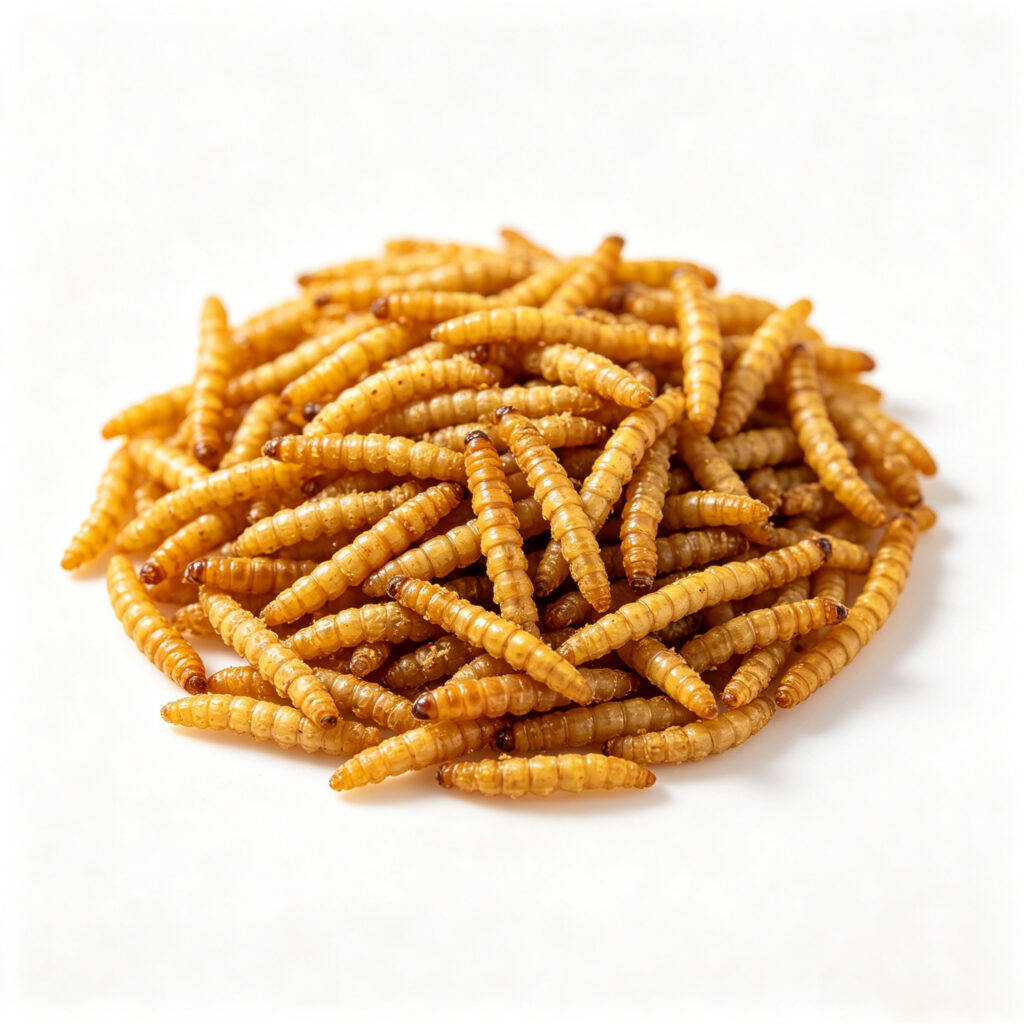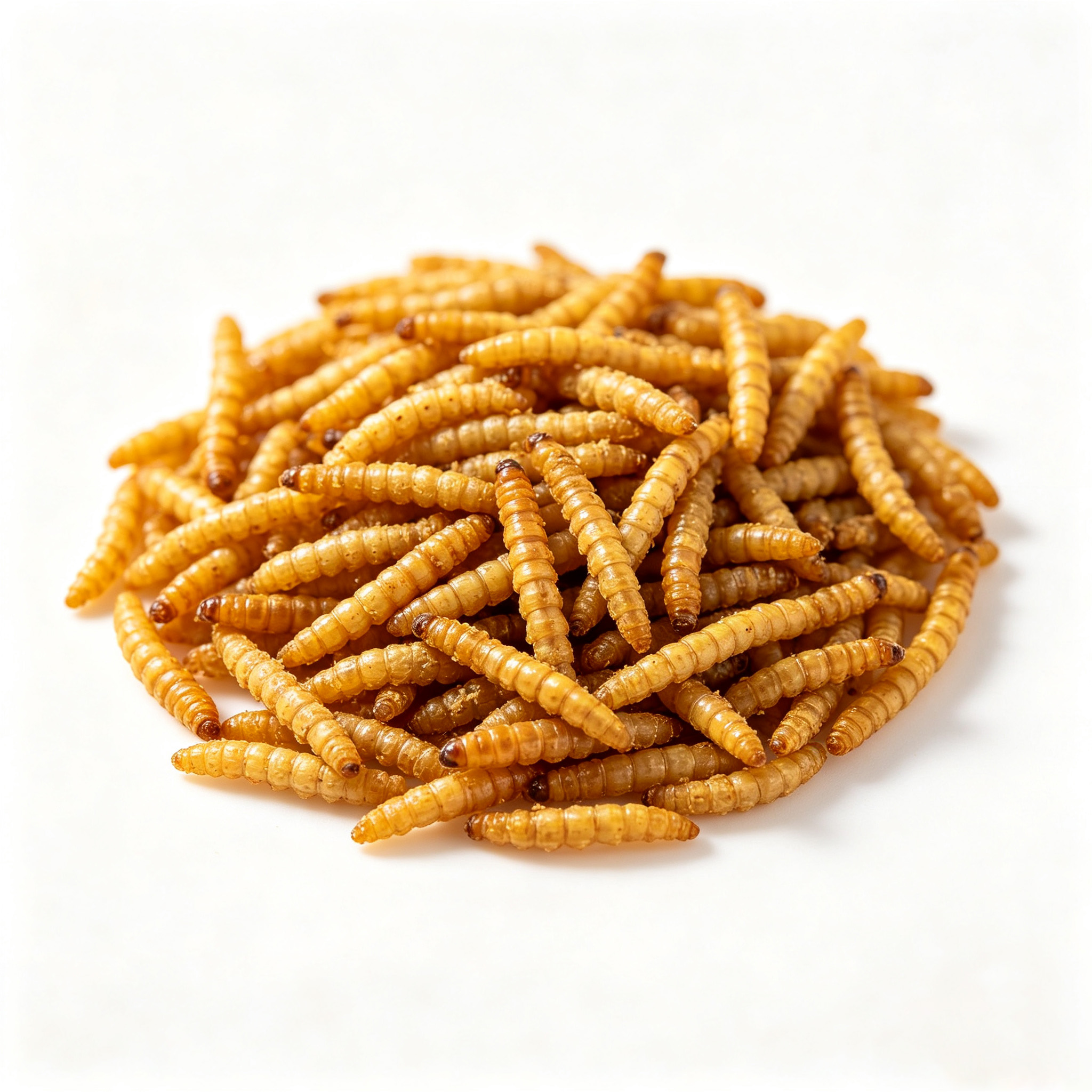

Optimizing international freight logistics is one of the most critical financial levers for B2B procurement managers sourcing alternative proteins. When importing massive volumes of Wholesale Dried Mealworms for commercial poultry or premium pet food formulations, the executive decision between booking a 20ft container versus a 40ft High Cube (HQ) container drastically impacts your landed cost per metric ton. Unlike heavy, dense agricultural commodities such as soybean meal or marine fishmeal, dehydrated insect biomass is fundamentally a high-volume, low-weight product. This physical characteristic fundamentally shifts the logistics strategy from maximizing weight to aggressively optimizing CBM (Cubic Meters). However, packing thousands of kilograms of biological material into a sealed steel box for a multi-week ocean transit introduces severe spatial and sanitary vulnerabilities. Understanding the structural and biological dynamics of container loading is absolutely essential for maximizing your freight ROI and preventing catastrophic cargo losses at the destination port.
Optimizing CBM for Wholesale Dried Mealworms
The primary challenge when loading Wholesale Dried Mealworms is managing their bulk density. A standard 20ft container offers approximately 28 to 30 CBM of usable internal volume, whereas a 40ft HQ container provides a massive 68 to 75 CBM. Because dried insects are incredibly lightweight, a 20ft container will almost always “cube out” (reach its maximum volume capacity) long before it “weighs out” (reaches its maximum weight limit). For international feed formulators negotiating FOB or CIF contracts, shipping high-volume insect protein in 20ft containers is highly inefficient, as the freight cost per kilogram becomes disproportionately expensive. Therefore, scaling procurement to fill a 40ft HQ container is the ultimate strategy to dilute international shipping rates and lower the final formulation cost.
However, stacking lightweight biological commodities to the ceiling of a 40ft HQ introduces a severe mechanical risk: physical crushing. When auditing a potential manufacturing partner for Wholesale Dried Mealworms, procurement directors must deeply evaluate the factory’s dehydration methodology, as it dictates the physical resilience of the insect. Traditional processing methods, such as cheap thermal oven-roasting or open-air sun-drying, heavily desiccate the outer exoskeleton while leaving the internal core damp. This severe thermal stress makes the chitin shell incredibly brittle. When these fragile, heat-damaged insects are packed into woven bags and stacked high inside a 40ft HQ, the sheer gravitational weight of the top tiers aggressively crushes the bottom tiers. By the time the vessel arrives, a massive percentage of the cargo has shattered into a fine, unusable dust. This insect powder clogs industrial feed extruders and burns easily, severely degrading the Feed Conversion Ratio (FCR) on the farm and destroying the initial freight savings.
Preventing Container Rain in Wholesale Dried Mealworms
Beyond mechanical crushing, maximizing the CBM of a 40ft HQ container creates a highly dangerous biological environment if the source factory lacks strict moisture control. When a container is packed tightly with Wholesale Dried Mealworms, air circulation is virtually eliminated. If the manufacturer uses outdated thermal drying, the insects typically retain a hidden internal moisture content of 10% to 15%. During a standard 30-to-40-day ocean transit, the steel container absorbs extreme solar radiation during the day and cools rapidly at night.
This drastic temperature fluctuation causes the hidden moisture trapped within the densely packed insects to evaporate and rapidly condense on the ceiling of the container. This deadly logistical phenomenon, universally known as container rain, drips directly back onto the cargo. In a fully loaded 40ft HQ, this trapped humidity transforms the shipment into an active biological breeding ground for Salmonella, E. coli, and highly toxic aflatoxins. When health inspectors at the destination port sample the cargo, the entire shipment is immediately condemned, resulting in a total financial wipeout.
To systematically eliminate these crushing and sanitary risks, industry-leading manufacturers have completely transitioned to advanced microwave dehydration technology. This state-of-the-art volumetric heating process generates heat directly from the water molecules inside the insect. This guarantees a highly uniform internal moisture content strictly below the critical 5% threshold. This sub-5% exactitude acts as an impenetrable biological barrier, completely preventing container rain even when stacked tightly in a 40ft HQ. Furthermore, because microwave technology does not desiccate the outer shell, the structural elasticity of the insect is preserved, preventing the bottom tiers from shattering into dust.
Most importantly, the lightning-fast microwave process explicitly prevents the Maillard reaction. This ensures the heat-sensitive essential amino acids remain completely intact, allowing the impressive Crude Protein levels to translate directly into high bioavailability for commercial livestock. Ultimately, buyers must demand rigorous third-party validations, including an SGS certified Certificate of Analysis (COA), to prove moisture and protein metrics before loading. By partnering with a technologically advanced factory, procurement directors can confidently book 40ft HQ containers, maximize their CBM efficiency, and scale their B2B operations with absolute logistical security.
Looking for a Reliable Supplier? BulkInsects utilizes advanced microwave dehydration technology to ensure premium quality. Fully SGS certified with COA provided per batch. Start your market test with our 1000kg MOQ. Contact us today for CIF pricing and free samples.